pioneer
Sesame
til
Sesamum indicum
Also known as Til (Pakistan).
- punjab plains
- sindh coast
International hardiness
- USDA 10-11
- RHS H2
- AU: Tropical, Subtropical, Arid / semi-arid, Warm temperate
Where it grows — regional guide
| Zones / rating | Regional notes |
|---|---|
USDA 10-11 | A drought-tolerant warm-season annual oilseed in USDA zones 8 to 11; harvest capsules as they dry, and note that sesame is a major food allergen. |
| Zones / rating | Regional notes |
|---|---|
H2 (1 to 5C) | No region-specific data yet |
| Zones / rating | Regional notes |
|---|---|
Tropical, Subtropical, Arid / semi-arid, Warm temperate | Suited to hot, semi-arid and tropical summer cropping areas with free-draining soil; yields nutritious oilseeds, but poses severe risks for those with sesame allergy. |
| Zones / rating | Regional notes |
|---|---|
USDA 10-11 (USDA scale) Canada uses its own zone system; Canadian zones run roughly one lower than USDA. | No region-specific data yet |
| Zones / rating | Regional notes |
|---|---|
Punjab plains, Sindh coast | Pakistan:A vital, drought-hardy summer kharif oilseed crop across Punjab and Sindh plains; prized for edible seeds and oil, but seeds are a recognized major food allergen. India:Ancient staple summer oilseed cultivated across dryland farming belts of India; yields rich oil and cooking seeds, though it is a major food allergen for sensitive people. |
Grows alongside
Species that appear with Sesame in 2 of our published guides — a starting list for a guild, not a planting plan.
Sesame (Sesamum indicum) is an annual oilseed crop in the family Pedaliaceae, grown across warm climates worldwide for its edible seeds and the oil pressed from them. Its truly wild origin is uncertain (the species is not known in a genuinely wild state), but botanical treatments generally place its origin in India, or across northeast Africa and the Indian subcontinent, with the cultivated type widely accepted as having originated in India. Today it is naturalized throughout the tropics and cultivated in tropical and warm-temperate zones. For a homesteader, its appeal is its toughness: it is notably drought-tolerant and is often grown on hot, dry ground where other crops fail, making it a practical summer oilseed for marginal beds with limited irrigation.
How to identify it
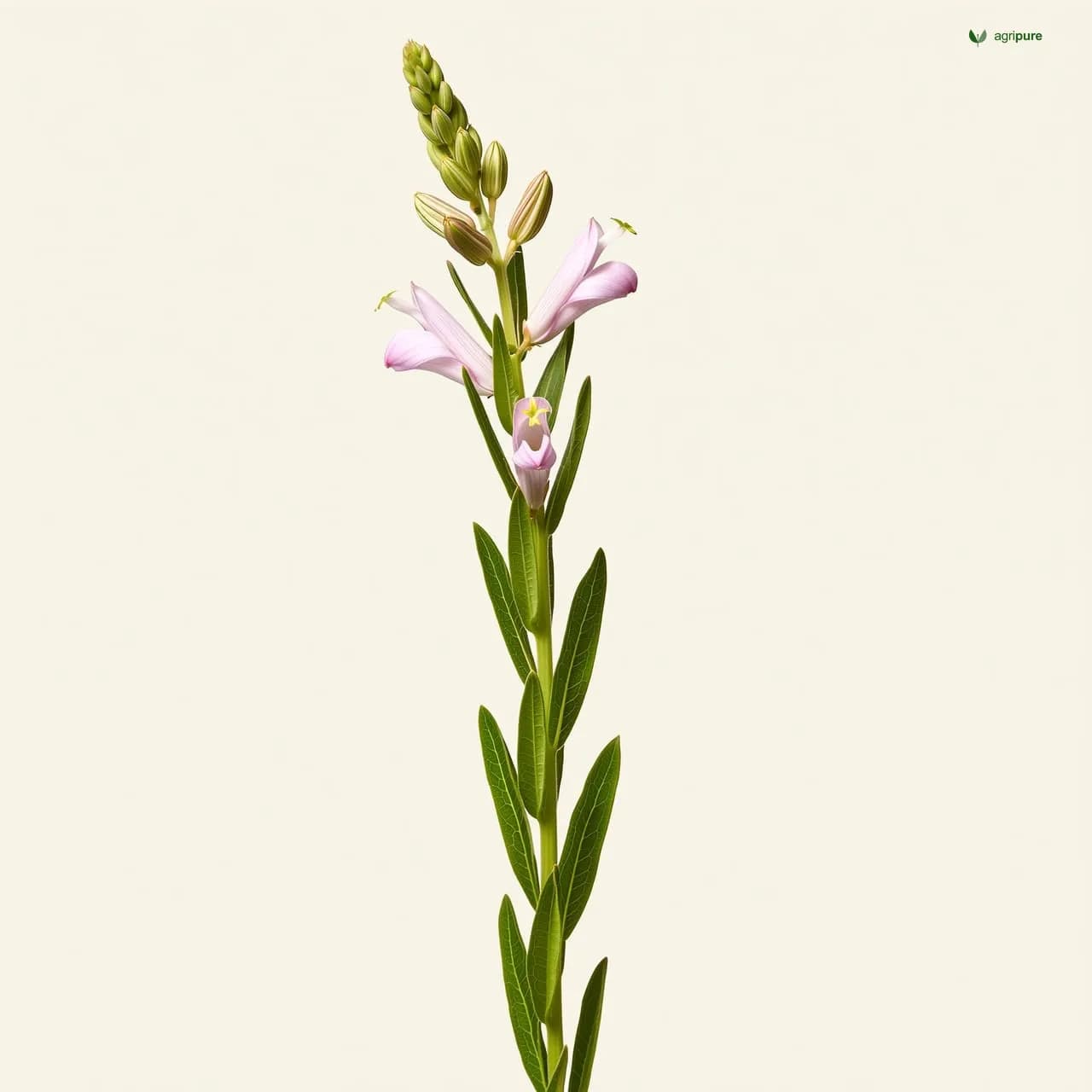
Sesame is an erect, herbaceous annual, generally 1 to 3 m tall with a branching habit, though garden plants grown for seed are often noted around 0.6 to 1.5 m. The stems are upright and green to purplish, and can be sparsely to moderately hairy depending on the cultivar. Its leaves are lanceolate (lance-shaped); the lower leaves tend to be broader and opposite, while the upper leaves are narrower and arranged alternately. The tubular, bell-shaped flowers are borne singly or in small clusters in the leaf axils and range from creamy white to pink or purple depending on variety — a foxglove-like cue that is easy to spot. The fruits are elongated pods (capsules) that mature and then split open (dehisce) to release numerous tiny seeds, the trait behind the phrase “open sesame.” The seeds are small and flattened and may be white, cream, brown, red, or black depending on the cultivar. Taken together, the tall upright habit, foxglove-like axillary flowers, narrow leaves, and slender pods that dry and pop open to shed seed are the practical field signature.
Growing sesame
Sesame is propagated by seed, sown directly in situ in the field or bed rather than transplanted. It is a frost-sensitive warm-season crop: sow only after the danger of frost has passed and the soil has warmed, aiming the planting at a long, warm growing season. It needs a well-drained, porous soil in a warm, sunny, sheltered position.
The crop is built for heat and prefers a daytime temperature of 20 to 30 degrees Celsius, tolerating a range from about 10 to 40 degrees. It does well across warm-temperate to tropical zones provided there is a growing season of at least roughly five months. On water, it prefers 500 to 1,000 mm of annual rainfall but tolerates anywhere from 300 to 1,500 mm; high humidity and heavy rains tend to increase fungal disease pressure, which is another reason free-draining ground matters. Its strong drought tolerance is one of its defining agronomic traits. Depending on variety and conditions, a crop can mature anywhere from 40 to 180 days from sowing; this wide span reflects the diversity of landraces and growing environments, with commercial grain cultivars usually falling toward the middle of that range.
Primary sources do not assign a USDA hardiness zone to sesame directly. As a frost-sensitive annual needing warm conditions and a roughly four-to-five-month frost-free season, it is most practical as a summer annual in about USDA zones 8 to 11, and in zone 7 where a reliably long, hot summer occurs. This zone range is an informed horticultural inference, not a figure from the primary sources.
Harvest and uses
The harvested products are the seed and the oil pressed from it; sesame is grown across warm climates worldwide specifically for these edible seeds and their oil. The capsules are the part to watch at harvest: because the mature pods dehisce and shed their seed, timing the cut around the point when the lower capsules begin to dry and split is what protects the yield. Properly processed seeds and oil are generally regarded as safe as food. Sesame also has a documented history of use as a medicinal plant, though that use carries important safety caveats covered below.
Safety and cautions
Although properly processed sesame seeds and oil are generally safe as food, the sources are explicit that sesame carries real cautions a homesteader should know about.
- Sesame is a major food allergen. For anyone with a sesame allergy, the seeds and oil can pose a serious risk, and this is the single most important caution for handling, sharing, or selling the crop.
- Its use as a medicine carries important safety caveats, particularly for people with allergies, those taking certain medications, and during pregnancy, and should not be approached casually as self-treatment.
This profile describes sesame’s traditional and culinary use only and makes no medical claims and gives no dosages. Treat it as a food and oilseed crop first, and seek qualified guidance before any medicinal use, especially if you are pregnant, on medication, or have any history of seed or nut allergy.
Sources
- Sesamum indicum L. — GBIF (Global Biodiversity Information Facility)
- Descriptors for Sesame (Sesamum indicum) — Plant Breeders’ Rights Registry
- Sesamum indicum — Useful Tropical Plants Database
- Interesting Plants of the World: Sesamum indicum — Greenlife Industry Queensland
- Sesamum indicum — ScienceDirect Topics
- Sesamum indicum — iNaturalist