Key takeaways
- Greywater from showers, sinks, and laundry can safely irrigate fruit trees, saving over 15,000 gallons of potable water annually.
- Select low-sodium, boron-free, and biodegradable soaps to protect soil health and plant vitality.
- Simple laundry-to-landscape systems, using 1.5 in pipes and mulch basins, are effective and often permit-exempt.
- Passive irrigation methods like ollas, wicking beds, and earthworks maximize water efficiency and minimize maintenance.
- Choose robust fruit trees like citrus, stone fruits, and figs that tolerate slight variations in soil conditions.
- Regular soil testing every one to two years and checking local regulations help ensure long-term system success.
Quick answer: Household greywater from showers, sinks, and laundry can safely irrigate fruit trees when using low-sodium, boron-free, biodegradable soaps and appropriate system designs like laundry-to-landscape setups. This method conserves potable water and supports plant vitality.
In arid regions like the American Southwest, where annual rainfall can be as low as 8 in, water conservation is essential for growers. Many homesteads across Arizona, California, and Nevada face increasing pressure on their water resources, making every gallon count. For those cultivating fruit trees and shrubs, sustainable irrigation methods support long-term orchard health.
One practical approach is reusing household greywater, the wastewater from sinks, showers, and laundry that can be safely diverted to nourish perennial plants. Integrating greywater systems can reduce potable water consumption by up to 30% for irrigation, according to some estimates, while supporting an orchard or berry patch [1].
Understanding greywater for the garden
Greywater, in simple terms, is household wastewater that has not come into contact with toilet waste. This typically includes water from bathroom sinks, showers, bathtubs, and washing machines. Kitchen sink water and dishwasher water are generally excluded due to higher grease and food particle content, which can clog systems and attract pests, though some advanced systems can handle it [4]. The goal is to collect this relatively clean water and redirect it to irrigate non-edible parts of the garden, or, with careful consideration, fruit trees and shrubs.
What constitutes safe greywater
For safe greywater use on edible plants like fruit trees, the primary concern is what goes down the drain. We need to avoid harsh chemicals, bleaches, and strong detergents. The EPA emphasizes that greywater should be free of hazardous substances to protect soil and plant health [2]. In a typical US household, this means choosing specific soaps and detergents.
- Low-sodium soaps: Sodium can build up in soil, especially in clay soils, and inhibit water absorption by plant roots. Look for products with less than 50 mg of sodium per serving or per load.
- Boron-free detergents: Boron is an essential micronutrient for plants, but even small excesses can be toxic, particularly to fruit trees. Many common laundry detergents contain boron.
- Chlorine bleach avoidance: Chlorine can harm soil microbes and plant tissue.
- Biodegradable products: These break down more readily in the soil, reducing the risk of chemical accumulation.
It’s worth noting that some states, like California, have specific guidelines for greywater use, often requiring permits for more complex systems. For simpler laundry-to-landscape systems, permits are often not needed, but checking local regulations is always a smart first step [1]. For more general information, see greywater systems: reusing household water in the garden.
System design and diversion strategies
Designing a greywater system for fruit trees involves a few fundamental principles: direct diversion, subsurface irrigation, and avoiding storage. Storing greywater for more than 24 hours is generally discouraged due to potential bacterial growth and odor issues, as noted by the USDA Natural Resources Conservation Service [1]. Instead, the goal is to get the water from the source to the plant roots as quickly and efficiently as possible. A simple laundry-to-landscape system, for instance, can divert 15-25 gallons per load directly to a dedicated planting area.
Simple laundry-to-landscape setup
The laundry-to-landscape system is often the easiest and most cost-effective entry point for greywater reuse. It involves diverting the washing machine’s drain hose directly to the landscape, bypassing the sewer or septic system. This typically requires a three-way valve to allow switching between the greywater system and the sewer, useful for when you use harsh detergents or need to drain the machine. The water then flows through a 1 in or 1.5 in diameter pipe, often laid on the surface or buried shallowly, distributing water to mulch basins around trees.
- A diversion valve: Allows switching between greywater and sewer lines.
- Large diameter piping: Prevents clogging from lint and soap residue. A 1.5 in pipe is often recommended for good flow.
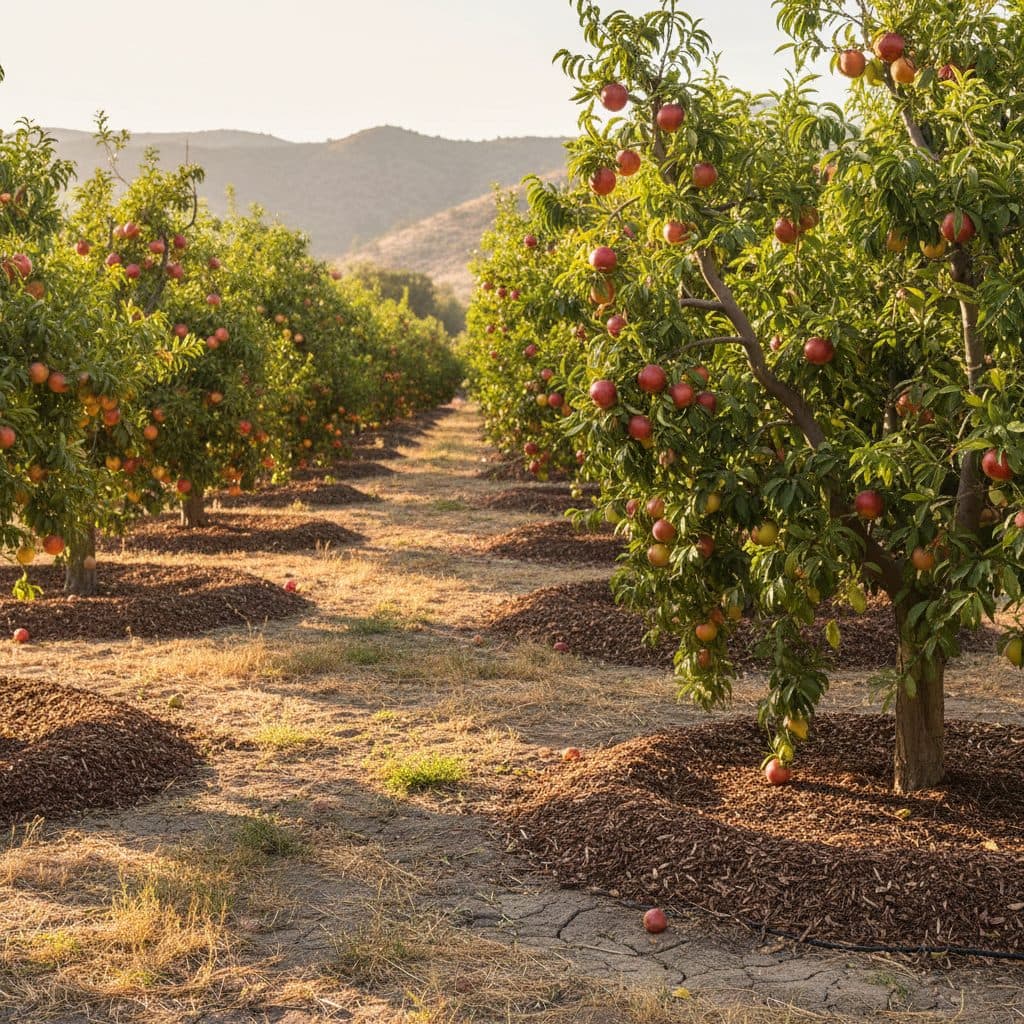
- Mulch basins: These are shallow depressions around trees, typically 18-24 in deep and 3-4 ft in diameter, filled with wood chips or straw to help absorb and slowly release the water.
- Gravity flow: Most simple systems rely on gravity, so ensure your landscape is downhill from your greywater source.
- Permeable soil: Avoid direct greywater application to heavy clay soils without significant soil amendment, as this can lead to waterlogging and surface pooling.
For more complex systems, like those involving bath or shower water, a simple surge tank and gravity distribution can be used, often with a filter to catch hair and soap scum. Always ensure the greywater is discharged below the surface, under at least 2 in of mulch, to prevent human or animal contact and reduce evaporation [3].
Passive irrigation techniques for greywater
Once greywater is diverted, passive irrigation methods excel at distributing it efficiently to fruit trees and shrubs. These techniques minimize energy use and maintenance, allowing water to slowly infiltrate the soil where plant roots can access it. In regions like the high desert of New Mexico, where water is scarce, these methods have proven highly effective for establishing drought-tolerant species. For instance, a well-designed wicking bed can reduce water usage by up to 50% compared to traditional surface irrigation [3].
Ollas, wicking beds, and passive earthworks
Ollas are unglazed clay pots buried in the soil, filled with water, which then slowly seeps out through the porous clay directly into the root zone. While traditionally used with potable water, they can be adapted for greywater if the greywater is pre-filtered to prevent clogging. An olla typically holds one to five gallons and can irrigate a 2-3 ft diameter area around a young tree. They are particularly effective for establishing young fruit trees in USDA zones 7-9, where consistent moisture is crucial during dry periods.
- Wicking beds: Are raised garden beds with a built-in water reservoir at the bottom, drawing water upwards into the soil through capillary action.
- Ollas: Unglazed clay pots buried in the soil, slowly releasing water directly to the root zone.
- Swales: Shallow ditches dug along contours that slow down water flow, allowing it to soak in over a wider area.
- Berms: Raised mounds of earth that help direct water flow and create microclimates.
- Infiltration basins: Depressions designed to capture and slowly release water into the soil.
Wicking beds are raised garden beds with a built-in water reservoir at the bottom. A wicking layer (often gravel or sand) draws water upwards into the soil through capillary action. When using greywater, the reservoir can be filled via a pipe from the greywater source. This method is ideal for smaller shrubs or berry bushes, providing steady moisture without surface evaporation. A typical wicking bed for a small berry patch might be 4 ft by 8 ft and require 10-20 gallons of greywater per week in peak growing season.
Passive irrigation earthworks, such as swales, berms, and infiltration basins, are designed to capture and slowly infiltrate rainwater and potentially greywater into the soil. Swales, for example, are shallow ditches dug along contours that slow down water flow, allowing it to soak in over a wider area. These are excellent for larger fruit tree guilds or food forests, especially in landscapes with a slight slope. A 30 ft long swale, 18 in deep, can capture hundreds of gallons of water during a single rain event or from a diverted greywater source, benefiting multiple trees in a USDA zone 6 orchard. Consider integrating these methods with drought tolerant shrubs to maximize water efficiency and plant resilience.
Choosing the right plants for greywater
Not all fruit trees and shrubs are equally tolerant of greywater. The ideal candidates are those that are robust, have moderate to high water needs, and are relatively tolerant of slight variations in soil pH or mineral content. In many parts of the Pacific Northwest, where rainfall is seasonal, greywater can supplement irrigation for established fruit trees through the dry summer months. The USDA National Agroforestry Center suggests focusing on species that are already well-adapted to local conditions and have some drought tolerance [5].
Fruit trees and shrubs that thrive with greywater
When selecting plants, consider their salt and boron tolerance. While we aim for low-sodium and boron-free greywater, some accumulation is possible over time. Deciduous fruit trees, in general, tend to be more tolerant than evergreens.
- Citrus trees: Particularly in USDA zones 9-10, established citrus like oranges, lemons, and grapefruits can handle greywater well, provided sodium and boron levels are low.
- Stone fruits: Peaches, plums, and apricots in USDA zones 5-8 are generally robust and can benefit from supplemental greywater during dry spells.
- Berries: Blackberries, raspberries, and blueberries (if soil pH is managed) are often good choices for wicking beds or basins fed by greywater.
- Figs: Highly tolerant of various soil conditions and often thrive with consistent moisture, making them suitable for greywater in USDA zones 8-10.
- Olives: Extremely drought-tolerant once established, olives in USDA zones 8-10 can benefit from greywater during fruit development.
Avoid using greywater on young seedlings or plants in containers, as they are more sensitive to nutrient imbalances. Also, ensure that greywater is not applied directly to edible root crops or leafy greens that will be eaten raw, to minimize potential health risks. For more detailed information on specific species, consult resources like best cold-hardy fruit and nut trees for USDA zones 4-6 or salt-tolerant trees and shrubs for saline and coastal sites, by hardiness zone.
Maintenance, monitoring, and regulations
Operating a greywater system successfully over the long term requires consistent maintenance and vigilant monitoring of soil and plant health. Even with careful soap selection, there’s a potential for mineral buildup, particularly sodium and boron, which can harm plants and degrade soil structure over time. In regions with naturally alkaline soils, like much of the arid West, this accumulation can be exacerbated. Regular soil testing, perhaps every one to two years, is a prudent practice to track changes in pH, salinity, and specific mineral concentrations [1].
Soil health and legal compliance
If soil tests show increasing sodium levels, you might need to leach the soil with potable water periodically or apply gypsum to help displace sodium ions. For boron accumulation, the solution is often to switch to different laundry products or temporarily cease greywater use on affected plants. Observing your plants for signs of stress (such as leaf tip burn, stunted growth, or yellowing leaves) can provide early warnings. For example, boron toxicity in fruit trees often manifests as yellowing between veins and browning of leaf margins.
- Regular filter cleaning: If your system includes filters (e.g., for hair or lint), clean them weekly or monthly depending on usage.
- System inspection: Check pipes and distribution points monthly for clogs, leaks, or surface pooling.
- Soil testing: Conduct soil tests every one to two years to monitor pH, salinity, and nutrient levels.
- Plant observation: Regularly inspect plants for signs of nutrient deficiencies or toxicities.
- Detergent review: Periodically check your household product labels for changes in ingredients.
Local regulations are a critical aspect of greywater use. While many states, like Texas and Arizona, have adopted more permissive greywater codes, requirements can vary significantly by county or municipality. Some areas may require permits for all systems, while others only for complex ones. Always check with your local health department or building department before installing any system. For instance, in some parts of California, simple laundry-to-landscape systems are exempt from permitting if they meet specific criteria, such as no greywater storage and subsurface discharge [1].
Benefits and long-term outlook
Implementing a greywater system for your fruit trees and shrubs offers several significant benefits, extending beyond just water conservation. For a typical US household of four, diverting laundry and bath water can save over 15,000 gallons of potable water annually, reducing utility bills and easing strain on municipal water supplies [2]. This practice aligns with broader sustainable agriculture goals, promoting resource efficiency and resilience, especially in areas prone to drought, such as the Colorado River Basin.
Ecological and economic advantages
Beyond the direct water savings, greywater irrigation contributes to healthier soil ecosystems. The organic matter and nutrients (like nitrogen and phosphorus from soaps, in small, safe quantities) in greywater can act as a mild fertilizer, feeding beneficial soil microbes and improving soil structure over time. This can lead to more vigorous plant growth and potentially reduce the need for synthetic fertilizers. The EPA notes how decentralized water management, including greywater reuse, can reduce the energy footprint associated with pumping and treating water [2].
- Reduced water bills: Direct savings on municipal water or extended well life.
- Increased water security: Greater resilience during drought periods or water restrictions.
- Improved soil health: Introduction of organic matter and micronutrients that support microbial activity.
- Reduced energy consumption: Less energy used for water treatment and transport.
- Environmental stewardship: Contributing to local watershed health and sustainability.
As climate patterns shift and water becomes an increasingly precious resource across the country, from the Central Valley of California to the Great Plains, greywater systems will likely become more common and sophisticated. The principles of passive irrigation and thoughtful water management, as advocated by organizations like SARE, will remain central to these efforts [3]. By starting with a simple, well-maintained system, growers can reduce water consumption on homestead orchards. For more information on greywater systems, visit agripure.org/articles/greywater-systems.
Comparing passive greywater irrigation methods
Method | Best use case | Greywater suitability | Maintenance level |
|---|---|---|---|
Ollas | Establishing young trees, small shrubs | Good (with filtration) | Low (refilling, occasional cleaning) |
Wicking beds | Berry bushes, smaller fruit shrubs | Excellent (reservoir-fed) | Moderate (reservoir cleaning, soil monitoring) |
Swales & basins | Mature fruit trees, food forests, larger areas | Good (gravity-fed) | Low (mulch replenishment, debris removal) |
Water Savings: In California’s Central Valley, greywater systems can reduce outdoor water use by 30-50% for landscapes with established trees.
Soil Health: Regular greywater application, when managed correctly, can increase soil organic matter by 0.5-1% annually in sandy soils over 3 years.
Frequently asked questions
Is greywater safe for all fruit trees?
No, not all fruit trees are equally tolerant. Deciduous trees like peaches and plums in USDA zones 5-8 are generally more forgiving than evergreens or very young seedlings. Always avoid direct application to edible root crops.
How often should I test my soil when using greywater?
It is recommended to test your soil every one to two years to monitor for changes in pH, salinity, and potential accumulation of minerals like sodium or boron, especially in arid regions.
Can I store greywater for later use?
Storing greywater for more than 24 hours is generally discouraged due to the rapid growth of bacteria and potential odor issues. Systems should be designed for immediate, subsurface discharge.
What kind of soaps are safe for greywater systems?
Use biodegradable, low-sodium, and boron-free soaps and detergents. Avoid products containing chlorine bleach, strong chemicals, or high levels of salts to protect your soil and plants.
Do I need a permit to install a greywater system?
Regulations vary significantly by state, county, and municipality. Simple laundry-to-landscape systems are often exempt from permits in some areas, but it’s always best to check with your local health or building department first.
How much water can a greywater system save?
A well-designed greywater system, especially diverting laundry and bath water, can save a typical US household over 15,000 gallons of potable water annually, significantly reducing outdoor water use.
References
- USDA Natural Resources Conservation Service (2024). USDA Natural Resources Conservation Service.
- EPA — Soak Up the Rain (2024). EPA — Soak Up the Rain.
- SARE — Sustainable Agriculture Research & Education (2023). SARE — Sustainable Agriculture Research & Education.
- ATTRA / NCAT Sustainable Agriculture (2023). ATTRA / NCAT Sustainable Agriculture.
- USDA National Agroforestry Center (2023). USDA National Agroforestry Center.