pioneer
Hopbush
sanatha
Dodonaea viscosa
Also known as Sanatha (Pakistan), Varnish Leaf (United States).
- pothohar
- kpk hills
- balochistan highlands
International hardiness
- USDA 9-11
- RHS H2
- AU: Arid / semi-arid, Subtropical, Warm temperate, Mediterranean
Where it grows — regional guide
| Zones / rating | Regional notes |
|---|---|
USDA 9-11 | Grown in USDA zones 9 to 11 for drought-tolerant screening; foliage contains toxic saponins and is not safe to consume. |
| Zones / rating | Regional notes |
|---|---|
H2 (1 to 5C) | No region-specific data yet |
| Zones / rating | Regional notes |
|---|---|
Arid / semi-arid, Subtropical, Warm temperate, Mediterranean | Native across arid and coastal zones for windbreaks and soil binding; leaves contain toxic saponins and must not be eaten. |
| Zones / rating | Regional notes |
|---|---|
USDA 9-11 (USDA scale) Canada uses its own zone system; Canadian zones run roughly one lower than USDA. | No region-specific data yet |
| Zones / rating | Regional notes |
|---|---|
Pothohar, KPK hills, Balochistan highlands | Pakistan:Tough evergreen hedge shrub of rocky hillsides and dry plains; plant parts contain toxic saponins and are not edible. India:Planted across dry slopes and sandy soils for erosion control; foliage contains toxic saponins and should never be ingested. |
Grows alongside
Species that appear with Hopbush in 2 of our published guides — a starting list for a guild, not a planting plan.
Hopbush (Dodonaea viscosa), also called broadleaf hopbush or varnish leaf, is a tough, evergreen shrub or small tree in the soapberry family. Its center of origin is believed to be Australia, but it now grows throughout the tropics and subtropics worldwide, including tropical and subtropical Africa, the Americas, southern Asia, and Australasia. For a homesteader, the appeal is its toughness rather than any harvest: it is one of the most reliable shrubs for hedging, screening, and holding eroding ground, thriving on dry, rocky, and exposed sites where less hardy plants fail. It is not a food plant, so its value lies in shelter, structure, and erosion control.
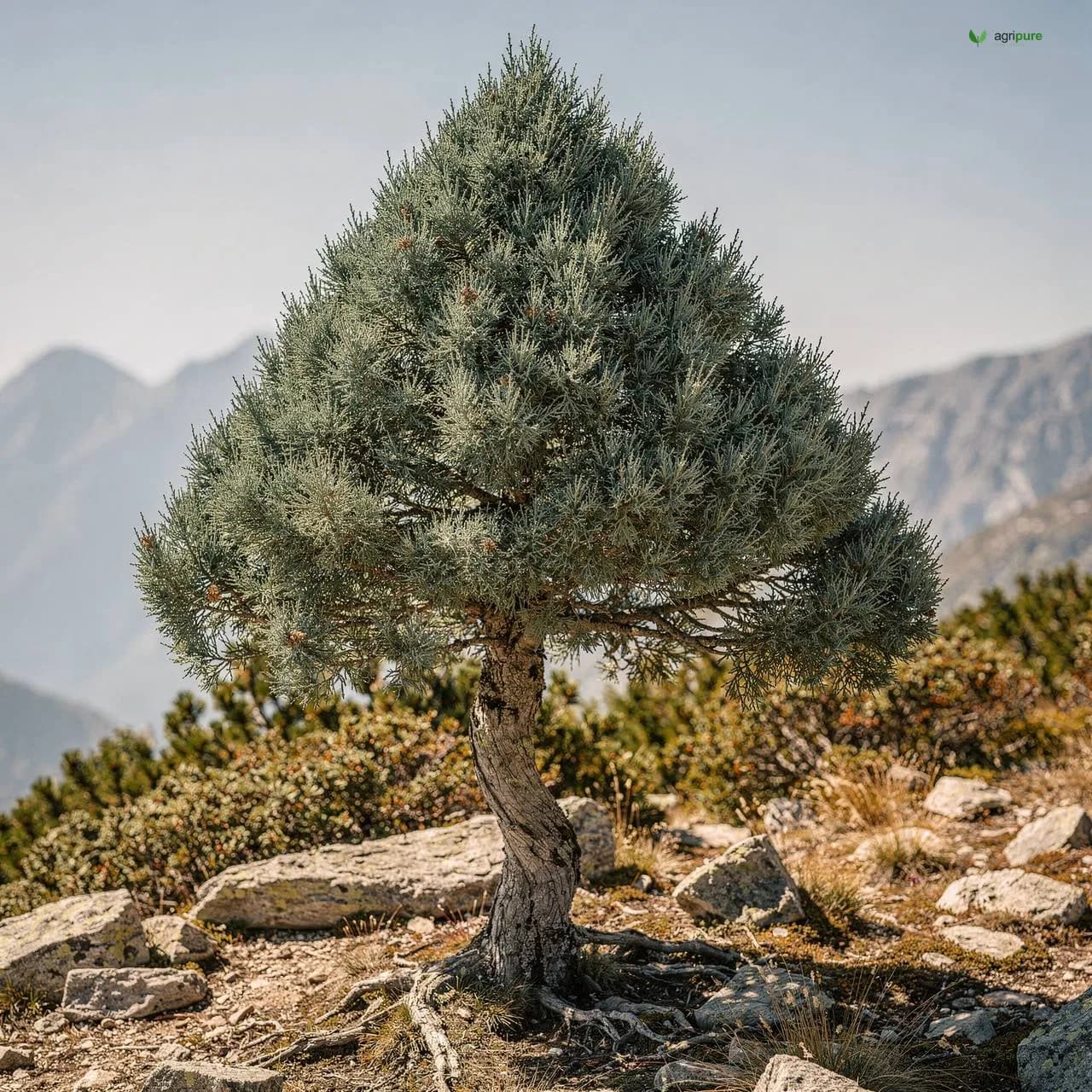
Hopbush is a multistemmed shrub or small tree, typically 1 to 3 m (3 to 10 ft) tall as a shrub but capable of reaching 7 to 9 m (23 to 30 ft) as a small tree in favorable conditions. The trunk can reach about 20 cm in diameter, with blackish to dark brown bark that becomes rough or furrowed on older stems. The evergreen leaves are simple and alternate, varying from spatulate to obovate, elliptic, or lance-shaped, usually narrow and long at roughly 3.5 to 10 cm long and 0.3 to 1.5 cm wide, with a leathery texture and often wavy or under-rolled margins. The upper leaf surfaces are frequently shiny and resinous, the “varnish” that gives the plant its common name and that helps reduce water loss in dry climates.
Growing hopbush
Hopbush can be raised from seed or cuttings, with seed produced in quantity inside the papery winged capsules. It prefers full sun but tolerates light or partial shade. It is notably adaptable to soil and site: in the wild it occurs on coastal dunes, washes, rocky slopes, canyons, hillsides, and erosion-prone gullies, often forming dense stands. It grows from sea level up to nearly 2,400 m (about 8,000 ft) and tolerates annual rainfall ranging from about 12 to 98 inches, a span that reflects its wide adaptability.
On cold tolerance, sources differ by region and form: University of Florida IFAS lists it as hardy in USDA zones 9 to 11 in Florida, while Oregon State University and desert-nursery sources report hardiness down to about USDA zone 8, tolerating roughly 10 to 15°F (about −9 to −12°C) in suitable forms. Taken together, it is reliable in roughly USDA zones 8 to 11, with local variation in cold hardiness. Detailed spacing and time-to-maturity figures are not given consistently in these sources, so they are left out rather than stated with false precision; in practice, treat hopbush as a drought-hardy dryland shrub that wants sun and free-draining ground.
Harvest and uses
Hopbush is grown for what it does rather than for a crop, and it is widely used for hedging, erosion control, and traditional medicine. Its toughness on dunes, washes, and eroding slopes makes it a practical choice for stabilizing degraded or windblown ground, where its dense stands hold the surface in place. The conspicuous, papery winged capsules are also ornamental, shifting through green, yellow-green, pink or red, and finally brown as they mature, which gives a working hedge a decorative season as well. Because it is not a food plant, there is no edible yield to harvest; the return is shelter, screening, and stabilized soil.
How to identify it
A few combined features make hopbush recognizable in the field:134
- Habit: Evergreen, multistemmed shrub or small tree, usually 1 to 3 m but sometimes a tree to 7 to 9 m, with dark, rough-barked older stems.
- Leaves: Narrow, long, leathery, alternate leaves about 3.5 to 10 cm long, with shiny resinous (varnished) upper surfaces and often wavy or under-rolled margins.
- Flowers: Small, greenish to yellow-green, and notably without true petals, borne in terminal clusters about 2.5 to 7.5 cm long; plants may be dioecious (separate male and female) or carry mixed flower types.
- Fruit: A papery, winged capsule (with two to four wings) about 1.5 cm wide, hanging and highly conspicuous, ripening green to yellow-green to pink/red to brown.
- Seed: Very small, roundish, and black.
The combination of evergreen narrow varnished leaves, winged capsules turning red and pink, and small greenish petal-less flowers is the most reliable identification cue.
Safety and cautions
Hopbush is not an edible plant and should be treated with care. Sources note that it contains saponins and describe it as containing poisonous compounds, so it should not be ingested without medical supervision. It has a long record of traditional medicinal use across its range, but that is not the same as a proven treatment, and this profile makes no claim that it treats or cures any condition. Grow it for hedging, screening, and erosion control, and do not eat any part of it or self-administer it as a remedy.
Sources
- Dodonaea viscosa — PROTA (Plant Resources of Tropical Africa)
- Dodonaea viscosa — Wikipedia
- Dodonaea viscosa: Varnish Leaf, Hopbush — University of Florida IFAS Extension
- Dodonaea viscosa — Oregon State University Landscape Plants
- Dodonaea viscosa (Hopbush) — University of Arizona Arboretum
- Plant Fact Sheet: Hopbush, Dodonaea viscosa — USDA NRCS