pioneer
Sewan Grass (Desert Grass)
gorkha / sewan
Lasiurus scindicus
Also known as Gorkha (Pakistan).
- sindh coast
- punjab plains
International hardiness
- USDA 9-11
- RHS H2
- AU: Arid / semi-arid
Where it grows — regional guide
| Zones / rating | Regional notes |
|---|---|
USDA 9-11 | No region-specific data yet |
| Zones / rating | Regional notes |
|---|---|
H2 (1 to 5C) | No region-specific data yet |
| Zones / rating | Regional notes |
|---|---|
Arid / semi-arid | No region-specific data yet |
| Zones / rating | Regional notes |
|---|---|
USDA 9-11 (USDA scale) Canada uses its own zone system; Canadian zones run roughly one lower than USDA. | No region-specific data yet |
| Zones / rating | Regional notes |
|---|---|
Sindh coast, Punjab plains | Pakistan:Premier perennial pasture grass of Thar and Cholistan dunes, binding loose desert sand and providing drought-proof camel forage. India:Native to Thar desert dunes; premier drought-hardy perennial rangeland forage, binding shifting sand and feeding desert herds. |
Grows alongside
Species that appear with Sewan Grass (Desert Grass) in 1 of our published guides — a starting list for a guild, not a planting plan.
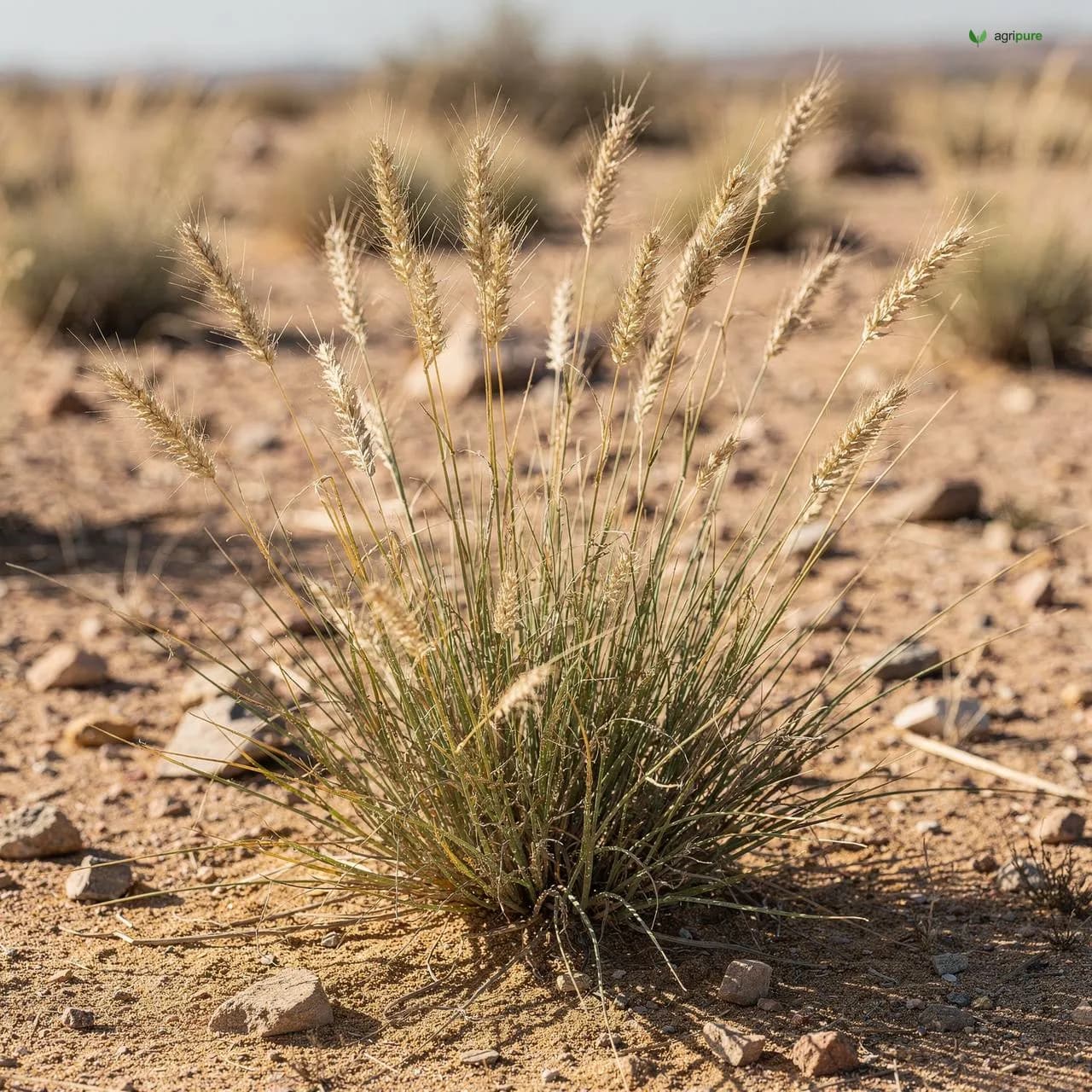
Sewan grass (Lasiurus scindicus, locally gorkha or sewan) is the premier perennial range grass of the Thar and Cholistan dunes — a tough, bushy, drought-proof bunchgrass that carries desert herds through the dry season on the sandy plains of Sindh and the Punjab desert margins. Where rainfall is too low and the sand too loose for almost any sown fodder, this is the grass that holds the dune and fills the trough.
Where it thrives
It is one of the most important grazing grasses of the Thar, sown for permanent pasture in country with less than 250 mm of rain a year and thriving where annual rainfall drops below 200 mm. A perennial that can live up to 20 years, it grows from a stout woody rhizome on alluvial and light sandy soils, on low dunes and hummocks, and tolerates drought and salt stress. It wants full sun and deep sand; it is built for exactly the ground that defeats other grasses.
Role in the system
This is a pioneer perennial for desert and dune restoration, and it is one of the most useful plants there is for that ground. Its stout woody rhizome and bushy, multi-branched habit bind shifting sand and can be used directly to stabilise desert dunes, while a closed stand cuts the wind across open sand and shelters whatever is planted in its lee. A perennial that lives up to 20 years, it provides that shelter and soil cover season after season off the same rootstock rather than needing to be re-sown. Cut or trampled growth returns as mulch on ground that carries almost no organic matter. The sequence for reclaiming a degraded dune is clear: establish sewan first to fix the sand and break the wind, then bring in hardy desert shrubs and trees behind that shelter, where they have a chance the open dune would never have given them.
Grazing value
Sewan is relished by ruminants and is a palatable pasture for camels, prized as bulk dry-season forage in the desert. Fresh growth averages about 6% crude protein on a dry-matter basis, modest in quality but invaluable in quantity where nothing else grows, and a single sward yields several tonnes of forage per hectare in a good year. Manage it with a cutting interval of about 30 days at roughly 15 cm height; it does not stand heavy continuous grazing, so rest it between uses.
Establishment
Establish it from seed, sown generously because germination on hot, dry sand can be uneven, and protect young plants from wind in the early stages while they root. Once a stand is established it is long-lived and largely self-sustaining, returning year after year off the same rootstock with the seasonal rains.
Sources
- Heuzé, V., et al. (Feedipedia). “Sewan grass (Lasiurus scindicus).” INRAE, CIRAD, AFZ & FAO.
- Yadav, M. S., et al. “Sewan Grass: A Potential Forage Grass in Arid Environments.” IntechOpen.
Sourcing notes
Source seed from established Thar or Cholistan rangeland; germination can be patchy, so sow generously and shelter seedlings from wind while they establish.