climax
Pomegranate — Ganesh
anaar — Ganesh (انار گنیش)
Punica granatum cv. Ganesh
- balochistan highlands
- punjab plains
International hardiness
- USDA 7-11
- RHS H4
- AU: Warm temperate, Mediterranean, Arid / semi-arid, Subtropical
Where it grows — regional guide
| Zones / rating | Regional notes |
|---|---|
USDA 7-11 | Grown as a shrub or small tree in USDA zones 8 to 11, and kept in a container to overwinter indoors across colder parts of the country; needs real summer heat to crop well. |
| Zones / rating | Regional notes |
|---|---|
H4 (-10 to -5C) | No region-specific data yet |
| Zones / rating | Regional notes |
|---|---|
Warm temperate, Mediterranean, Arid / semi-arid, Subtropical | No region-specific data yet |
| Zones / rating | Regional notes |
|---|---|
USDA 7-11 (USDA scale) Canada uses its own zone system; Canadian zones run roughly one lower than USDA. | No region-specific data yet |
| Zones / rating | Regional notes |
|---|---|
Balochistan highlands, Punjab plains | Pakistan:Grown in warm, sunny sites of the Punjab plains and Balochistan; it needs real summer heat to crop well and produce its sweet, soft-seeded pink arils. India:A commercial soft-seeded pomegranate grown widely across India; yields sweet pink arils on sun-drenched, well-drained semi-arid soils. |
The Ganesh pomegranate (Punica granatum cv. Ganesh) is a named fruiting selection of the common pomegranate, a deciduous-to-evergreen shrub or small tree in the loosestrife family, Lythraceae. The species itself is an ancient cultivated fruit of the dry country running from Iran into northern India, and the Ganesh cultivar is an Indian selection developed in the mid-twentieth century as a commercial variety. What sets Ganesh apart, and the reason a homesteader might seek it out specifically, is its soft seeds: the arils are easily chewed, so the fruit eats more like a dessert than a chore. It also carries a reputation for large fruit, sweet pink arils, and consistent cropping, which makes it a forgiving choice for anyone planting their first pomegranate.
Ganesh grows as a shrub or small tree that can reach roughly 3 m (about 10 ft) but is easily kept smaller with pruning, so it suits a hedge line, an orchard corner, or even a large container. It is often described as spreading and, under warm conditions, evergreen; in mild coastal climates it has been observed to hold its leaves through winter rather than going fully deciduous like many other pomegranate types. The flowers are the typical pomegranate form, orange-red and urn-shaped, borne on new growth, and the plant is grown as much for that ornamental show as for the crop.
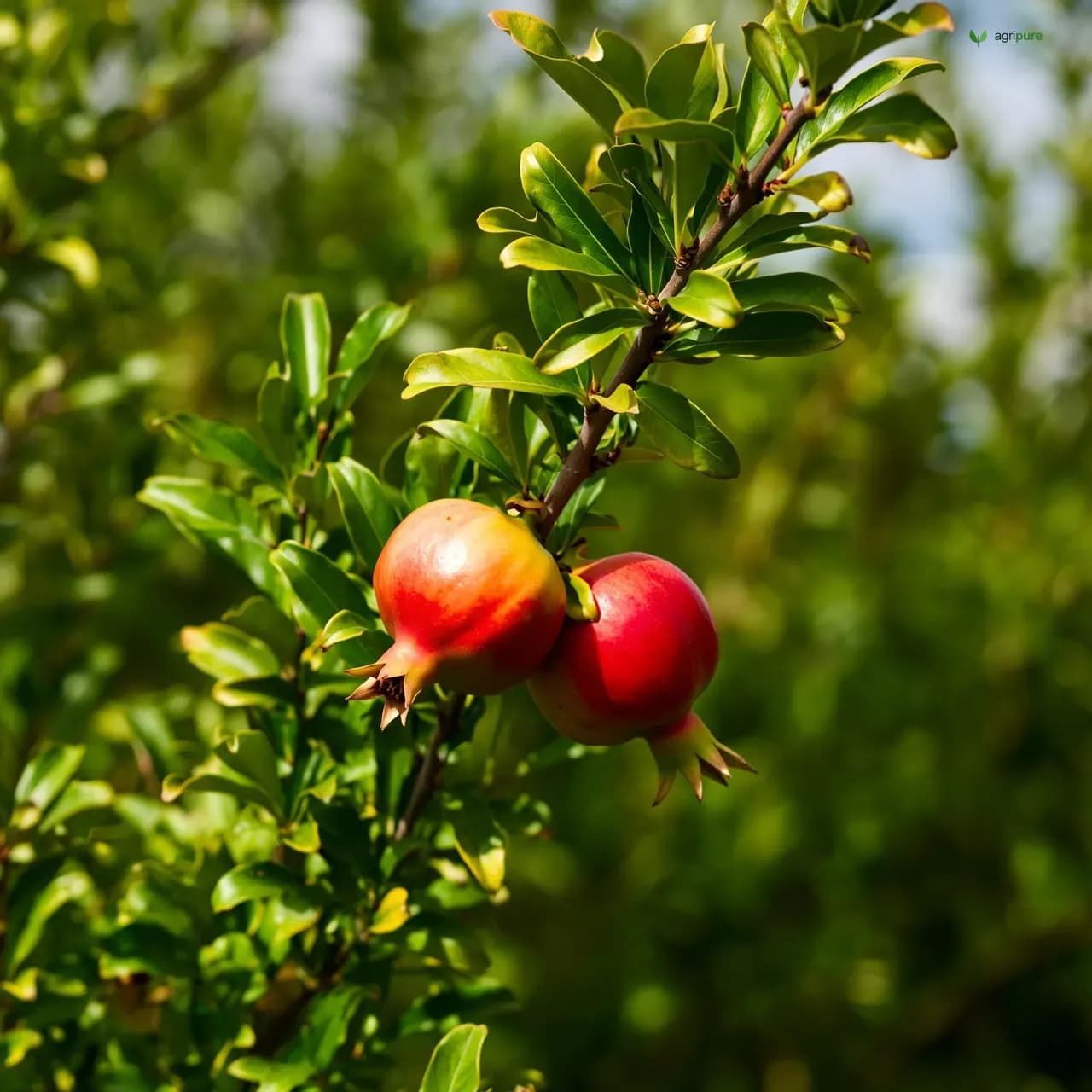
The fruit is the main event. Ganesh fruits are medium to large, roughly 5 to 12 cm across, round to slightly flattened (oblate), and finished with the characteristic crown-like calyx at the blossom end. The rind is smooth, glossy, firm, and leathery, variegated in pink, red, and yellow, with some nursery descriptions emphasising a yellow ground colour flushed with pink. Inside, the translucent pink-to-red arils are oval and very juicy, and each fruit may hold several hundred of them. The flavour is consistently called sweet with only a mild, refreshing tartness, and the soft, easily chewed seeds are the cultivar’s signature trait.
Growing Ganesh pomegranate
Ganesh is propagated to keep it true to type rather than grown from seed, which would not reproduce the soft-seed, sweet-aril character reliably. The method specifically cited for Ganesh in its main growing regions is air layering, and plants raised this way are sold as layered live plants. Air-layered stock has two practical advantages for an impatient grower: it fruits earlier than seed-grown plants, often within about 9 to 12 months of planting, and it carries the true-to-type fruit quality of the parent cultivar. If you are buying a plant, look for a layered specimen from a source you trust so you actually get the soft-seed Ganesh and not a seedling of unknown quality.
This is a warm-climate fruit. Ganesh is grown widely across India and adapts well to tropical, subtropical, and semi-arid conditions, thriving in hot, sunny sites. The ideal growing temperature is given as roughly 20 to 35 C (68 to 95 F), which tells you it wants real summer heat to crop well. For temperature hardiness, a U.S. nursery recommends planting Ganesh in the ground in **USDA zone 8 and warmer**, and notes that it also produces well in containers, which is the standard way to carry a tender fruit like this through colder-zone winters under cover. In cooler but still mild regions its fruit ripens later, becoming available from autumn through mid-winter, which points to it cropping successfully where summers are warm and winters are gentle.
Beyond heat and full sun, the precise figures a grower wants next, such as spacing, irrigation, soil pH, and pruning, are not spelled out in the sources gathered here, so they are left out rather than invented. In practice, treat Ganesh like other pomegranates: give it the sunniest, best-drained spot you have, keep it warm, and protect young plants from hard frost. In a marginal-for-zone-8 area, a container you can move under shelter is the safer route the sources recommend.
Harvest and uses
Ganesh is valued for consistent yields of soft-seeded fruit, which is the practical payoff of the cultivar. Air-layered plants reach first fruiting quickly, often inside a year of planting, so the wait from planting to a first crop is short compared with seed-grown pomegranates. In warmer-summer, mild-winter climates the fruit is available from autumn into mid-winter, giving a useful late-season harvest window.
The fruit’s main use is fresh eating and juicing. The pink-to-red arils are very juicy and sweet with mild tartness, and because the seeds are soft and easily chewed, the whole aril can be eaten without the spitting-out that puts people off harder-seeded varieties, which is exactly what makes Ganesh a popular fresh-market and home-garden cultivar. Its spreading shrub-to-small-tree habit and showy orange-red flowers also give it ornamental value, so it can earn its place as a dual-purpose plant in a homestead planting, providing both a crop and a flowering hedge or feature.
Sources
- Pomegranate Ganesh (Layered Live Plant) — Golden Hills Farm
- Ganesh Pomegranates — Specialty Produce
- Pomegranate ‘Ganesh’ — Trees of Joy Nursery
- Punica granatum ‘Ganesh’ — Mahindra Nursery