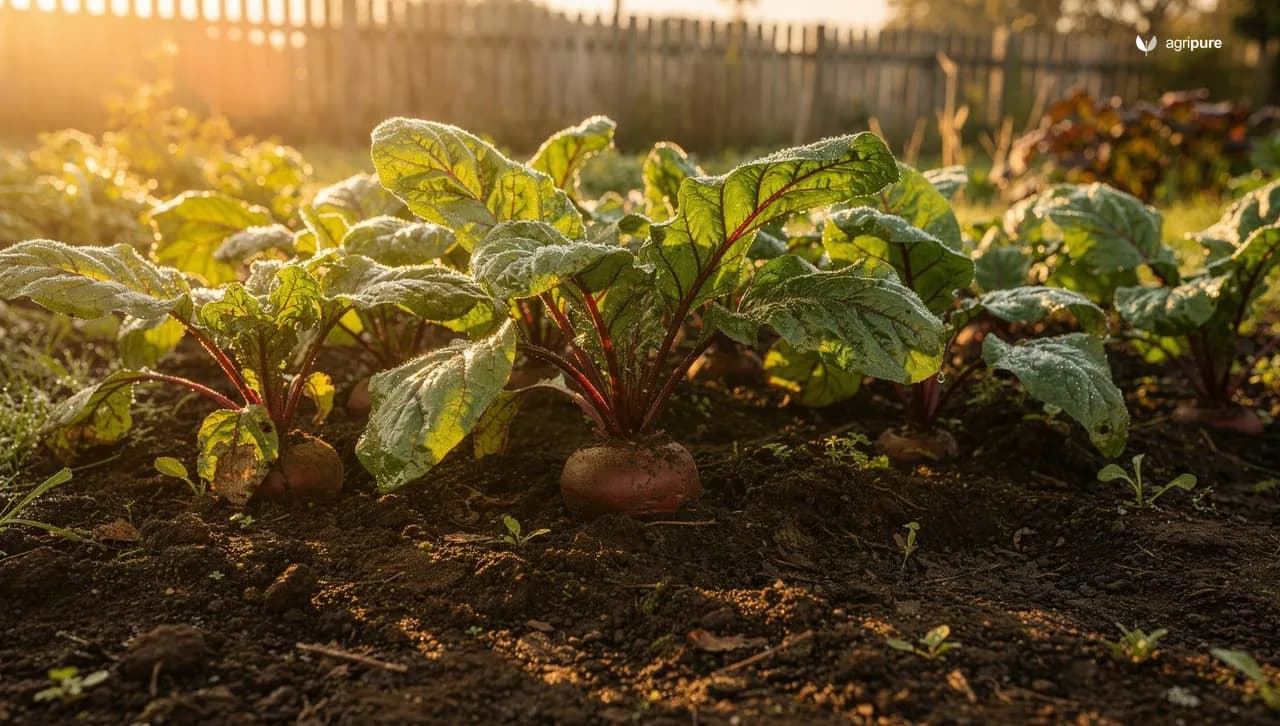
Key takeaways
Beet seeds are actually seed balls containing multiple embryos, producing seedling clusters that require thinning for healthy root development.
- Each beet “seed” is a seed ball with several embryos, so a clump of seedlings comes up from every one and thinning is not optional.
- Sow ½ inch deep, then thin in stages to a final 3 to 4 inches apart so roots have room to size up.
- Beets are a cool-season crop; sow every 3 to 4 weeks for a steady supply of tender young roots instead of one glut.
- Keep moisture even: dry spells make roots stringy and tough, while steady water grows them to 3 inches.
- You eat both crops: thinnings and tops cook like spinach, and roots pull at 1 to 3 inches, storing about 5 months cold.
Most root-crop failures start at the very first step, and with beets that step is misread. The lumpy thing you plant is not one seed; it is a dried fruit holding several embryos, so a single planting hole sends up a little tuft of 3 or 4 seedlings fighting over the same square inch. Leave that tuft alone and you get a tangle of pencil-thin roots instead of round beets.
Get the thinning right and the rest of the crop is forgiving. This seed-to-harvest guide covers why the seed cluster forces early thinning, the cool-season window and a 3-to-4-week succession, the even moisture that keeps roots tender, when to pull at 1 to 3 inches across, and the second harvest most growers walk right past: the greens.
Why one beet seed sends up a clump
The first rule of beets is that you are not planting a seed at all. University of Maryland Extension is plain about it: beet seed is actually a fruit or seed ball with several embryos. Drop one in the ground and 2 to 4 seedlings emerge in a crowded little cluster, each pulling against the others for light, water, and room. University of Wisconsin Horticulture Extension frames the consequence directly: most beet seeds produce a small cluster of seedlings, which makes thinning necessary for correct plant spacing.
That is why beets, unlike most crops, are thinned in 2 passes rather than 1. Sow about ½ inch deep and an inch apart, then come back twice as the clumps grow. Skipping the job is the single most common reason a bed of beets yields nothing but greens and stringy roots.
Thin in two passes, not one
Match the timing to the size of the seedlings. UC Integrated Pest Management lays out a 2-stage schedule that wastes nothing, because the first round of thinnings goes straight to the kitchen.
- First pass: when seedlings are 1 to 2 inches tall, snip the extras at soil level with scissors rather than pulling, so you do not disturb the roots of the keepers.
- Second pass: as the roots start to swell, thin again to about 3 to 4 inches between plants, the spacing a full-size beet needs.
- Snip, don’t yank: pulling a seedling out of a tight cluster tears the neighbour’s roots; cutting leaves them undisturbed.
Eat the first thinning: the seedlings you cut at 1 to 2 inches are baby beet greens; wash them and add them raw to a salad. Nothing from a beet bed needs to go to the compost.
A close cluster of young beet seedlings with red stems crowding up from dark soil, several seedlings emerging from a single planting spot.
Cool-season timing and a steady succession
Beets belong to the cool half of the season, and pushing them into 90°F midsummer heat is a fight you lose. University of Illinois Extension notes that although beets grow well during warm weather, the seedlings are established more easily under cool, moist conditions. In practice that means two sowing windows: early spring once soil reaches the mid-40s°F, and again in late summer for a fall crop that often tastes sweetest after a light frost.
The mistake is sowing the whole packet at once. A single planting hands you 30 beets that all size up in the same week. Illinois Extension recommends successive plantings at 3-to-4-week intervals until midsummer for a continuous supply of fresh, tender, young roots. A short row every 3 weeks keeps the harvest rolling for months, the same staggered habit that makes growing lettuce a season-long crop instead of a one-week glut.
Pick a window and stagger it
Beets germinate across a wide soil-temperature band, which is what makes both the spring and fall windows workable. UC Cooperative Extension lists a minimum of 40°F, an optimum range of 65 to 85°F, and a maximum of 95°F for beet germination, so the limiting factor in spring is usually a workable, not-frozen seedbed rather than warmth. Sow a 4-foot row, mark the date, and sow the next when the previous row shows its first true leaves.
Even moisture is what keeps roots tender
A beet’s texture is decided almost entirely by how steady its water supply was. University of Maryland Extension is direct: keep plants uniformly supplied with moisture for best performance, and water deeply and regularly during dry periods. Let a bed swing from bone-dry to soaked and the roots respond by going woody and stringy, the same fibrous texture beets develop when left to oversize in the ground. The target is roughly 1 inch of water a week, from rain or irrigation combined.
Even moisture is also what drives size. Illinois Extension records that beets enlarge rapidly to 3 inches with adequate moisture and space; the two conditions go together. A bed kept evenly damp under a layer of mulch swings far less between waterings, and a quick probe with a moisture meter takes the guesswork out of when to water rather than relying on how the surface looks.
Steady beats heavy: a deep soak twice a week grows tenderer roots than a daily splash. The roots crack and turn woody when a drought is broken by a sudden flood of water.
A beet-growing reference at a glance
The numbers that decide a beet crop are few, and most live in the seed cluster, the spacing, and the moisture. This table collects the 6 stages in order so you can sort what matters at each step and the consequence of getting it wrong.
Stage | What to do | Target | If you skip it |
|---|---|---|---|
Sow | Plant seed balls in cool soil | ½ inch deep, 1 inch apart | Poor stand in hot, dry soil |
Thin (first) | Snip extras at soil line | At 1 to 2 inches tall | Crowded, pencil-thin roots |
Thin (second) | Open final spacing | 3 to 4 inches apart | Small, misshapen beets |
Water | Keep moisture even | ~1 inch per week | Stringy, woody roots |
Succession | Sow a new short row | Every 3 to 4 weeks | One glut, then nothing |
Harvest | Pull while young | 1 to 3 inches across | Tough roots if oversized |
Read top to bottom, the whole crop is thin early, water evenly, and pull young. Skip any one of the three and the roots tell on you at the cutting board.
Harvesting: pull at 1 to 3 inches, store for months
Beets have a generous harvest window, but it does have an end. UC Integrated Pest Management reports that beets reach harvest size in 42 to 70 days depending on the variety, and should be pulled when the roots are between 1 and 3 inches wide; beets that are larger or left in the ground too long get tough. Illinois Extension is more specific on pace: about 60 days are required for a beet to reach the 1½-inch size used for cooking whole.
Most beets store far better than people expect. University of Minnesota Extension advises harvesting at 1¼ to 3 inches in diameter and storing them cold and moist without their tops, for an expected shelf-life of five months at roughly 32°F and 95% humidity. Twist or cut the leaves off about an inch above the crown so they do not pull moisture from the root, then store the roots in a perforated bag or a box of damp sand.
Freshly pulled beetroots with their leafy red-and-green tops still attached, resting on dark garden soil beside a row of growing beets in morning light.
- Pull young: a 2-inch beet is sweeter and more tender than a 4-inch one that has gone fibrous in the ground.
- Top them off: remove the greens before storage so the roots do not go soft.
- Keep them cold and damp: a root cellar or the crisper at near-freezing holds them for months.
Don’t waste the greens
The part most growers throw on the compost is the part a beet does best early. Illinois Extension is clear that the tops are cooked or served fresh as greens, and that if thinning is delayed until the plants are about 3 inches tall, those removed may be cooked as greens, similar to spinach. A single beet plant, in other words, feeds you twice: leaves on the way up and a root at the end.
Treat the tops as a deliberate crop, not a byproduct. Young leaves under 4 inches go raw into salads; older ones wilt down in a pan like chard, which is the same species. Growing a few extra plants just for cutting greens, then thinning hard for roots, gets 2 harvests off one bed, and the beetroot itself is only half the reason to plant it. If you already grow carrots in the same cool-season bed, beets slot in beside them with nearly identical thinning and spacing.
Conclusion
Growing beets well comes down to respecting one quirk and one habit. That quirk is the seed cluster: every seed ball is a crowd, so thin in 2 passes to a final 3 to 4 inches or the roots stay small. Even water is the habit: a steady inch a week keeps roots tender and growing to 3 inches. Sow into the cool season, stagger a short row every 3 to 4 weeks, eat the thinnings and tops as greens, and pull the roots at 1 to 3 inches for a crop that stores for months.
Frequently asked questions
Why do several beet seedlings come up from one seed?
Because a beet “seed” is not a single seed. It is a dried fruit, or seed ball, that contains several embryos, so 2 to 4 seedlings usually emerge in a cluster from each one. That is why thinning is required: you must reduce each clump to a single plant for the roots to size up.
How far apart should beets be thinned?
Thin in two passes. Snip the extra seedlings at soil level when they are 1 to 2 inches tall, then thin again to a final 3 to 4 inches apart as the roots begin to swell. Cutting rather than pulling avoids disturbing the roots of the plants you keep.
When should I plant beets?
Beets are a cool-season crop, so sow in early spring once the soil is workable and again in late summer for a fall harvest. Make successive plantings every 3 to 4 weeks until midsummer for a continuous supply of tender young roots rather than one large glut.
Why are my beets tough or woody?
Almost always uneven moisture or leaving them in the ground too long. A lack of water makes roots stringy and tough, so keep the bed evenly moist at about an inch a week. Pull beets at 1 to 3 inches wide, because roots larger than that get fibrous.
Can you eat beet greens?
Yes; the tops are eaten raw in salads when young or cooked like spinach when older, since beets and chard are the same species. The seedlings you remove during thinning at 1 to 2 inches tall are baby beet greens, so a single planting gives you both a leaf crop and a root crop.
References
- University of Maryland Extension — Growing Beets in a Home Garden
- University of Illinois Extension — Beet, Home Vegetable Gardening
- UC Statewide IPM Program — Cultural Tips for Growing Beets
- University of Wisconsin Horticulture Extension — Growing Carrots, Beets, Radishes, and Other Root Crops
- University of Minnesota Extension — Harvesting and Storing Home Garden Vegetables