Key takeaways

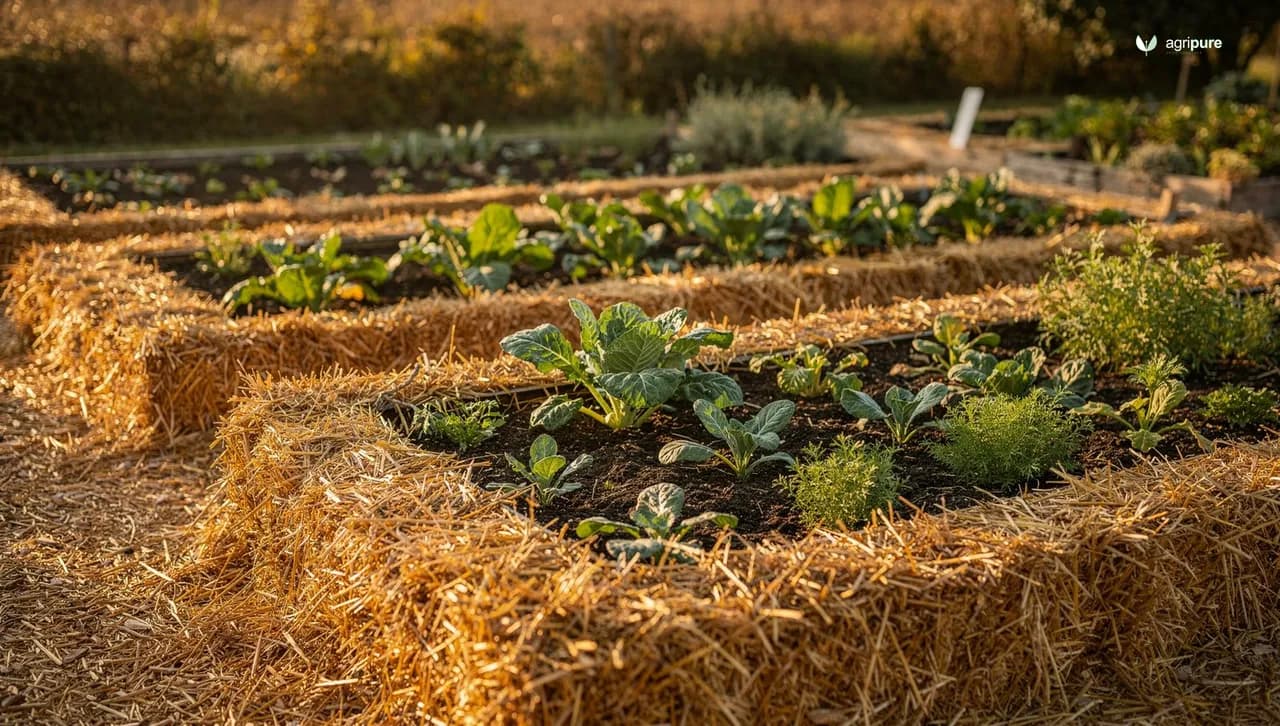
A thick layer of organic mulch, like these wood chips, is an essential component of a thriving, low-maintenance organic garden, providing nutrients, suppressing weeds, and conserving moisture.
- Organic mulch does 3 jobs at once: it suppresses weeds, holds moisture, and feeds the soil.
- Lay it 2 to 4 inches thick, with coarse wood chips at 4 to 6 inches.
- Wood chips, straw, shredded leaves, and pine needles are the workhorse organic mulches.
- Use straw free of weed and grain seeds, and shred leaves so they do not mat.
- Keep mulch a few inches back from plant stems and tree trunks.
Mulch is the closest thing organic gardening has to a free lunch. A layer of dead plant matter on the soil surface does the work of a weeder, a sprinkler, and a fertilizer all at once, and it asks almost nothing in return. It is the habit that makes a no-dig garden work, and getting it right takes 3 decisions: what, how thick, and how to apply.
What mulch actually does
Before picking a material, know the 3 jobs it does. A mulch layer blocks light so weed seeds cannot germinate, cuts evaporation so soil stays moist through a hot week, and feeds the soil as it breaks down, building structure and fungi. One 3 inch layer covers all 3 at once.
Mulch does | By |
|---|---|
Suppressing weeds | Blocking the light seeds need to sprout |
Holding moisture | Cutting surface evaporation in dry spells |
Feeding the soil | Breaking down into food for microbes and roots |
Pick your mulch
Those jobs are done best by a handful of materials. Arborist wood chips are the gold standard for paths and perennials, often free from local tree crews; straw suits vegetable beds; shredded leaves are free in fall; and pine needles are light and airy. Match the mulch to the bed and the source you can get cheaply.

Mulch | Best for and thickness |
|---|---|
Wood chips | Paths, trees, perennials, 4 to 6 inches |
Straw | Vegetable beds, 4 to 6 inches, seed-free only |
Shredded leaves | Beds and perennials, 2 to 3 inches, shred to stop matting |
Pine needles | Vegetables and perennials, 4 to 6 inches |
How thick and how to apply
Whatever you choose, depth is what makes it work, the same attention to detail a productive homestead rewards. Lay most mulches 2 to 4 inches deep, and coarse wood chips up to 4 to 6 inches, because a thin scatter blocks neither weeds nor evaporation. The 1 rule that prevents rot: keep mulch a few inches clear of plant stems and tree trunks.

Avoid the common mistakes
Those benefits flip to problems when mulch is misused. Unshredded leaves mat into a water-shedding crust, hay carries weed and grain seeds that sprout in your beds, and mulch piled against a trunk traps moisture and rots the bark. Avoid those 3 and mulch is almost foolproof.
The volcano warning: never pile mulch in a cone against a tree trunk, the look that earns the nickname mulch volcano. It holds moisture against the bark, invites rot and rodents, and slowly kills the tree. Keep a 3 to 4 inch gap around every stem and trunk, like a doughnut, not a volcano.
The takeaway
Those 3 decisions are the whole craft. Mulch is the highest-leverage habit in organic gardening: pick a material you can get cheaply, lay it 2 to 4 inches deep, and keep it off the stems. Do that and it suppresses weeds, holds water, and feeds the soil, season after season, while you do almost nothing.
Frequently asked questions
What is the best mulch for an organic vegetable garden?
Straw and shredded leaves are the top choices for vegetable beds because they break down quickly and are easy to plant through. Arborist wood chips are best for paths, trees, and perennials. The best mulch is often whichever quality material you can source cheaply and locally.
How thick should mulch be?
Lay most organic mulches 2 to 4 inches deep, and coarse wood chips up to 4 to 6 inches. A thinner layer will not block enough light to stop weeds or cut evaporation. Top it up through the season as it breaks down into the soil.
Does mulch really stop weeds?
Yes. A thick mulch layer blocks the sunlight weed seeds need to germinate, stopping most of them before they start. A few weeds will still root in the mulch itself, but they pull out easily from the loose, moist surface.
Can I use leaves as mulch?
Yes, but shred them first. Whole leaves mat into a water-shedding crust, while shredded leaves break down into excellent soil-feeding mulch. Run a mower over a pile, or use them at 2 to 3 inches deep around beds, perennials, and shrubs.
Why shouldn’t mulch touch plant stems?
Mulch piled against a stem or trunk traps moisture, invites rot and rodents, and can kill the plant, the classic mulch volcano around trees. Keep a 3 to 4 inch gap around every stem so air can reach the base.
References
- South Dakota State University Extension. “Organic Garden Mulches to Conserve Moisture and Prevent Weeds.” extension.sdstate.edu
- Colorado State University Extension. “Mulches for Home Grounds.” extension.colostate.edu
- Washington State University Extension. “Using Arborist Wood Chips as a Landscape Mulch.” pubs.extension.wsu.edu
- Iowa State University Extension. “Using Mulch in the Garden.” extension.iastate.edu
- eOrganic. “Organic Mulching Materials for Weed Management.” eorganic.org