Key takeaways
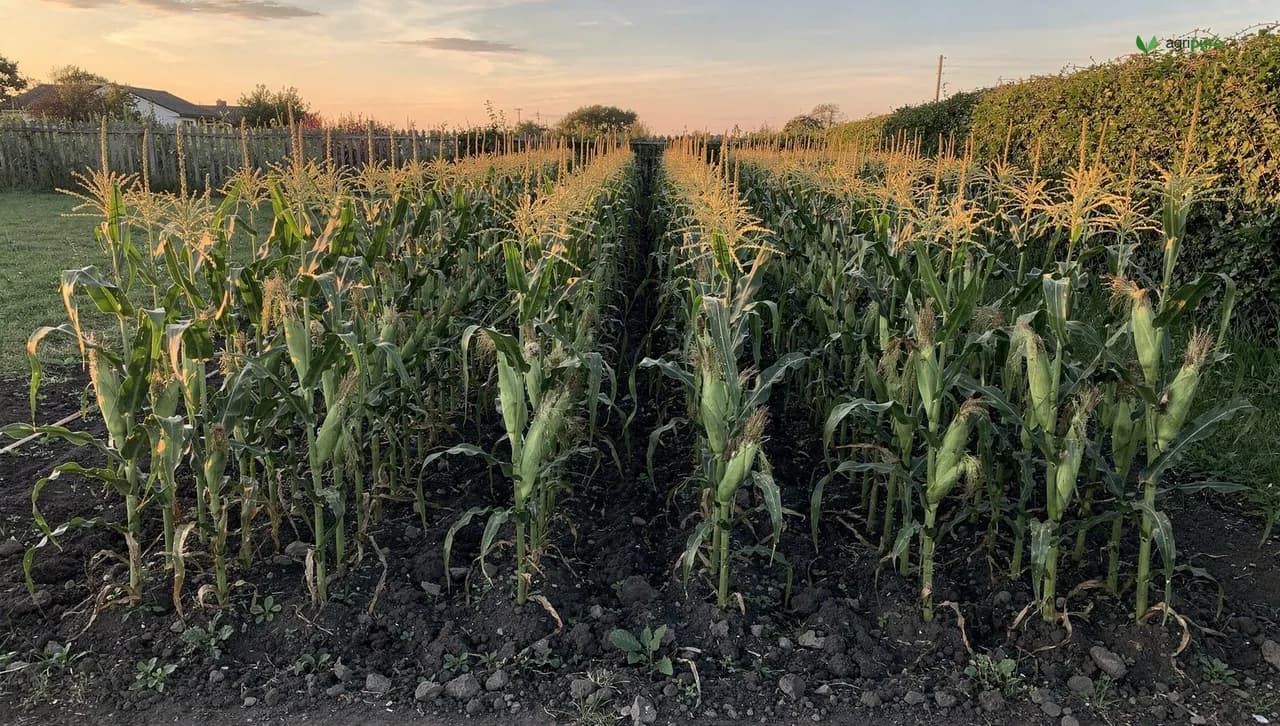
A photorealistic, top-down view of a small, thriving block of corn plants in a well-maintained organic garden. The corn stalks are green and healthy, with visible tassels at the top and silk emerging from young ears, illustrating effective block planting for wind pollination.
Optimize your corn harvest by planting in a block. This traditional method ensures pollen from the tassels effectively reaches the silks, leading to fully formed, plump kernels on every cob.
- Plant corn in a block of at least 4 short rows, never one long row, because it is wind pollinated and loose pollen blows away.
- Sow seed 1 inch deep, 8 to 12 inches apart, once soil reaches about 60°F (closer to 65°F for super-sweet types).
- Corn is a heavy nitrogen feeder; side-dress twice, at 12 to 18 inches tall and again when tassels appear.
- For a steady supply, make a new planting every time the last one shows 3 to 4 leaves, up to the first week of July.
- Pick at the milk stage, about 20 days after silks appear, when a punctured kernel runs milky.
Corn that fills out every ear comes down to one idea most first-timers miss: it is wind pollinated, so it has to be grown in a block. A single tidy row looks neat and then delivers cobs with scattered, half-empty kernels, because the pollen drifted off into the neighbour’s yard instead of landing on the silks 18 inches away.
Get the geometry right and the rest is straightforward. This is a seed-to-harvest guide to sweet corn: soil temperature, spacing and block layout, the heavy nitrogen feeding it demands, succession planting for a 6-week supply instead of one giant glut, the milk-stage test that tells you when to pick, and the Three Sisters trick that lets corn, beans, and squash share a bed.
Why corn has to be planted in a block
Corn pollen falls from the tassel at the top of the plant and has to reach the silks below, and each silk strand feeds exactly one kernel. Because that transfer rides on the wind, University of Minnesota Extension is direct: always plant corn in blocks of at least 4 rows. A single long row sheds most of its pollen sideways into open air, and you end up with ears that are gap-toothed where no silk got dusted.
University of Maryland Extension frames the same rule from the other side, advising you to plant in blocks of at least 3 to 4 short rows rather than one or two long ones to ensure good pollination and full kernel development. University of Georgia Extension puts the reason plainly: corn is wind pollinated, so set 4 or more short rows side by side instead of one long run.
Lay out the block, not the line
Picture a square, not a stripe. A patch 4 rows wide and 6 feet long pollinates far better than a single row 24 feet long, even though both hold the same number of plants. There are 3 layout habits worth keeping:
- Width over length: aim for a block at least 4 rows deep so wind-blown pollen has stalks to land on instead of escaping.
- One variety per block: super-sweet and standard types that cross-pollinate each other turn starchy, so isolate them. The practical home-garden fix is to stagger their planting so they tassel about 2 weeks apart, since the distance needed (UMD puts it at 400 yards for super-sweet types) is rarely workable in a small yard.
- Open sky overhead: corn wants full sun, so site the block clear of fences and tall crops that break the airflow it depends on.
Hand-pollinate insurance: in a small 3-by-3 block, snap off a tassel and dust it over the silks on a calm morning. Five minutes of work noticeably tightens kernel fill on the outer ears.
A close block of young sweet corn seedlings in dark garden soil, four parallel rows spaced a foot apart under bright morning light.
Soil, temperature, and getting seed up
Corn seed rots in cold, wet ground, so timing the sowing matters more than the calendar date. University of Minnesota Extension notes seeds germinate best when soil temperatures are close to 60°F, and that you should plant 1 inch deep, 8 to 12 inches apart, in rows 30 to 36 inches apart. Super-sweet (sh2) varieties have thinner seed coats and want the soil closer to 65°F before they will reliably emerge.
A cheap soil thermometer pushed 2 inches down at mid-morning settles the question better than guessing. In most of the northern US that means late May; warm-soil patience here is the difference between a 90% stand and a ragged 50% one that you have to reseed.
Spacing without crowding
Resist the urge to pack plants in. At 8 to 12 inches apart each stalk gets the light and root room to push a full ear, while tighter spacing produces tall plants with skinny, stunted cobs. Thin to the wider end of that range on poorer ground. Corn is hungry from the start, so a bed already built up with compost and balanced organic feed gives seedlings the early nitrogen they burn through fast. That is the same groundwork that pays off when you grow tomatoes in the next bed over.
Feeding corn: the heavy nitrogen habit
Corn is one of the hungriest crops in the garden, and nitrogen is what it runs out of first. The classic symptom is a V-shaped yellowing that creeps up the midrib of the lower leaves by knee height, a clear call to feed. University of Maryland Extension recommends side-dressing twice: once when plants are 12 to 18 inches high, and again when tassels appear. University of Georgia Extension is more specific on rate, calling for 2 to 3 side-dressings of ammonium nitrate at 3 to 5 lb per 100 feet of row.
You do not need synthetic nitrate to hit those numbers. A high-nitrogen organic source (blood meal at about 12% nitrogen, feather meal at 12%, or a fermented soybean meal at roughly 7% nitrogen), banded 4 inches to the side of the row and watered in, does the same job and feeds the soil life as it goes. Scratch it into the surface so it does not burn the shallow roots.
Time the second feed to the tassel: the plant pulls the most nitrogen in the 2 to 3 weeks around tasseling and silking, so a feed right as tassels emerge goes straight into filling kernels.
Succession planting for a 6-week harvest
A single sowing of one variety ripens almost all at once, leaving you with 40 cobs in 4 days and none for the rest of the month. Succession planting spreads that out. University of Illinois Extension advises making successive plantings when 3 to 4 leaves have appeared on the previous planting’s seedlings, which on warm soil lands roughly every 2 weeks, with plantings made as late as the first week of July for early varieties.
The table below sorts the two reliable ways to stretch the season, plus the trap that catches most gardeners. Both staggered methods turn one overwhelming glut into a steady 6 to 8 weeks of fresh ears.
Approach | How it works | Harvest spread | Best for |
|---|---|---|---|
Single planting, one variety | All seed sown on one day | 3 to 4 days (a glut) | Freezing or canning a batch |
Successive plantings, one variety | New block at 3 to 4 leaves on the last | 6 to 8 weeks | Fresh eating all summer |
Early, mid, and late varieties | 3 maturities sown together | 5 to 7 weeks | Short seasons, one sowing day |
Too-frequent sowing | New seed every few days | Overlaps into a glut anyway | Avoid: wastes the block |
Knowing when to pick: the milk-stage test
Corn has a short window where it is perfect, and the only reliable test is in the kernel itself. University of Illinois Extension says the milk stage occurs about 20 days after the first silk strands appear, when the kernels are smooth and plump and the juice appears milky when punctured with a thumbnail. Peel back an inch of husk near the tip, press a fingernail into a kernel, and read the liquid that comes out.
- Clear and watery: too early. Fold the husk back and give it 2 to 3 more days.
- Milky white: the milk stage, exactly when sugar peaks. Pick now.
- Thick and pasty (the dough stage): past prime. Sugars have turned to starch and the kernel skin is tough.
Iowa State University Extension pegs the window at 18 to 23 days from silk emergence to harvest, and warns it holds for only 1 or 2 days in hot weather above 85°F. The browning, dry silk at the tip is your outside cue, but the thumbnail test is what confirms it. Pick in the cool of the morning and cook or chill the ears fast, because the sugars start converting to starch the moment the cob leaves the stalk.
A single ear of sweet corn with the husk peeled back to show plump milk-stage kernels and a thumbnail pressed into one row, with browning silk at the tip.
The Three Sisters: corn, beans, and squash together
Corn’s heavy appetite and tall, open habit make it the anchor of the oldest companion-planting system in North America, traditionally grown on mounds spaced about 4 feet apart. According to the USDA National Agricultural Library, in the Three Sisters corn offers a structure for the beans to climb, while beans absorb nitrogen from the air and convert it to nitrates, fertilizing the soil for the corn and squash. The broad leaves of squash and pumpkin vines then provide living mulch that conserves water and provides weed control across the whole mound.
The point is that the three crops cover each other’s weaknesses. Maize needs the nitrogen that a climbing common bean fixes from the air, and the sprawling squash shades out the weeds that would otherwise compete for that nitrogen. To build a mound, let the corn reach 4 to 6 inches first, then sow beans at its base and squash around the edge so each gets its turn at the light.
Conclusion
Growing corn well is mostly about respecting two things it cannot fake: pollination and appetite. Plant a block at least 4 rows wide so the wind has somewhere to drop its pollen, sow into 60°F soil at 1 inch deep, feed it nitrogen twice on the way up, stagger your sowings about every 2 weeks, and pick at the milk stage 20 days after the silks show. Do that and the same plant that supported beans and squash for centuries will fill every ear in your block.
Frequently asked questions
Why is my corn not filling out with kernels?
Poor pollination is almost always the cause, and it usually traces back to planting a single long row. Corn is wind pollinated, so grow it in a block of at least 4 short rows side by side; in a small patch, shake or hand-dust the tassels over the silks to fill the gaps.
How warm does the soil need to be to plant corn?
Standard sweet corn germinates best when the soil is close to 60°F, measured 2 inches down at mid-morning. Super-sweet (sh2) varieties have thinner seed coats and want about 65°F, so wait an extra week or two on those rather than risk seed rotting in cold ground.
How often should I feed corn?
Corn is a heavy nitrogen feeder. Side-dress it twice: once when the plants are 12 to 18 inches tall and again when the tassels emerge, using a high-nitrogen source at roughly 3 to 5 pounds of equivalent per 100 feet of row, watered in beside the row.
How do I know when corn is ready to pick?
Use the milk-stage test about 20 days after the first silks appear. Peel back a little husk and press a thumbnail into a kernel: clear juice means wait, milky juice means pick now, and thick pasty juice means it has gone starchy and is past its prime.
Can I grow corn, beans, and squash together?
Yes, that is the Three Sisters system. Let the corn reach 4 to 6 inches first so it can support the bean vines, then the beans fix nitrogen for the hungry corn, and the squash leaves shade the soil as living mulch to suppress weeds and hold moisture.
References
- University of Minnesota Extension — Growing sweet corn in home gardens
- University of Maryland Extension — Growing Sweet Corn in a Home Garden
- University of Illinois Extension — Corn, Home Vegetable Gardening
- Iowa State University Extension — Harvesting Sweet Corn
- University of Georgia Extension — Growing Home Garden Sweet Corn
- USDA National Agricultural Library — The Three Sisters of Indigenous American Agriculture