Key takeaways
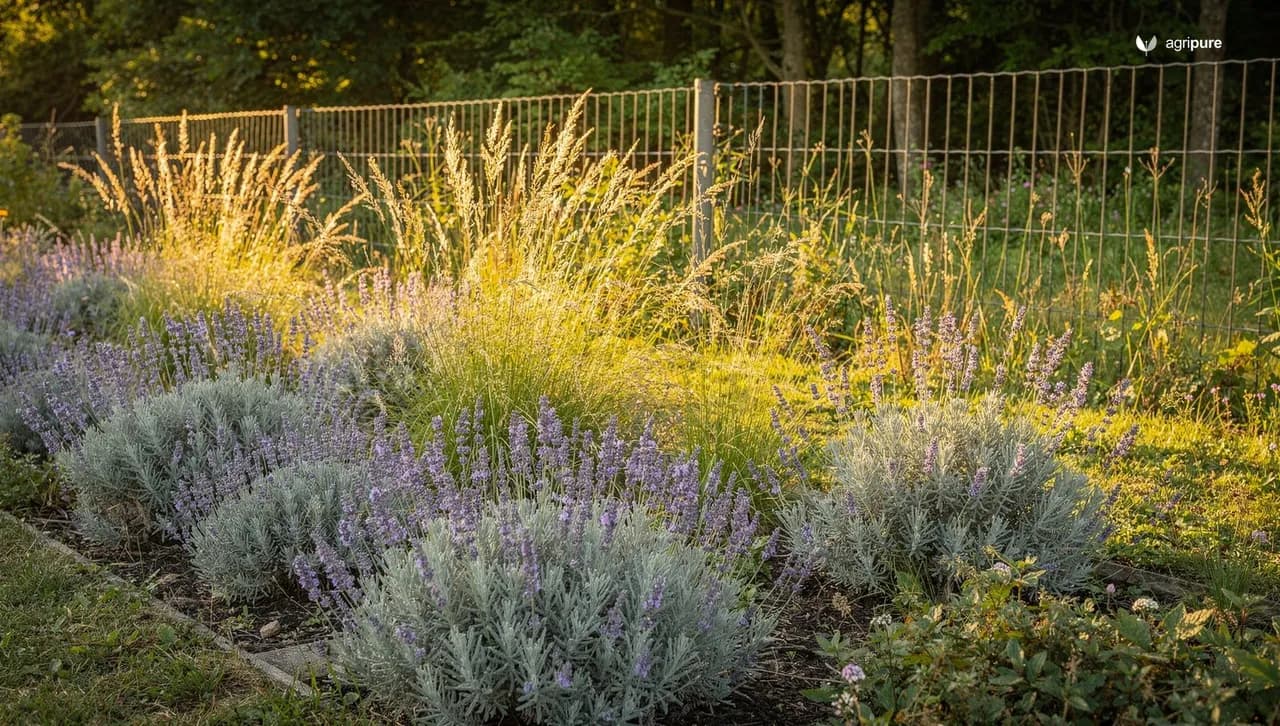
A photorealistic image showing a meticulously maintained garden border filled with various deer-resistant plants. In the foreground, vibrant lavender bushes, rosemary, and lamb's ear thrive under soft sunlight. In the background, a tall, dark wire garden fence blends into the landscape, and a lone white-tailed deer grazes calmly in the distance, away from the protected garden beds.
Even in challenging conditions, a well-planned garden with aromatic, textured, or toxic plants can deter deer, especially alongside a good fence.
- Extension ratings run from A (rarely damaged) to D (frequently severely damaged); build your beds from the A and B tiers.
- Deer avoid plants for three reasons — aromatic foliage, fuzzy or prickly texture, and toxic compounds — so group your picks around those traits.
- No plant is deer-proof: in a hard winter or a drought year, hungry deer will browse nearly anything.
- A fence has to be 7 to 8 feet tall to stop a deer that can clear 8 feet on the level and jump up to 12 feet.
- Match every pick to your USDA hardiness zone first, then layer plants, fencing, and repellents together.
Most “deer resistant” plant lists oversell the idea. A white-tailed deer eats 6 to 8 pounds of forage a day, and in a lean February it will sample plants that no list would ever flag. The honest version is this: some plants are reliably unappealing, most are merely less preferred, and a few are so toxic that deer leave them alone in almost any year.
This guide groups the dependable performers by category — perennials, shrubs, herbs, and bulbs — and explains the 3 traits that earn a plant its place. It also covers where plant choice ends and fencing or repellents have to take over, because the strongest gardens use all three at once.
Why deer skip some plants and devour others
Deer browse by smell and taste, and three plant traits put them off. Clemson Cooperative Extension sorts deterrent plants into three groups: those with a pungent aroma or bitter taste, those with toxic compounds, and those with fuzzy or prickly leaves. The University of Minnesota Extension says the same thing more plainly — plants stay unpalatable to deer because of toxicity, fragrance, or texture.
The toxic group is the most dependable. UC Integrated Pest Management notes that the plants most resistant to browsing are those that contain toxins, like oleander, which is poisonous to most mammals. Aromatic and fuzzy plants work too, just less absolutely: a hungry deer in a drought year will eat a lavender it would walk past in June.
The three traits, ranked by reliability
- Toxic compounds (most reliable): foxglove, daffodils, monkshood, and delphinium carry alkaloids deer instinctively avoid.
- Aromatic oils (very good): lavender, rosemary, sage, thyme, and catmint mask the scent of nearby plants.
- Texture (good): the felted leaves of lamb’s ear and the bristly foliage of coneflower and yarrow feel wrong in a deer’s mouth.
The honest caveat: “resistant” means seldom eaten, not never eaten. Plant the A and B tiers, but assume any single plant can be browsed in a year when deer numbers are high and natural forage is short.
Close-up of silvery lavender and catmint foliage beaded with morning dew in a garden border, their aromatic leaves catching low sunlight.
Perennials and shrubs that hold the bones of the garden
Perennials and shrubs are the framework, so this is where deer resistance matters most. Among perennials, the steady performers are catmint, yarrow, salvia, Russian sage, peony, and bearded iris — all aromatic, bitter, or coarse. For structure, boxwood, juniper, barberry, and spirea rarely get touched; boxwood’s bitter alkaloids and juniper’s prickly needles do the work year-round.
Site them by exposure and zone. Most of these run hardy across a wide band — catmint to USDA zone 3, boxwood to zone 5, lavender to zone 5 — but a plant that survives the winter still has to suit your soil and light. A 3 to 4 inch ring of mulch at planting keeps roots steady while they establish.
Reliable structural picks by role
- Front of border: catmint, lamb’s ear, and hardy geranium, all low and aromatic or fuzzy.
- Mid-border perennials: yarrow, salvia, peony, and bearded iris for height and bloom across summer.
- Evergreen and woody structure: boxwood, juniper, and barberry to carry the garden through winter, the season of heaviest browsing.
A field guide to deer resistance by category
Each category brings a different mix of the three traits. This table sorts representative plants by their main deterrent, a typical hardiness range, and the honest browsing risk so you can build a layered bed rather than betting on one species.
Category | Example plants | Main deterrent | USDA zones | Browsing risk |
|---|---|---|---|---|
Perennials | Catmint, yarrow, salvia, peony | Aroma + texture | 3-9 | Low |
Shrubs | Boxwood, juniper, barberry, spirea | Toxic + prickly | 4-9 | Low |
Herbs | Lavender, rosemary, sage, thyme | Strong aromatic oils | 5-9 | Very low |
Bulbs | Daffodil, allium, hyacinth, fritillaria | Toxic / pungent | 3-8 | Very low |
Tulip / hosta | Tulip, hosta, daylily | None (deer candy) | 3-8 | High — fence these |
The pattern across all 5 rows is clear: herbs and bulbs are the safest bets, perennials and shrubs carry low risk when you pick aromatic or toxic species, and a handful of favorites — tulips, hostas, daylilies — are deer candy that need a fence no matter what a list says.
Herbs and bulbs: the safest categories to plant
If you want the lowest-risk start, lean on aromatic herbs and toxic bulbs. The strongly scented herbs — lavender, rosemary, sage, thyme, and oregano — pull double duty: deer skip them, and planted as a border they help mask the scent of more vulnerable plants behind. The University of Minnesota Extension confirms fragrance is one of the three reasons a plant stays unpalatable.
Bulbs split sharply. Daffodils, alliums, hyacinths, and fritillaria contain compounds toxic enough that deer reliably leave them alone, which is why a spring display built on daffodils survives untouched while a tulip bed 10 feet away gets grazed to the ground. Interplant the two if you love tulips: a ring of daffodils and alliums around them buys real protection.
An aromatic herb edge that earns its keep
- Plant a scented perimeter: a single row of rosemary, lavender, or catmint along the deer-facing edge of a bed.
- Pick pungent companions: tuck marigolds and alliums among vegetables and roses deer would otherwise target.
- Lead with toxic bulbs: make daffodils and alliums the backbone of the spring garden, with tulips only inside a fenced or interplanted zone.
Zone check first: lavender and rosemary are only reliably winter-hardy to about USDA zone 5 to 7. In colder zones grow them in pots and overwinter indoors, or treat rosemary as an annual.
Where plant choice ends and fencing begins
Plant selection only goes so far, and the research is candid about it. Rutgers NJAES rates landscape plants from A, rarely damaged, to D, frequently severely damaged, and still warns that no plant is deer proof. It recommends that the more palatable C and D plants be grown only with added protection such as fencing or repellents.
Fencing is the one method that works regardless of how hungry the deer are. UC IPM calls a 7 to 8 foot fence the most effective control, because a deer that will not jump a 6-foot fence can clear an 8-foot one on level ground if chased. The University of Minnesota Extension adds that deer jump up to 12 feet high and 30 feet long and squeeze through gaps as small as 7.5 inches, so a deer fence has to be tall, tight, and unbroken.
Layering the three defenses
- Plants first: fill the open landscape with A and B tier perennials, shrubs, herbs, and bulbs to lower the overall draw.
- Fence the prizes: ring the vegetable garden, roses, and tulips with a 7 to 8 foot barrier, since those are worth the cost.
- Repellents as backup: rotate sprays on the highest-value plants, reapplying often because new growth is unprotected and most repellents fade.
On repellents: UC IPM is blunt that chemical repellents are often not very effective or long lasting. Treat them as a supplement to plant choice and fencing, not a replacement, and reapply every 2 to 4 weeks and after rain.
A layered deer-resistant garden border with daffodils and alliums in front of boxwood and juniper, edged by a tall wire deer fence at the woodland line.
Conclusion
Building a deer-resistant garden is less about a magic plant and more about stacking the odds. Pick from the A and B tiers, group your plants around aroma, toxicity, and texture, match every choice to your USDA zone, and fence the few favorites deer cannot resist. Do all 3 and you shift the math: a deer that eats 6 to 8 pounds a day will move on to an easier yard, and the one or two plants it samples in a hard winter will not break the garden.
Frequently asked questions
What are the most deer-resistant plants?
The most reliable are toxic and strongly aromatic plants: daffodils, alliums, foxglove, lavender, rosemary, sage, catmint, and boxwood. Deer avoid them for their toxins, oils, or bitter taste, though no plant is completely deer-proof in a hard winter.
Do deer-resistant plants really keep deer away?
They lower the draw but do not create a force field. Extension services rate plants from rarely to frequently damaged, and even the best picks can be browsed when deer numbers are high or natural forage is scarce, such as in drought years or late winter.
What makes a plant unappealing to deer?
Three traits: toxic compounds, strong aromatic oils, and fuzzy or prickly texture. The toxic group is the most dependable, while aromatic and textured plants are very effective in normal years but can be eaten under heavy deer pressure.
How tall does a fence need to be to stop deer?
A deer fence should be 7 to 8 feet tall. Deer normally will not jump a 6-foot fence but can clear an 8-foot one on level ground if chased, and they can jump up to 12 feet high under pressure, so taller and tighter is safer.
Are repellents enough to protect a garden?
Not on their own. Most chemical repellents are not very effective or long lasting and must be reapplied often, because new growth is unprotected. Use them as a backup to resistant plant choices and fencing on your highest-value plants.
References
- Rutgers NJAES — Landscape Plants Rated by Deer Resistance
- UC Statewide IPM Program — Deer Pest Notes
- University of Minnesota Extension — Managing Deer Damage
- Clemson Cooperative Extension — Deer-Resistant Gardening: 3 Plant Groups
- USDA Agricultural Research Service — Updated Plant Hardiness Zone Map
- Penn State Extension — Spectacular Sumacs