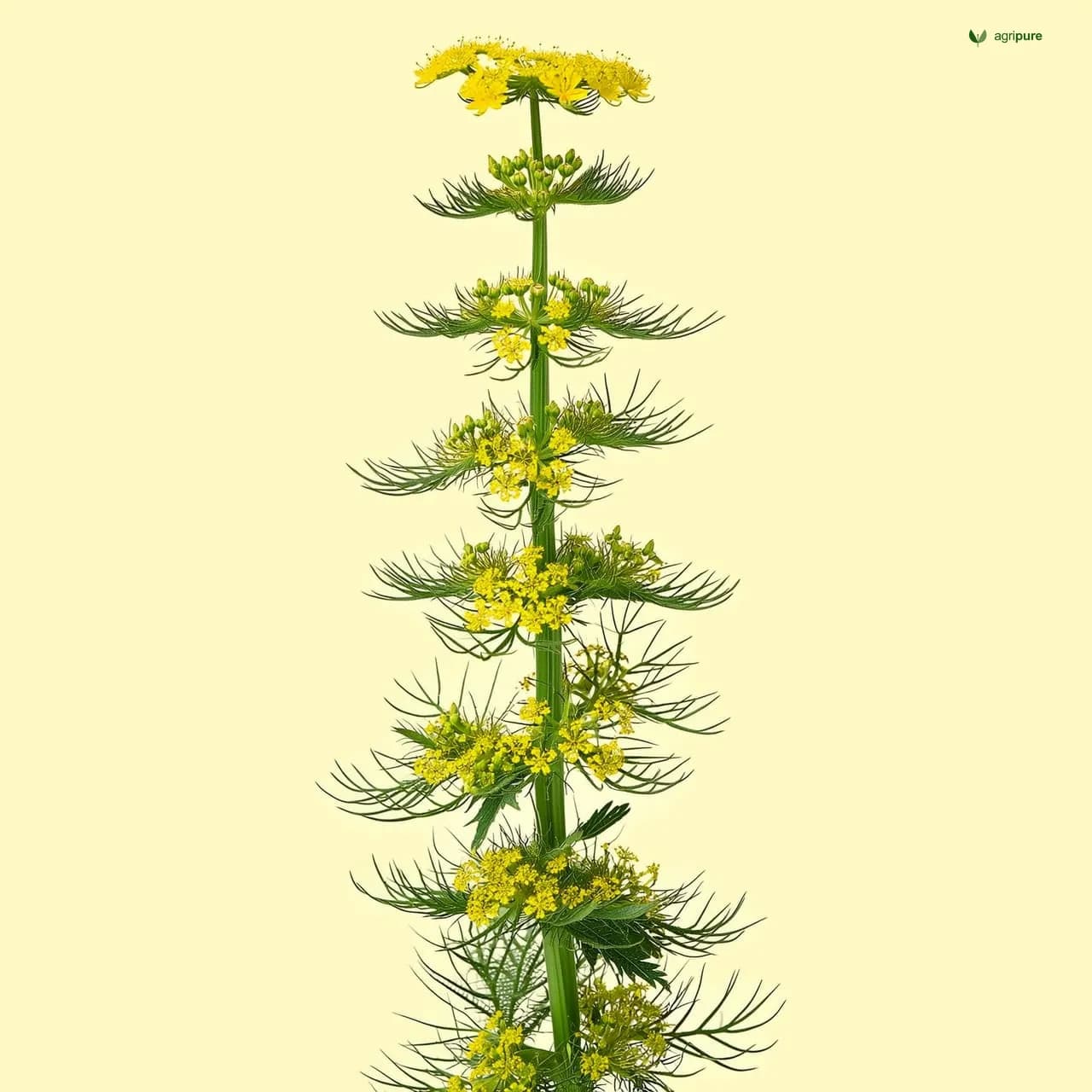
pioneer
Sunn hemp
Crotalaria juncea
Also known as San (Pakistan).
- punjab plains
- sindh coast
International hardiness
- USDA 10-12
- RHS H1c
- AU: Tropical, Subtropical
Where it grows — regional guide
| Zones / rating | Regional notes |
|---|---|
USDA 10-12 | Grown as a warm-season cover crop in summer; direct-seed into warm soil after frost to build organic matter and suppress weed growth. |
| Zones / rating | Regional notes |
|---|---|
H1c (5 to 10C) | No region-specific data yet |
| Zones / rating | Regional notes |
|---|---|
Tropical, Subtropical | Grown as a tropical and subtropical green manure; incorporate at early bloom to add organic nitrogen and improve dry sandy ground. |
| Zones / rating | Regional notes |
|---|---|
USDA 10-12 (USDA scale) Canada uses its own zone system; Canadian zones run roughly one lower than USDA. | No region-specific data yet |
| Zones / rating | Regional notes |
|---|---|
Punjab plains, Sindh coast | Pakistan:Grown across the plains as a fast warm-season green manure; chop and drop at early bloom before stems become woody to feed the soil. India:Cultivated as a quick summer green manure; turn in at early flowering to build soil nitrogen and suppress nematodes. |
Grows alongside
Species that appear with Sunn hemp in 11 of our published guides — a starting list for a guild, not a planting plan.
Sunn hemp (Crotalaria juncea) is a fast, upright annual legume grown not for its fruit but for what it does to the soil: in a single warm season it fixes nitrogen, smothers weeds, and produces a wall of green biomass you can chop and drop. For a Punjab or Sindh grower starting a new food forest, it is one of the cheapest ways to turn tired ground into a planting bed before the trees go in.
Where it thrives
Sunn hemp is built for the warm Punjab plains and the Sindh coast. It germinates and grows best when soil is above about 20°C, and it is genuinely drought-hardy — it can produce on as little as 200 mm of annual rainfall, though irrigation lifts the biomass sharply. An erect annual legume reaching 1–3 m, it thrives even in poor, sandy soils, wants good drainage and will not tolerate standing water, and is killed by frost — so it is a crop for the hot months, sown after the cold has passed.
Role in the system
Sunn hemp is the textbook pioneer of a syntropic planting. Sown densely as a pioneer-stratum cover, it occupies bare ground first, suppresses weeds through sheer canopy density, and fixes roughly 50–60 kg of nitrogen per hectare within 60–90 days through its Rhizobium root nodules. As a green manure it is a powerful biomass pump: ploughed in or cut for chop-and-drop mulch at flowering, its succulent, nitrogen-rich tops break down fast to feed the soil and the slower trees planted alongside it. In a young guild it is the support species that buys time — protecting soil, building organic matter and feeding the secondary stratum — then yields its place to the woody crop trees it nursed. Its residue also suppresses plant-parasitic nematodes, an extra service in vegetable rotations.
Growing it
Broadcast or drill seed at a generous rate once soil is warm, sowing shallow (an inch or less). Two decisions decide the payoff. First, timing of the cut: chop at early flowering, around 60–90 days, when the plant is still soft — wait past 90 days and the stems turn woody and hard to incorporate or mow. Second, what you do with it: lay it as surface mulch for soil cover and slow nitrogen release, or turn it in as green manure where you need a faster fertility hit. A sharp bypass pruner makes the repeated cut-and-drop manageable on a small block.
What you get
The harvest here is fertility, not food. Expect green biomass on the order of 18–27 t/ha in good conditions, a nitrogen credit of 50–60 kg/ha, weed suppression, and improved soil structure and organic matter — all in one short season. The young tops can also be cut for protein-rich cattle fodder before flowering. The economic angle is what it saves: fewer bagged-fertiliser rupees and a faster start for the cash trees that follow.
Sourcing notes
Start with quality sunn hemp cover seed, and pair it with other pioneers in the rotation — our twelve-weeks-with-sesbania trial shows how these legumes stack, while managing the understorey in the secondary stage covers what to plant once the pioneers have done their work.
Sources
- Feedipedia (FAO-INRAE-CIRAD). “Sunn hemp (Crotalaria juncea).” Feedipedia.
- NC State Extension. “Crotalaria juncea (Sunn Hemp).” NC State Extension Gardener Plant Toolbox.
- Feedipedia (FAO-INRAE-CIRAD). “Sunn hemp (Crotalaria juncea) — forage, biomass and green manure.” Feedipedia.
- University of Florida IFAS. “Questions and Answers for Using Sunn Hemp (Crotalaria juncea L.) as a Green Manure Cover Crop.” UF/IFAS Extension.