Key takeaways
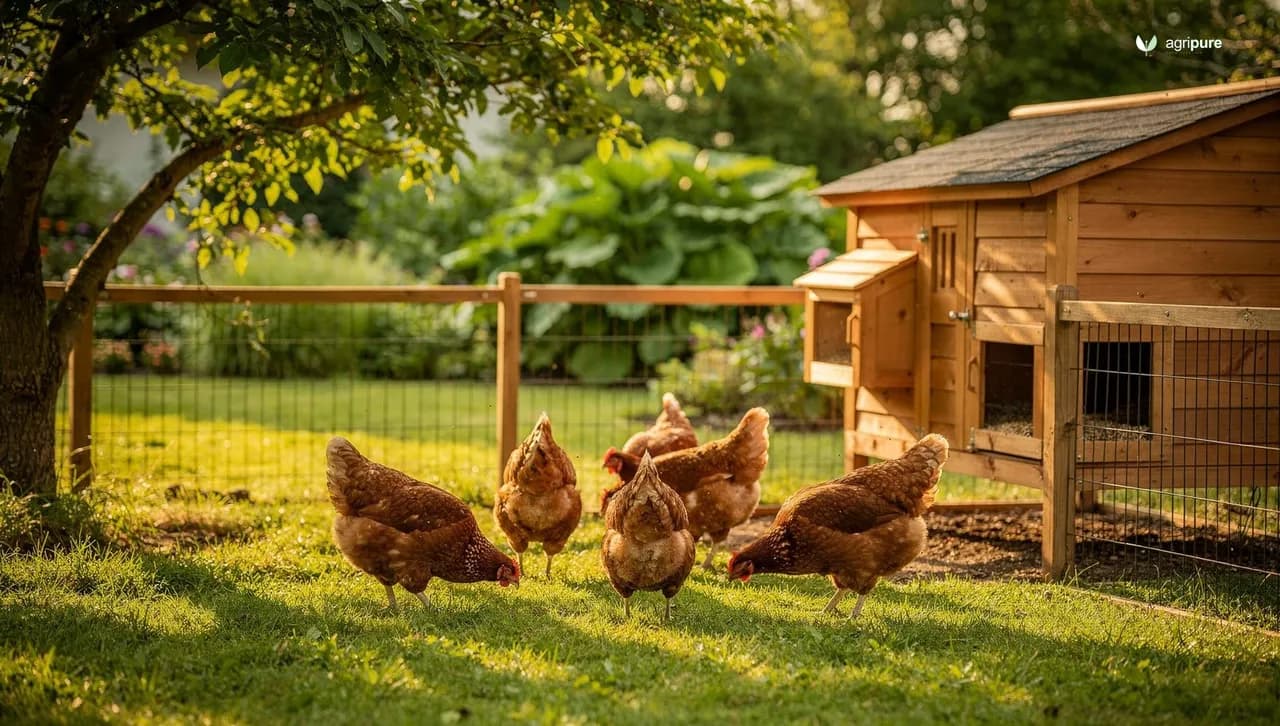
Five healthy laying hens of various breeds, including a red hen, a white hen, and a black and white striped hen, are scattered across a vigorous green lawn, pecking at the ground with a wooden chicken coop visible in the soft background. The scene suggests a thriving, small backyard chicken flock.
A happy, healthy backyard flock enjoys foraging on fresh grass. Starting with 4 to 6 hens is ideal for covering family egg needs and building a resilient small flock.
- Start with 4 to 6 hens: 3 is the social minimum, and 4 to 6 covers a family’s eggs.
- Give each hen about 1.5 square feet in the coop and 5 to 10 square feet in the run.
- Provide one nest box per 4 hens, with a minimum of 4 boxes.
- Hybrids lay 200 to 260 eggs a year; heritage breeds lay 100 to 180.
- Pullets start laying around 20 weeks on a 16 to 18 percent protein feed.
Chickens are the gateway livestock of the homestead, and for good reason. A flock of 4 hens turns scraps, bugs, and a little feed into roughly a dozen eggs a week, plus manure for the garden, on a patch of yard smaller than a parking space. They are the natural next step once a garden is running, the layer that homesteading guides reach for first. Here is how to start a healthy laying flock without the rookie mistakes.
How many hens to start with
Begin with the number, because everything else sizes off it. Three hens is the social minimum, since chickens are flock birds and a lone hen frets, but 4 to 6 is the real sweet spot: it covers a family of 4’s eggs and leaves a cushion if you lose a bird. Most cities that allow hens cap a backyard flock at 4 to 6 anyway.
Backyard flock numbers: 3 hens is the social minimum, 4 to 6 suits a family, and you need 1 nest box for every 4 birds
Space and the coop
That flock size sets your build. Plan about 1.5 square feet of coop per hen and 5 to 10 square feet of run, so 6 birds want roughly 9 square feet of housing and a 50 to 60 square foot run. Crowding is the root of most pecking and disease, so round up. Add 1 nest box for every 4 hens, with a floor of 4 boxes.
A tidy raised wooden chicken coop with an attached wire run and external nesting boxes in a green backyard
Site the coop on well-drained ground within a short walk of the house, the same place-it-close logic that makes daily chores quick. A small flock fits even a city lot, as our urban homesteading guide shows.
What to expect for eggs
That housing pays you back in eggs, but the rate depends on the breed. Hybrid layers give 200 to 260 eggs a year; heritage breeds lay a more modest 100 to 180 but often live and forage better. Pullets start laying around 20 weeks, and output dips each winter as daylight falls below the 14 to 16 hours hens need for peak laying.
A basket of fresh brown, white, and blue-green eggs resting on straw beside an open nesting box
Breed type | Eggs per year |
|---|---|
Hybrid layers (e.g. ISA Brown) | 200 to 260 |
Heritage breeds (e.g. Orpington) | 100 to 180 |
Feeding and daily care
Those numbers only hold if feeding is right. Layers over 18 weeks need a 16 to 18 percent protein layer ration, with grit to grind food and free-choice oyster shell for strong shells. Clean water daily is non-negotiable, since a hen off water stops laying within 1 day.
Five daily and weekly chicken chores: fresh water daily, layer feed with grit and oyster shell, collect eggs, refresh bedding, and lock up at dusk
The two-minute morning: let the flock out, top up water, scatter feed, and collect any eggs. That is the whole daily job for 6 hens. The deeper tasks, fresh bedding and a coop scrub, come around once a week and once a season.
Check the rules before you build
That simple routine still starts with paperwork. Most municipalities cap flocks at 4 to 6 hens, ban roosters for noise, and require the coop to sit a set distance from property lines. Read your local ordinance and any HOA bylaws first, because a coop built in the wrong spot is an expensive thing to move.
Check before you buy | Typical rule |
|---|---|
Flock size | Often capped at 4 to 6 hens |
Roosters | Usually banned in residential zones |
Coop setback | A set distance from fences and homes |
The takeaway
Those rules aside, hens are the easiest livestock win on a homestead. Start with4 to 6 birds, give each 1.5 square feet of coop, feed a proper layer ration, and you will gather most of a household’s eggs from a corner of the yard. Get the flock running, then let the garden and the compost feed off it.
Frequently asked questions
How many backyard chickens should a beginner start with?
Four to six hens is the sweet spot. Three is the social minimum, since chickens are flock birds, and 4 to 6 covers a family of four’s eggs while leaving a margin if you lose one. Many cities cap residential flocks at 4 to 6 anyway.
How much space do backyard chickens need?
Allow about 1.5 square feet of coop space per hen and 5 to 10 square feet of run. Six hens want roughly 9 square feet of housing and a 50 to 60 square foot run. Crowding causes most pecking and disease, so round up.
How many eggs will backyard hens lay?
Hybrid layers give 200 to 260 eggs a year; heritage breeds lay 100 to 180. Pullets begin around 20 weeks, and laying slows each winter when daylight drops below the 14 to 16 hours hens need for peak production.
What do backyard chickens eat?
A complete layer feed of 16 to 18 percent protein, plus grit to grind food and free-choice oyster shell for shell strength. They will supplement with kitchen scraps, garden greens, and bugs, but the balanced ration should be the base.
Do I need a rooster for hens to lay eggs?
No. Hens lay with or without a rooster; you only need one to fertilize eggs for hatching. Most residential zones ban roosters for noise, so a hen-only flock is both legal and quieter.
References
- Penn State Extension. “Management Requirements for Laying Flocks.” extension.psu.edu
- Farmers’ Almanac. “Raising Backyard Chickens for Beginners.” farmersalmanac.com
- Nutrena. “Egg Production in Backyard Chickens.” nutrenaworld.com
- The Chicken Coop Company. “How Many Chickens Should I Get?” chickencoopcompany.com
- PetMD. “Backyard Chickens 101.” petmd.com