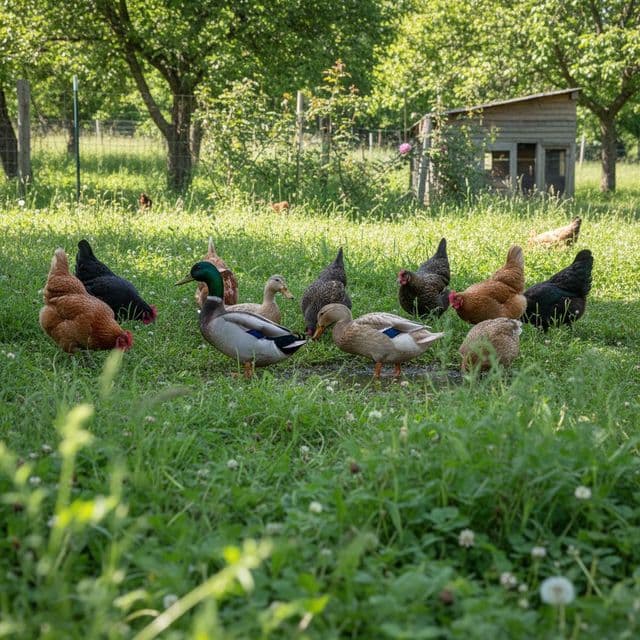
Raising ducks vs chickens: comparison for homesteaders
Comparing ducks and chickens for eggs, meat, hardiness, feed costs, and pest control to determine which poultry species fits your homestead.
Tag
20 articles in this tag on agripure.
Comparing ducks and chickens for eggs, meat, hardiness, feed costs, and pest control to determine which poultry species fits your homestead.
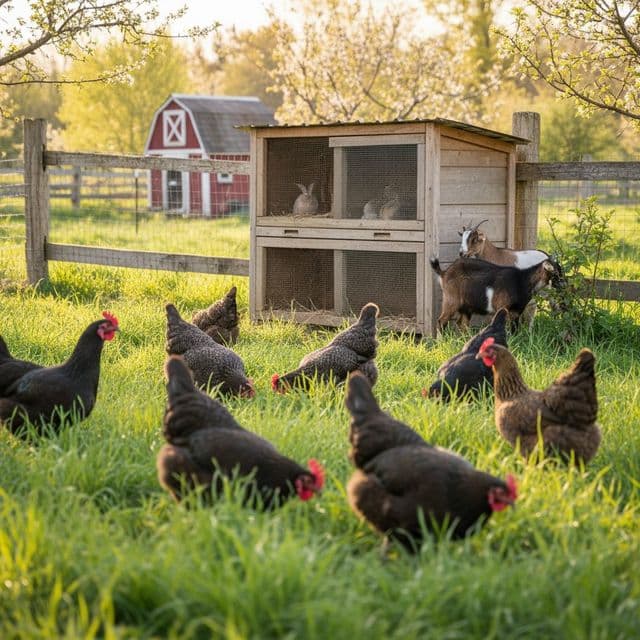
The best animals for homesteading ranked by space needs, feed efficiency, labor, and utility, from chickens and rabbits to ducks and dairy goats.
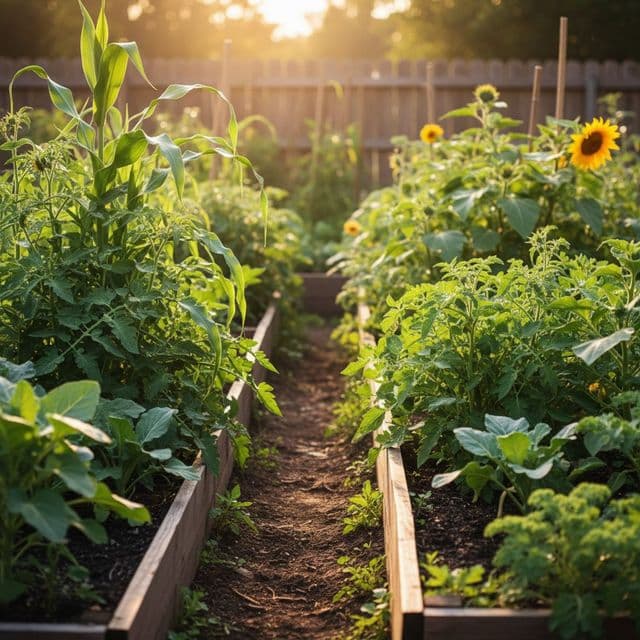
Learn safe composting of chicken manure for fertile soil. Achieve the ideal 30:1 C:N ratio, monitor temperatures, and apply compost in your Midwest garden.

Learn to safely compost chicken, rabbit, cow, and horse manure. Balance C:N ratios, monitor temperatures, and prevent pathogens & weed seeds for nutrient-rich soil.
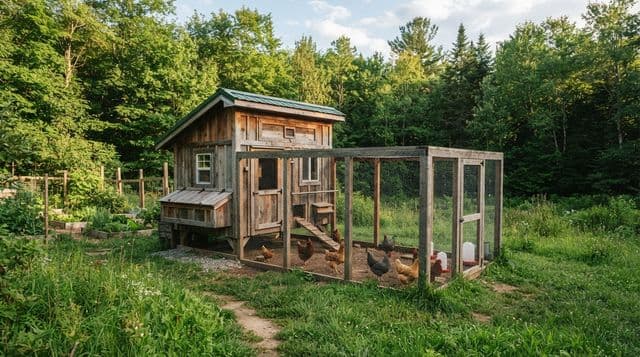
Size a coop for 10 hens, weigh wood vs plastic, and rat-proof the run: space, ventilation, nesting boxes, and predator and rodent control.
Ferment chicken feed in 2-3 days to stretch the bag, and learn why homemade rations are hard to balance. Method, real feed-savings numbers, scratch and fodder.

What to feed chickens: the 90/10 treat rule, safe kitchen scraps, foods to never feed (avocado, chocolate, beans, green potato), plus calcium, winter, and grit.
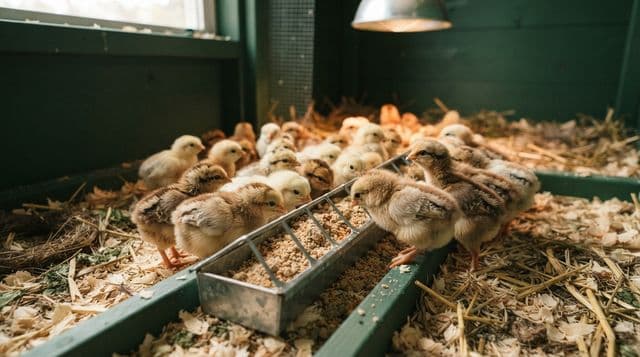
Chick starter feed explained: the 18-20% protein rule, medicated vs non-medicated (amprolium), how long to feed it, grit, what not to feed, and ducklings.

Pick the right chicken feeder and feed by life stage — starter, grower, layer, broiler, medicated, organic — plus how much to feed per bird and no-waste feeders.

Backyard chicken FAQs, answered: is it legal, do you need a rooster, cost to start and per month, smell, noise, predators, winter, lifespan, and vacation care.
Start a chicken farm the numerate way: decide eggs vs meat, clear zoning, pick production breeds, size housing and feed, and sell legally. Extension-backed.
The best chicken breeds for eggs, meat, dual-purpose, cold climates, and beginners: egg counts, weights, and temperament from extension and the Livestock Conservancy.
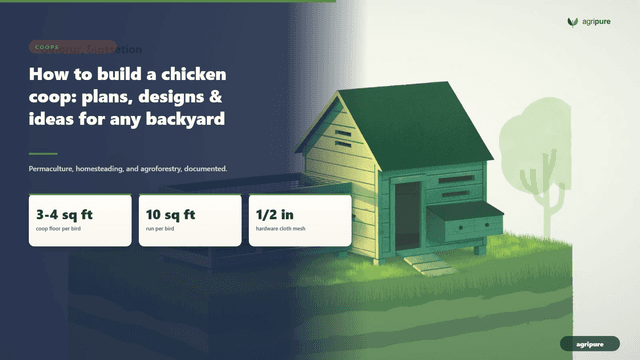
Chicken coop plans, designs, and ideas for any backyard – real space-per-bird numbers, ventilation, nesting boxes, roosts, predator-proofing, and winter prep.
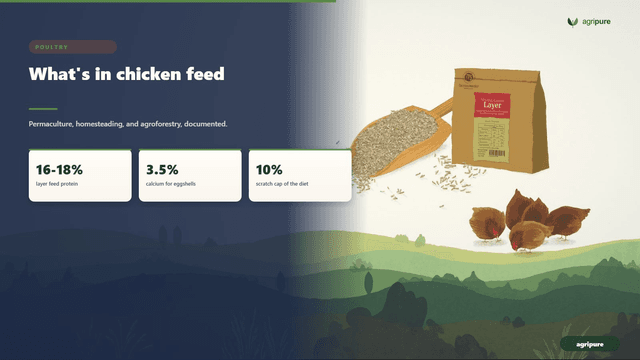
Read a chicken-feed label like a nutritionist: protein, calcium, grains, soy-free and scratch-and-peck-style mixes, and whether buying in bulk pays off.
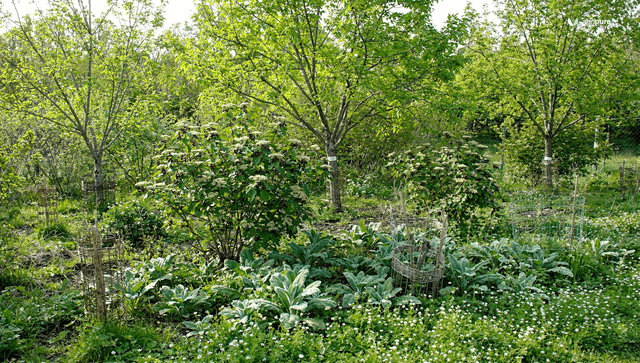
How to design a perennial chicken food forest in temperate North America – species, paddock rotation, toxic plants to avoid, and the honest feed-offset math.
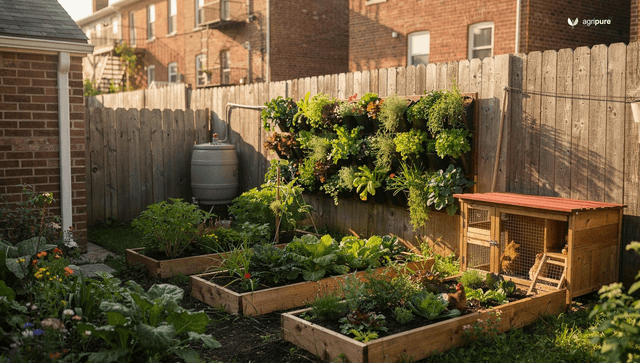
Urban homesteading is growing food, preserving it, and cutting what you buy, all on a city lot. Here is what fits a small space and how to start.
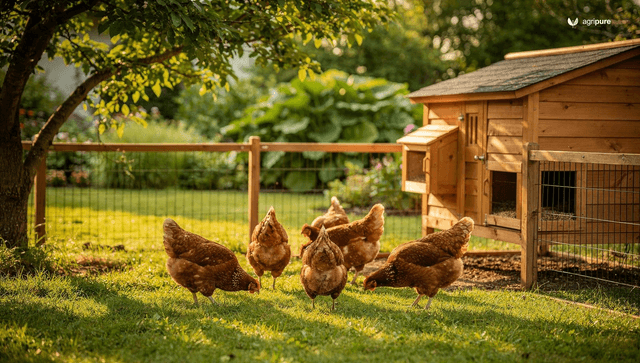
How many hens to keep, how much space and feed they need, and how many eggs to expect. A beginner’s guide to a healthy backyard laying flock.
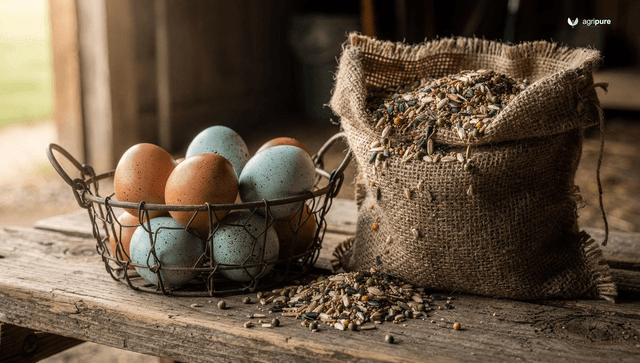
What separates a premium farm egg from a supermarket egg – breed selection, soy-free feed, pasture-driven yolk color, and an honest cost-per-dozen worksheet.
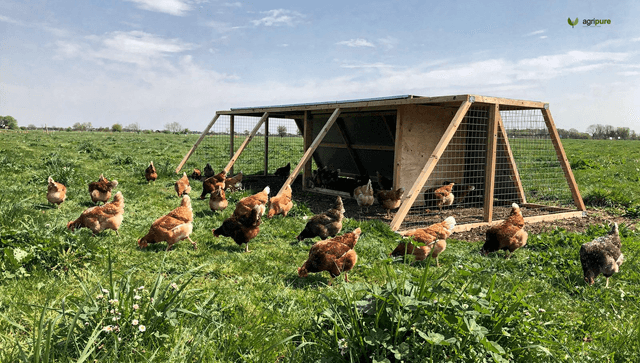
Pastured chickens are healthier and improve your land, but the system needs a plan. Here is how to use chicken tractors, rotate paddocks, and what feed really costs.
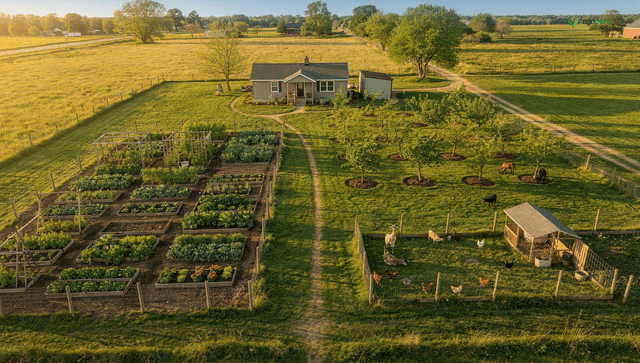
One acre can grow most of a household’s vegetables and keep a small flock, but not feed a family of four. Here is how to split it, stock it, and lay it out.