Key takeaways

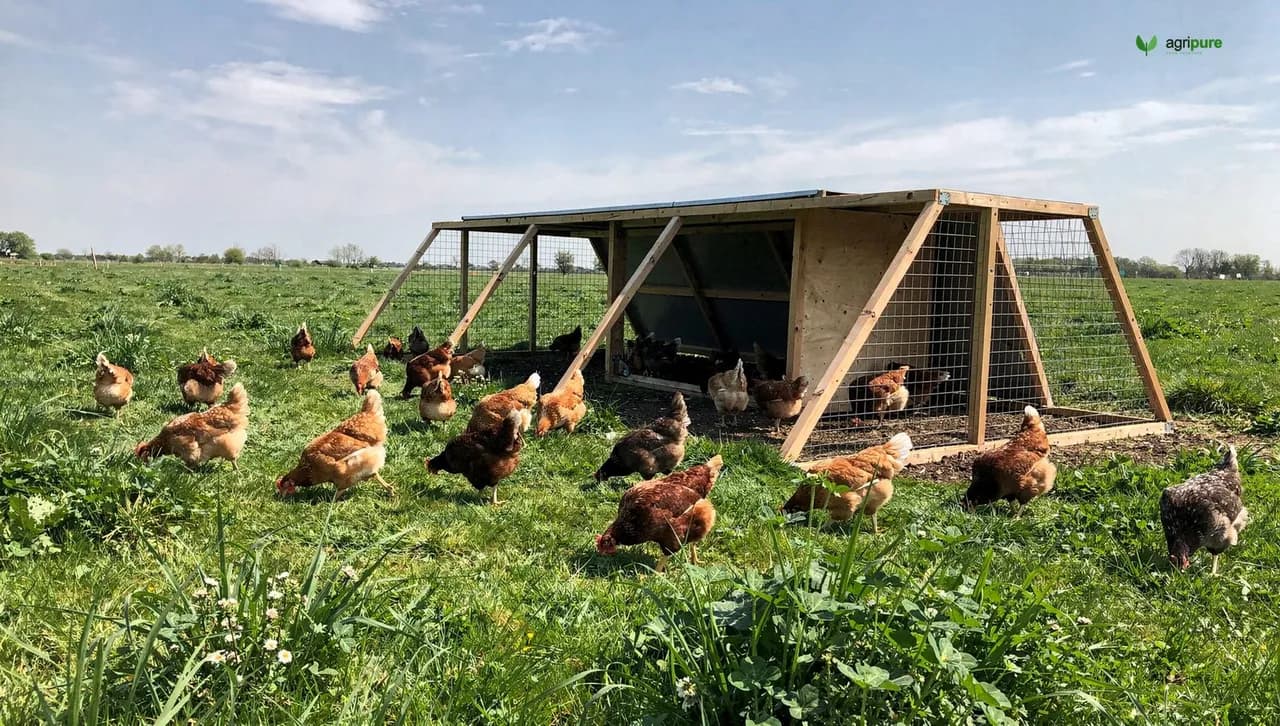
A mobile chicken tractor lets hens forage on fresh pasture, closer to their natural diet, while spreading manure evenly across the soil.
- Pastured chickens are healthier, with fewer parasites and better eggs, while improving the land.
- A chicken tractor is a floorless portable coop moved to fresh grass regularly.
- Rotate birds every 5 to 7 days, giving 10 to 15 square feet per bird.
- Keep pasture between 2 and 8 inches tall for the best foraging.
- Pastured birds eat more feed, not less; forage is only about 4 percent of their diet.
Where a backyard flock guide covers the basics of keeping a few hens, raising pastured chickens is about the system around them: moving birds across grass so they forage, fertilize, and stay healthy. It borrows the same logic as rotational grazing, scaled to poultry, and it rewards the keeper who keeps the flock moving. It also comes with 1 honest catch on feed.
Why pasture beats a static run
The case for pasture is health, for the birds and the ground. Moving chickens to fresh grass mimics their natural foraging, which means fewer parasites, better health, and richer eggs, while their manure spreads evenly instead of burning 1 patch, feeding living soil across the field. A stationary run of bare, eroded soil is the opposite: it shuts down the very biology pasture builds.


Pastured | Static run |
|---|---|
Fresh forage and bugs daily | The same bare, picked-over ground |
Manure spread across the field | Manure piled and burning one spot |
Living, covered soil | Eroded, biologically dead dirt |
The chicken tractor
The tool that makes it practical is the chicken tractor, a floorless, portable coop you slide to fresh grass. The classic Joel Salatin design is about 10 by 12 feet and holds roughly 75 broilers, while a smaller 8 by 12 shelter suits 8 to 10 layers. Move it daily for meat birds so they always sit on clean grass.

Tractor size | Holds |
|---|---|
10 x 12 ft (Salatin style) | About 75 broilers, moved daily |
8 x 12 ft | 8 to 10 layers |
Set a rotation that fits the grass
Tractor or fenced paddocks, the key is rotation timed to the grass. Move birds every 5 to 7 days, give each bird 10 to 15 square feet, and aim to graze pasture that is between 2 and 8 inches tall, never bare, never rank. Watch the grass, not just the calendar, and move sooner in a wet, fast-growing week.

The honest truth about feed
Here is the catch nobody markets: pastured birds eat more feed, not less. Walking, foraging, and holding body heat outdoors burn energy, and forage makes up only about 3.6 percent of a grass-fed bird’s diet, rising to roughly 5 percent on legume pasture. Pasture buys health and flavor, not free feed, so budget for a full ration either way.
The feed-budget rule: never plan pasture as a way to skip the feed bill. Forage is a supplement worth a few percent of the diet, plus real gains in health and egg quality, but your birds still need a complete ration. Pasture pays you in healthier animals and better eggs, not in cheaper feed.
The takeaway
Raising pastured chickens is a system, not just a setting. Keep the flock moving across grass in a tractor or rotation, every 5 to 7 days on pasture 2 to 8 inches tall, and you get healthier birds, richer eggs, and better soil. Just budget for the feed, and let the pasture pay you back in quality.
Frequently asked questions
What is a chicken tractor?
A chicken tractor is a floorless, portable coop you move across pasture so the flock always has fresh grass, bugs, and clean ground. The classic Joel Salatin design is about 10 by 12 feet and holds roughly 75 broilers; smaller versions suit a handful of layers.
How often should I move pastured chickens?
Rotate them every 5 to 7 days for fenced paddocks, or daily for meat birds in a tractor, giving each bird about 10 to 15 square feet. Time the moves to the grass: graze pasture between 2 and 8 inches tall and move sooner when growth is fast.
Are pastured chickens healthier?
Generally yes. Moving birds onto fresh grass reduces parasites, improves overall health, and produces richer eggs, while spreading manure evenly and keeping soil alive. A stationary run on bare, eroded soil does the opposite for both birds and land.
Do pastured chickens need less feed?
No, they usually eat more. Foraging, walking, and staying warm outdoors burn energy, and forage is only about 3.6 percent of a grass-fed bird’s diet, up to around 5 percent on legume pasture. Pasture improves health and flavor, not the feed bill, so budget for a full ration.
How much space do pastured chickens need?
Plan about 10 to 15 square feet of pasture per bird per rotation, plus shelter. The exact area depends on grass growth and how often you move them, but the goal is for birds to graze without stripping the ground bare before they shift to fresh grass.
References
- Penn State Extension. “A Quick Guide to Raising Pastured Broilers.” extension.psu.edu
- Sustainable Farming Association. “Pastured Poultry Fact Sheet.” sfa-mn.org
- Hobby Farms. “The Benefits of Rotating on Pasture.” hobbyfarms.com
- Community Chickens. “Rotational Grazing with Backyard Flocks.” communitychickens.com
- FarmstandApp. “Rotating Pasture Methods for Chickens.” farmstandapp.com