Key takeaways

Homesteading isn’t about land size, but a mindset of self-reliance and growing your own. Start small, perhaps with a garden, and expand from there.
- Homesteading is a self-reliance lifestyle, not a property size or a place.
- The 1862 Homestead Act gave 1.6 million settlers 160 acres each; modern homesteading is about control, not free land.
- You can homestead a balcony, a suburban lot, or 40 acres — the same mindset scales.
- Growing food is the first skill, and everything else builds on it.
- Start with one project, not 10: a garden, then compost, then hens.
Ask 10 people what homesteading is and you will get 10 answers, from a downtown balcony of herbs to a remote cabin with solar panels and a milk cow. They are all right. Homesteading is a lifestyle of self-reliance — growing and preserving your own food, making rather than buying where you can, and leaning on supply chains you cannot see a little less each year. The word carries 160 years of American history, but the practice is having a strong revival, and most of today’s homesteaders are doing it on ordinary lots in ordinary towns.
What homesteading actually means
Homesteading is subsistence-minded self-sufficiency. The classic definition centers on growing your own food and preserving it at home, and often extends to small-scale textiles, soap, or craft work for the household. It is less about any single skill than about a direction: producing more of what you consume. That is why it scales so well, from a 1 square meter raised bed to a working farm.
It helps to separate homesteading from its neighbors. Off-grid living, generating your own power, is just 1 optional branch. Commercial farming is a different goal, sale rather than supply. And homesteading is no purity test — almost everyone keeps a job, a phone, and a grocery store in the mix.
The one-question test: homesteading is not a place you arrive at, it is a direction you face. Ask of any week, did I produce a little more of what I use, and rely on a little less that I cannot see made? If the answer trends yes, you are homesteading, whether you farm 40 acres or a fire escape.
Where the word comes from
That definition is older than the trend by more than a century. On May 20, 1862, the Homestead Act was signed into law, and when it took effect on January 1, 1863, Daniel Freeman filed the very first claim. The deal was simple and radical: any adult who had never borne arms against the government could claim 160 acres of surveyed public land, and after 5 years of living on and improving it, the title was theirs.
- 1862, the Homestead Act becomes law.
- 1976, the Federal Land Policy and Management Act ends new claims in the lower 48.
- 1986, Alaska’s extension expires, and in 1988 Ken Deardorff receives the last patent.
By the time the program wound down, the scale was staggering. About 1.6 million homesteaders had received title to land, totaling close to 10 percent of the entire United States.
Modern homesteading is a different project
That scale is history now: today’s homesteading is not about free land. The frontier closed in 1976, but the impulse did not. Modern homesteading is about reclaiming control over food, energy, and everyday skills in an economy that outsources nearly all of them. It blends old practices with new tools, and usually runs alongside outside income rather than replacing it.
Think of self-reliance as a dimmer switch, not an on-off button. Where you set it depends on your space, time, and goals.
Where you live | Realistic first homesteading moves |
|---|---|
Apartment or balcony | Container herbs and greens, sprouting, fermenting, batch cooking |
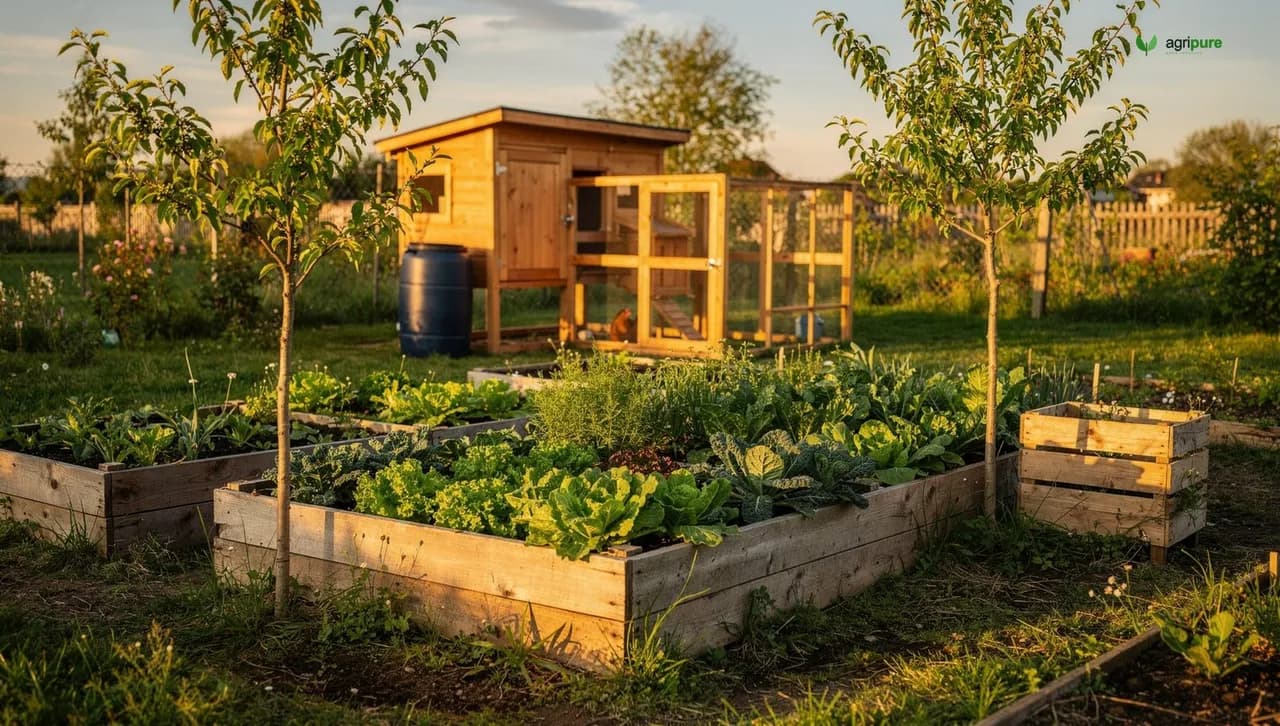
Suburban lot | Raised beds, compost, a few hens, rain barrels, a fruit tree or two |
Rural acreage | Larger gardens, orchard rows, pasture and livestock, woodlot and water capture |
Growing food is where it starts
Those choices all rest on one skill: growing food. It builds the patience and observation that everything else depends on, and it gives you a fast, motivating win. Two free tools make the difference between guessing and knowing. Get your soil tested through your state’s Cooperative Extension service, and look up your USDA hardiness zone — the map runs from zone 1 in the far north to zone 13 — so you plant what will thrive and when.

If you want a design framework to organize it all, a permaculture design is a natural fit for homesteaders, because it plans how the pieces feed each other. Start small the first season, keep notes, and expand only what works.
Plant the slow things first
Those beds pay off in months, but the highest-value parts of a homestead are perennial and take years, so the rule is to plant them early. A fruit or nut tree set in the ground this spring is a harvest for your future self. Match the species to your zone and your patience: a fig like Brown Turkey bears within 2 to 3 years, a hardy apple such as Granny Smith rewards a little more waiting, and a long-lived nut tree like a pecan is a gift for the next generation.

Browse the perennial plant profiles for varieties matched to cold-hardiness, chill hours, and space, so the slow things you plant now are the right ones.
How to start this season
Those perennials reward patience, but you can start this very season without land, a course, or a plan for total independence. You need 1 project and a season to learn it. Pick a single edge, get a quick win, and let the system grow over 2 to 3 years.
- Define your own edge. Decide what self-reliance means for you this year.
- Grow food first. A few raised beds teach the core skills.
- Close the loop. Compost kitchen and garden waste back into soil.
- Add small livestock. A few hens turn scraps into eggs.
- Preserve the harvest. Can, ferment, and freeze the surplus.
The takeaway
Those starting moves compound, season after season. Homesteading began as a way to claim 160 acres and became a way to claim back a little self-reliance, on whatever ground you have. Begin with 1 garden bed, 1 compost pile, and 1 tree, and let next season build on this one.
Frequently asked questions
Do I need land to start homesteading?
No. Homesteading is a set of skills, not an acreage. A balcony with containers, a community garden plot, or a suburban backyard all qualify. The 1862 settlers needed 160 acres because the goal was a land title; your goal is self-reliance, which scales down to a windowsill.
Is homesteading the same as living off-grid?
No. Off-grid living, generating your own power and water, is one optional branch of homesteading, not the whole tree. Most modern homesteaders stay connected to the grid and to outside income while they grow food, preserve it, and cut what they buy.
Can you actually make money homesteading?
Some do, through farm-gate sales of eggs, produce, or preserves, but most treat it as a way to spend less rather than earn more. Cornell Cooperative Extension and other land-grant programs frame it around self-sufficiency first, with surplus sales as a bonus.
How much land do you need to be self-sufficient?
Less than people think for food, far more than people think for true independence. A well-run quarter acre can supply most of a household’s vegetables and some fruit, but full self-sufficiency in grain, fuel, and protein is rare and demanding. Start with one quick win.
Where do I get my soil tested?
Through your state’s Cooperative Extension service, usually tied to a land-grant university. The test is inexpensive, tells you pH and nutrients, and pairs with a USDA hardiness zone lookup so you plant what will actually thrive where you live.
References
- National Archives. “Homestead Act (1862).” archives.gov
- Wikipedia. “Homestead Acts.” en.wikipedia.org
- Wikipedia. “Homesteading.” en.wikipedia.org
- Cornell Cooperative Extension. “Homesteading and Self-Sufficiency.” ccesaratoga.org
- USDA Agricultural Research Service. “Plant Hardiness Zone Map.” planthardiness.ars.usda.gov