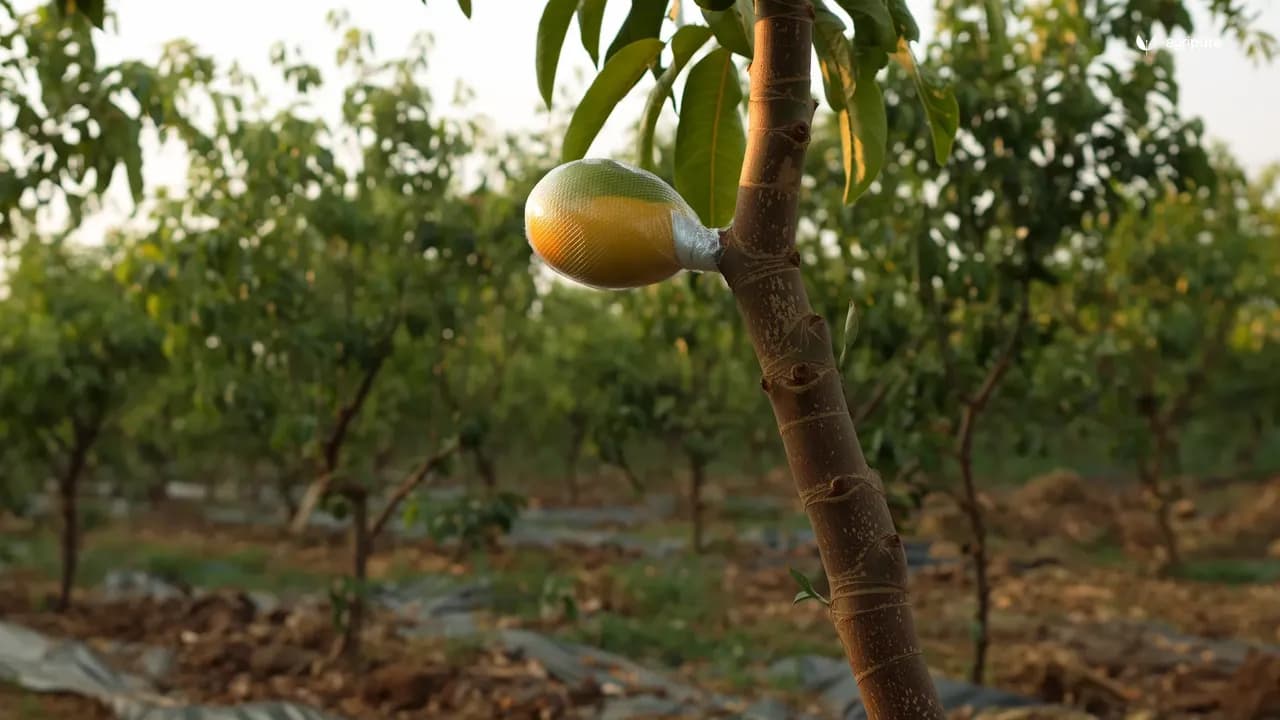
Grafting a mango is where many growers’ confidence fails. The tree is too valuable to experiment on, the literature is full of conflicting methods, and a botched graft costs a year. But the truth is that mango grafting in Pakistani conditions comes down to three controllable things — the right method, the right month, and a clean cut — and once those are settled, the take-rate climbs from frustrating to routine. This is the year-seven primer: how to topwork or propagate an established orchard tree without the tears.
The method: veneer and cleft, not magic
For established Pakistani orchards, two methods carry almost all the work. Side-veneer grafting is the nursery and topworking standard — a shallow downward slice on the rootstock, a matching wedge on the scion, bound and sealed; it suits semi-hardwood scion material and gives reliable unions on trees old enough to topwork. Cleft grafting comes into its own for changing a variety on a mature framework branch: behead the limb, split it, insert one or two wedge-cut scions, seal completely. Epicotyl (stone) grafting belongs to the nursery raising new rootstock, not the year-seven orchard. For the grower rehabilitating or upgrading existing trees, veneer for the smaller stock and cleft for the bigger limbs cover the field.
Source: [1] Mango Research Institute, Multan / Shujabad — recommended mango grafting methods (institutional reference)Source: [2] PARC / Sindh Horticulture Research Institute, Mirpur Khas — mango propagation & topworking guidance
The month: get the temperature window right
Timing decides take-rate more than technique. Mango cambium is only generous when it is actively growing and the air is warm and humid enough to keep the cut surfaces from drying before they knit. In Punjab and Sindh that means the warm, rising-humidity windows — broadly spring (around February–April) as the trees flush, and again the post-monsoon September flush. Graft into the dry peak heat of May–June and the scions desiccate; graft into the winter cold and the cambium is asleep and unions fail to form. Watch the tree, not the calendar: the right week is when the rootstock is pushing a fresh flush, because that is when the cambium is at its most active and forgiving.
Stock, scion, and the clean cut
Three small disciplines lift take-rate dramatically. Match the wood: scion and rootstock should be of similar caliper and maturity: use semi-hardwood scion from a healthy, true-to-type mother tree of the variety you want (Sindhri, Chaunsa, Anwar Ratol all graft readily onto local polyembryonic rootstock). Check stock health first: never graft onto a stressed, diseased, or drought-checked rootstock; a tree fighting to survive will not spend energy healing a union. Cut clean and seal fast: a single-bevel grafting knife kept razor-sharp makes the flat, unbruised matching surfaces the cambium needs, and wrapping immediately with grafting tape, sealing the union and the scion tip against moisture loss, is the difference between 50 percent and 80 percent success. The standard well-managed take-rate for veneer and cleft on these varieties sits around 75–85 percent under shade and decent humidity; below that, the cause is almost always a blunt blade, a dry month, or a stressed stock.
After the graft
Keep the new union shaded from direct afternoon sun, remove rootstock shoots that try to outcompete the scion, and do not unwrap too early — let the union lignify. A successful spring graft will push its own growth within weeks; a cleft-grafted limb will carry a new variety’s first fruit within two to three seasons. Done with these controllables in hand, mango grafting stops being a gamble and becomes the ordinary, repeatable orchard skill it is meant to be.
Source: [1] PARC — mango varietal grafting take-rates (Sindhri, Chaunsa, Anwar Ratol) (institutional reference)Source: [2] FAO — fruit-tree propagation: grafting methods & timing
References
- Mango Grafting Manual — World Agroforestry (ICRAF). Supports the use of a small set of standardized grafting methods, the need for close cambial contact, and sharp, clean tools to raise graft take-rates.
- Mango Grafting Booklet — Regreening Africa / World Agroforestry (ICRAF). Backs the procedural details: top/wedge grafting with pencil-thick scions, a deep even V-shaped cut tied to higher survival, and tight wrapping of the union.