The seven-layer food forest is the most quoted idea in permaculture and the most misapplied on a small plot. Robert Hart’s original framework — seven vertical strata, from the tall canopy down to the root crops underground — was drawn for a temperate English garden. Transplanted carelessly to a one-acre Pakistani smallholding it produces a crowded, competing mess. Applied with judgement, and married to the syntropic idea of succession over time, it produces the densest sustainable yield a smallholder can grow. The trick is to treat the seven layers as a target the system grows into, not a planting plan you execute on day one.
Related Agripure guides

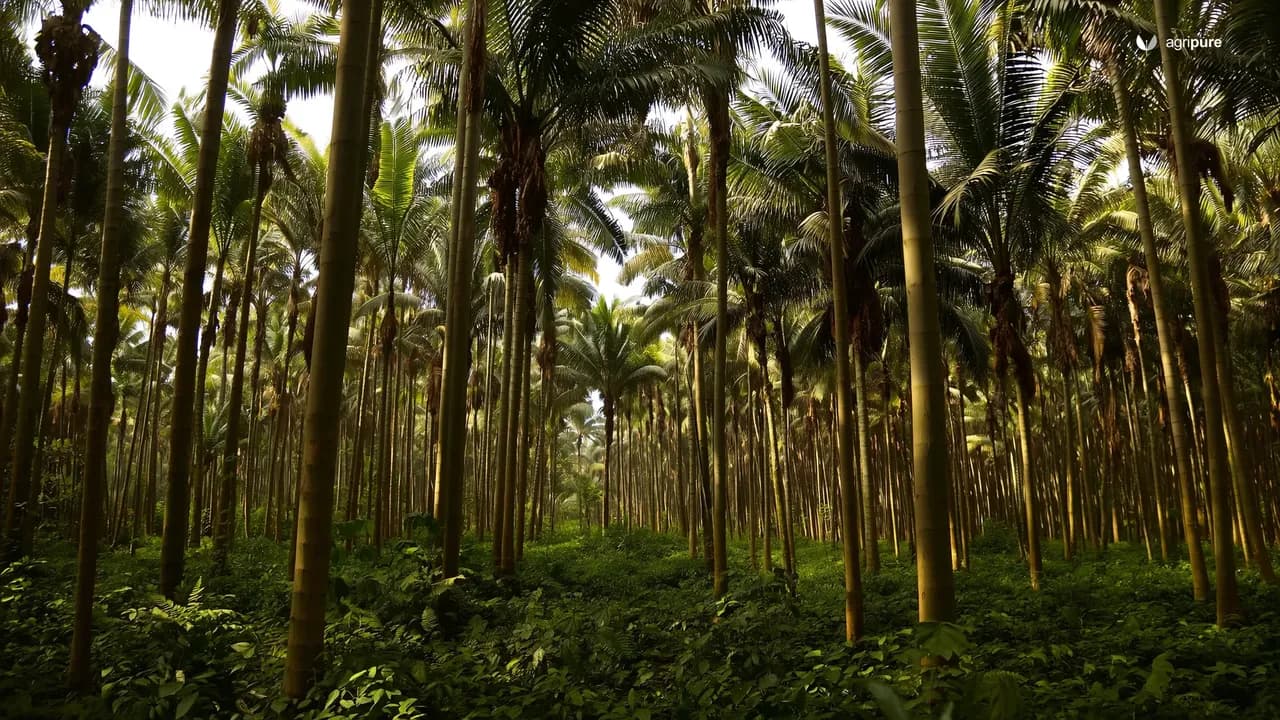
A mature seven-layer food forest, designed with intention for a Pakistani smallholding, exemplifies how thoughtful successional planting can transform a plot into a densely productive and sustainable agroecosystem.
The seven layers, with Pakistani species for each
Hart’s strata, adapted by Geoff Lawton for hotter climates, map cleanly onto species a Pakistani grower can actually source. Canopy: mango, the large climax tree that defines the system’s ceiling. Sub-canopy: citrus, guava, custard apple — smaller fruit trees in the filtered light below. Shrub: pomegranate, ber, fig, and the chop-and-drop legumes. Herbaceous: chillies, okra, leafy greens, medicinal herbs. Ground-cover: sweet potato, mint, creeping legumes that armour the soil. Vine/climber: grape, passionfruit, gourds trained up the sturdier trees. Root/rhizome: turmeric, ginger, garlic, working the soil layer beneath everything. Seven layers, each occupied by something the household eats or sells.
Source: [1] Hart, R. — Forest Gardening (1991); the seven-layer frameworkSource: [2] Lawton, G. — tropical/dryland food-forest adaptation (Permaculture Research Institute)
Density without crowding on one acre
The fatal error is planting all seven layers at full density at once. On a single acre the canopy trees alone, at mature spacing, set the budget for everything else: a mango wants 8–10 metres between trees, and that spacing dictates how many sub-canopy and shrub plants fit in the light wells between. The discipline is to plant the canopy at final spacing, fill the gaps generously with shorter-lived sub-canopy and shrub layers that will be thinned as the canopy closes, and keep the herbaceous, ground-cover, and root layers in continuous rotation beneath. Crowding is not density — crowding is competition that suppresses every layer. True density comes from vertical stacking in the same footprint, not from cramming more trunks into the ground.
Where Götsch and Hart agree — and the one place they don’t
Hart’s seven layers describe a system in space: the mature vertical structure. Götsch’s syntropic succession describes the same system in time: the sequence of pioneer, secondary, and climax plantings that build toward that structure. They are complementary, not contradictory: the seven-layer diagram is what a syntropic planting looks like once it has matured. The one place a careless reading goes wrong is treating Hart’s diagram as an instruction to plant the climax structure immediately. Götsch corrects that: you plant the pioneers and chaperones first, dense and disposable, and the seven mature layers emerge as the system succeeds. Hold both ideas at once, the spatial target and the temporal path, and the one-acre food forest stops being a crowded gamble and becomes a staged, deliberate build.
What the evidence shows at smallholder scale
Multi-strata food-forest systems are not theoretical in Pakistan; documented research-farm and NGO projects demonstrate stacked agroforestry working at smallholder scale, with the consistent finding that total system output per unit area exceeds any single-crop alternative once the system matures. The yield is spread across many products and many seasons rather than concentrated in one harvest — which is precisely the resilience a smallholder needs. Built in stages, sized to the canopy, and grown into over years rather than forced in a season, the seven-layer food forest is the most productive and most durable use a Pakistani acre can be put to.
Source: [1] Götsch, E. — syntropic succession & multi-strata system design (collected papers)Source: [2] PARC research farms / documented Pakistani agroforestry case studies (institutional reference)
References
- Homegardens — A Traditional Agroforestry System with a Promising Future — World Agroforestry Centre (ICRAF). Documents how multistrata homegardens with canopy, shrub, herb, and root layers achieve high productivity and biodiversity when adapted to local conditions.
- Multistrata Agroforestry Systems with Commercial Perennial Crops — World Agroforestry Centre (ICRAF). Explains vertical stratification and how excessive planting density causes competition for light and soil moisture, reducing yields.
- Successional Agroforestry: A Profitable Alternative for Ecological Restoration and Sustainable Agriculture in the Tropics — Forest Ecology and Management (Elsevier). Demonstrates that staggered, succession-mimicking establishment of species over time improves stability and long-term productivity versus planting full complexity at once.