Key takeaways

Sustainable living comes down to small, repeatable habits in waste reduction, energy efficiency, water conservation, and food choices, from reusable shopping bags to energy-saving lightbulbs and water-efficient fixtures.
- Sustainable living comes down to 4 everyday levers: waste, energy, water, and food.
- Refusing single-use plastic and using reusables is the simplest first win.
- Insulation, a programmable thermostat, and LEDs cut home energy waste by 10 to 30 percent.
- Low-flow fixtures, fixing leaks, and rainwater cut water use by 20 to 30 percent.
- Eating lower on the food chain and composting shrinks your largest daily footprint.
Sustainable living gets oversold as a lifestyle overhaul when it is really a stack of small, repeatable habits. The same self-reliant instinct behind homesteading applies here: use less, waste less, and make more of what you can. It breaks down into 4 everyday levers, waste, energy, water, and food, and pulling each a little adds up fast.
Cut waste first
The easiest lever is waste, because it costs nothing to pull. Refuse single-use plastic where you can and lean on reusables, bags, a water bottle, and food containers, which quietly erase a stream of throwaway items. This 1 habit, repeated daily, removes more trash over a year than almost any other single change.
Swap this | For this |
|---|---|
Single-use bags | Cloth shopping bags |
Bottled water | A refillable bottle |
Plastic wrap and bags | Reusable containers and jars |
Save energy at home
The next lever, home energy, has the biggest measurable payoff. Adequate insulation, a programmable thermostat, LED bulbs, and basic system maintenance can cut home energy waste by 10 to 30 percent. These are mostly 1-time fixes that pay back for years, and they pair naturally with the efficiency mindset of off-grid systems.

Energy fix | Effect |
|---|---|
Insulation and sealing | Less heat lost, lower bills |
Programmable thermostat | No heating an empty house |
LED bulbs | A fraction of the power per bulb |
Use less water
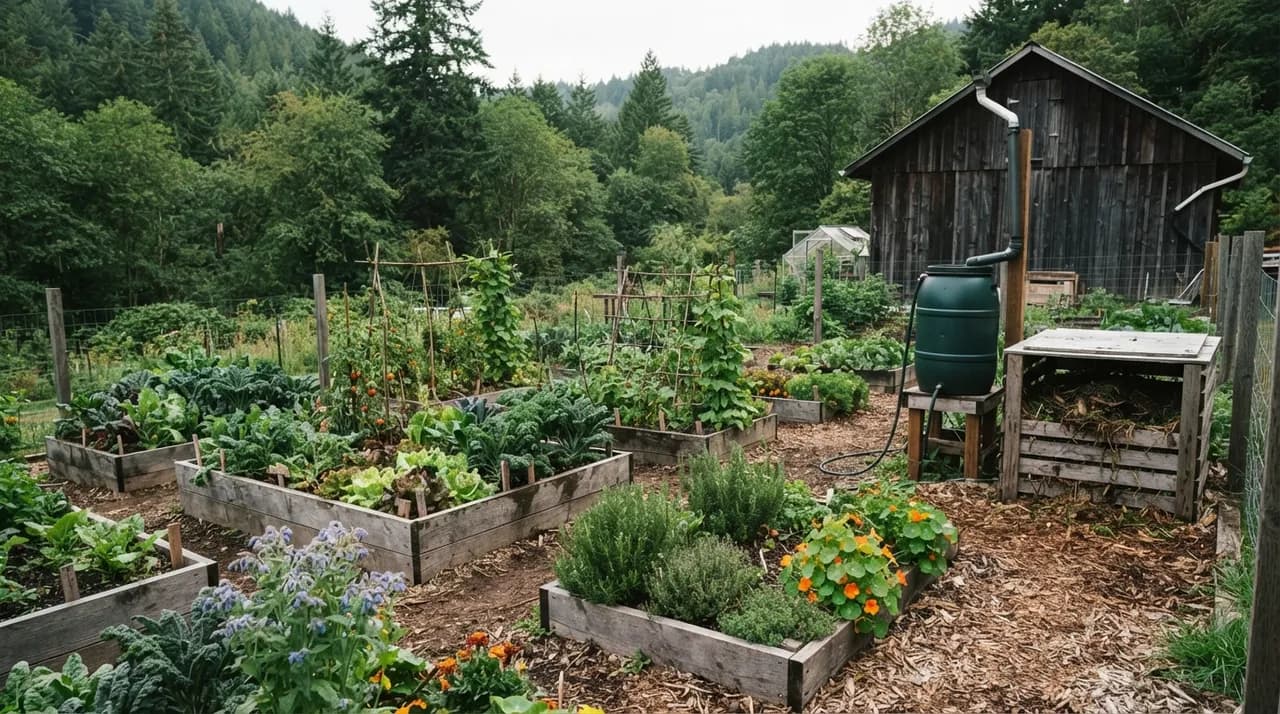
The third lever is water, and small fittings move it a lot. Installing low-flow fixtures, fixing leaks promptly, and collecting rainwater for the garden can cut household water use by 20 to 30 percent. A dripping tap alone can waste thousands of gallons a year, so the cheapest water saving is often a 5 dollar washer.

Eat lower on the chain
The largest daily footprint hides on your plate. Eating more plant-based meals and less meat shrinks it, while planning meals around a shopping list cuts the food waste that sends good produce to landfill. Close the loop by composting scraps, the same soil-feeding habit that powers a garden.
The plate-and-bin rule: the 2 highest-impact food habits are eating lower on the chain and composting what is left. Together they cut both the footprint of what you buy and the waste of what you do not eat. Start by composting 1 week of scraps and adding 1 meatless day, then build from there.
The takeaway
Sustainable living is the sum of small, durable habits. Pull the 4 levers, waste, energy, water, and food, a little each, and the savings compound without any grand sacrifice: reusables over single-use, a tighter house, low-flow fittings, and a plant-forward, compost-everything kitchen. Start with 1 lever this week and let the habit do the rest.
Frequently asked questions
What is sustainable living?
It is meeting your needs in ways that reduce environmental impact, mainly through everyday habits in four areas: cutting waste, saving energy, using less water, and eating lower on the food chain. It is less a single lifestyle than a stack of small, repeatable choices.
What are the easiest sustainable habits to start?
Begin with waste, since it costs nothing: carry reusable bags, a refillable water bottle, and food containers, and refuse single-use plastic. From there, switch to LED bulbs, fix leaks, plan meals to cut food waste, and start composting scraps.
How much can home efficiency cut my energy use?
Adequate insulation, a programmable thermostat, LED lighting, and regular system maintenance can reduce home energy waste by roughly 10 to 30 percent. Most are one-time fixes that keep paying back for years through lower bills.
How can I save water at home?
Install low-flow fixtures, fix leaks promptly, and collect rainwater for the garden. Together these can cut household water use by 20 to 30 percent. A single dripping tap can waste thousands of gallons a year, so small repairs have an outsized effect.
Does eating less meat really help?
Yes. Food is one of the largest parts of a household’s environmental footprint, and eating more plant-based meals while wasting less food meaningfully shrinks it. Pairing a plant-forward diet with composting tackles both the footprint of what you buy and the waste of what you do not eat.
References
- Center for Biological Diversity. “How to Live Sustainably.” biologicaldiversity.org
- Earthava. “The Complete Beginner’s Guide to Sustainable Living.” earthava.com
- Appalachian Mountain Club. “10 Tips for a More Sustainable Lifestyle.” outdoors.org
- One Tree Planted. “How to Reduce Waste: 21 Practical Tips.” onetreeplanted.org
- UNICEF USA. “A Guide to Sustainable Living.” unicefusa.org