Key takeaways

A thriving organic garden starts with the soil, and building a rich, living soil ecosystem through organic matter is the most important step.
- Healthy soil is built by adding organic matter: compost, aged manure, cover crops, and mulch.
- Aim for at least 5 percent organic matter; below that, soil turns less productive.
- Test your soil and target a pH of 6.5 to 6.8 for most vegetables.
- Cover crops and no-till keep soil life alive between plantings.
- Feed the soil and the soil feeds the plants, year after year.
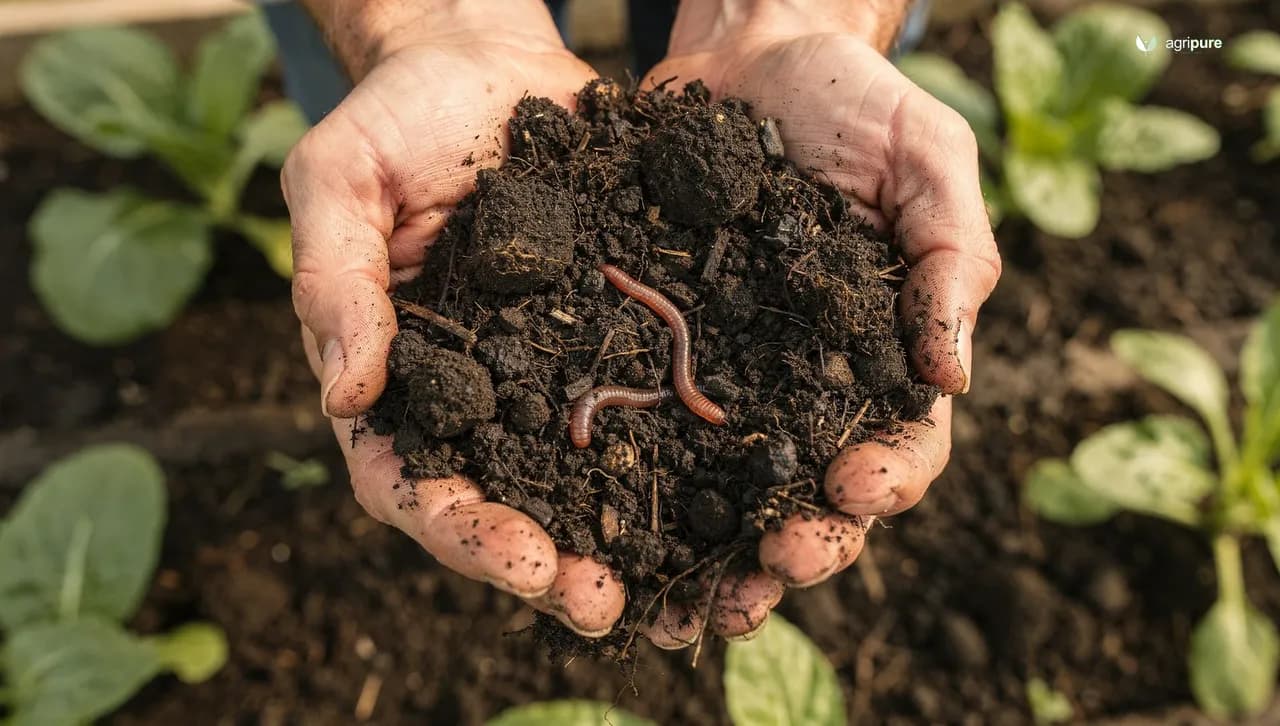
Every good garden is really a soil project in disguise. Plants are temporary; the soil is the asset you build and keep. Organic gardening treats it that way, feeding the living soil with compost and manure, covering it with mulch, and disturbing it as little as possible, the heart of a no-dig garden. Get the soil right and almost everything else gets easier.
Feed the soil with organic matter
The first job is raising organic matter, the decomposed plant and animal material that makes soil dark, spongy, and alive. Add it through compost, aged manure, cover crops, and mulch, and aim for at least 5 percent, since soil below that turns less productive and leaves plants deficient.

Add organic matter via | What it does |
|---|---|
Compost | Feeds microbes, improves structure |
Aged manure | Adds nutrients and organic matter |
Cover crops | Grow fertility in place, then turn in |
Mulch | Breaks down on top, feeding the surface |
Test before you amend
That organic matter works best when the chemistry is right, so test before you guess. A soil test, available cheaply through most extension offices, tells you pH and nutrients, and most vegetables want a pH of 6.5 to 6.8. Correct that first, because even rich soil locks up nutrients when the pH is off.
Soil test tells you | So you can |
|---|---|
pH | Lime to raise it or sulfur to lower it |
Nutrient levels | Amend only what is actually short |
Organic matter | Track soil health over the years |
Keep the soil alive and covered
Those amendments feed a living system you want to protect. Cover crops like clover and rye grow fertility between cash crops and keep roots in the ground, while no-till and a constant mulch blanket shelter the worms and fungi that do the real work. Bare, tilled soil loses organic matter fast; covered soil builds it.

Start where your soil is
Those practices compound, so start now with whatever you have. Spread compost, plant a cover crop on any bare bed, and send 1 soil sample to your extension office. The same soil-first patience that builds a productive acre builds a single raised bed.
The handful test: grab a handful of moist soil and squeeze. If it ribbons and stays in a tight ball, it is heavy clay; if it falls apart instantly, it is sandy. Both improve with the same fix, more organic matter, which is why compost is the 1 amendment almost every garden needs.
The takeaway
Those habits make soil your best crop. Organic gardening soil is built, not bought: raise the organic matter past 5 percent, hold the pH near 6.7, and keep the ground covered and alive. Do that and the soil will feed your plants, hold water, and fight disease, season after season.
Frequently asked questions
How do I make my garden soil more organic and healthy?
Raise its organic matter by adding compost, aged manure, cover crops, and mulch, and keep the soil covered and minimally disturbed. Aim for at least 5 percent organic matter. Over a few seasons this turns tired ground into dark, living, productive soil.
What is the best pH for a vegetable garden?
Most vegetables grow best at a soil pH of 6.5 to 6.8, slightly acidic to neutral. Test your soil first, then raise pH with lime or lower it with sulfur as needed. Correct pH matters because the wrong level locks up nutrients even in rich soil.
How much organic matter should garden soil have?
Aim for at least 5 percent organic matter; many healthy soils run 5 to 15 percent. Below 5 percent, soil holds less water and fewer nutrients and plants show deficiencies. Compost, cover crops, and mulch all raise organic matter over time.
Do I really need a soil test?
Yes, especially for a new garden. A cheap soil test through your extension office reveals pH and nutrient levels, so you amend only what is actually short instead of guessing. It saves money and prevents over-fertilizing that can harm soil life.
What are cover crops and why use them?
Cover crops like clover, rye, and vetch are grown between cash crops to protect and feed the soil. They add organic matter, fix nitrogen, suppress weeds, and keep living roots in the ground, then are cut or turned in before the next planting.
References
- Oregon State University Extension. “Add Organic Matter to Improve Most Garden Soils.” extension.oregonstate.edu
- Oregon State University Extension. “How Do I Test My Garden Soil?” extension.oregonstate.edu
- University of Minnesota Extension. “Promote Healthy Soil in Your Garden.” extension.umn.edu
- Michigan State University Extension. “Smart Gardens Begin with Healthy Soil.” canr.msu.edu
- USDA ARS. “Tips for Healthy Soil in Your Backyard Garden.” ars.usda.gov