Key takeaways

Modern homesteading brings self-reliance to suburban lots, combining old practices with smart technology and community connections. A new generation is driving it, motivated by health, money, and the environment.
- Modern homesteading pairs old self-reliance with new technology and suburban lots.
- It is surging on economic, health, and sustainability worries, led by Millennials and Gen Z.
- Suburban homesteading lets people grow food and cut costs without moving rural.
- Today’s homesteaders embrace tech: smart irrigation, soil sensors, apps, and online community.
- Start where you are and add 1 skill at a time, no acreage required.
Modern homesteading keeps the old goal, self-reliance, and drops the old assumptions. You do not need 160 acres, a mule, or a rejection of technology. Today’s movement is largely suburban, deeply online, and growing fast, a practical response to an uncertain world rather than nostalgia for an old one. It is the same impulse behind urban homesteading, scaled across every kind of yard.
Why it is surging now
The revival is not random; it tracks real pressures. Economic instability and inflation push families to cut costs, while worries about food security and health and a pull toward sustainability add reasons. The 2020 pandemic and the supply-chain shocks that followed lit the fuse, and Millennials and Gen Z are now leading the charge.
Driver | What it pushes people toward |
|---|---|
Inflation and costs | Growing food to cut the grocery bill |
Food security and health | Knowing what is in their food |
Sustainability | Less waste, more self-supply |
Suburban homesteading leads the way
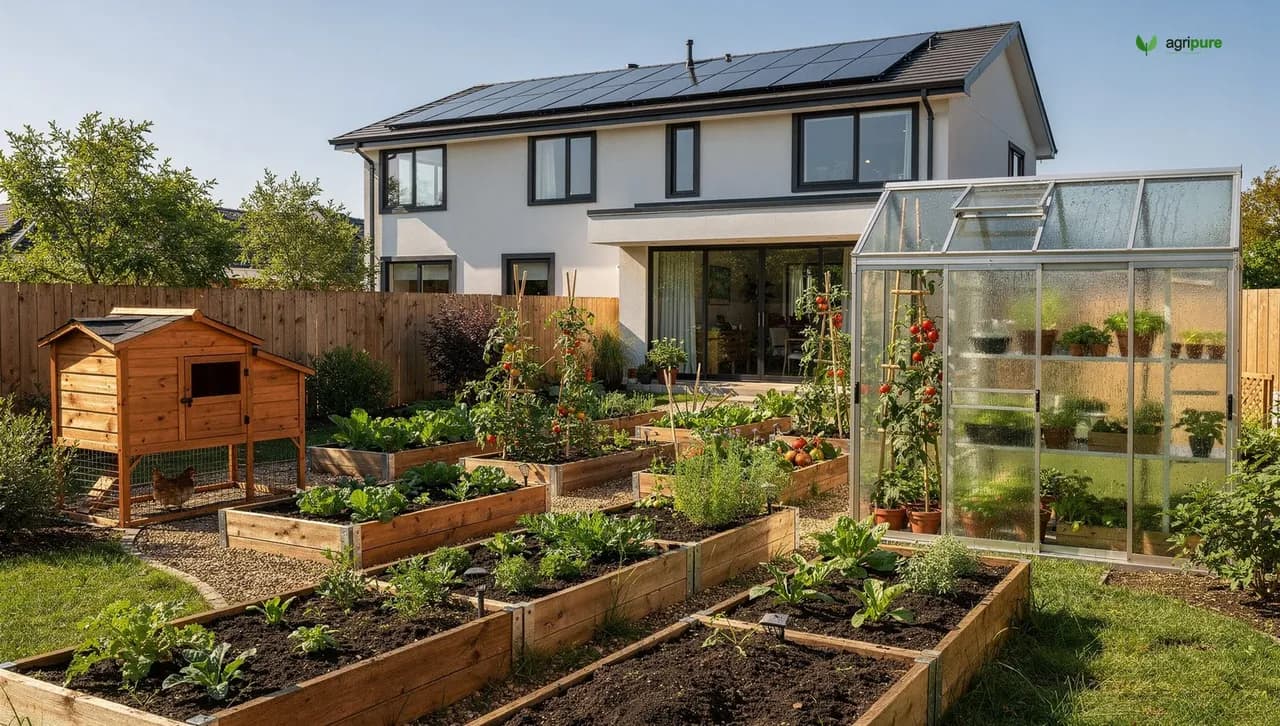
Those pressures meet a practical limit: rural land is pricey and scarce, so the action has moved to the suburbs. Suburban homesteading lets people grow food, keep a few hens, and gain independence on a normal lot without uprooting their lives. The movement now spans a spectrum from balcony to acreage, not just remote farms.

Where you are | Modern homesteading looks like |
|---|---|
Apartment | Containers, ferments, scratch cooking |
Suburban lot | Raised beds, hens, compost, a fruit tree |
Rural land | Gardens, livestock, and off-grid systems |
Technology is welcome here
The biggest myth is that homesteaders shun technology. In practice, the most successful modern homesteads are deeply plugged in: smart irrigation, soil-moisture sensors, and livestock-health trackers automate the tedious parts, while apps and online communities connect beginners with mentors. The tech does not replace working the land, it frees time for it, much like sizing an off-grid system well.

How to start where you are
That spectrum means there is no barrier to entry. Pick 1 skill that fits your space, a few containers, a worm bin, or 4 hens, and build from there, exactly as you would grow into an acre. Use an app to track plantings, learn from an online community, and add the next skill once the last runs itself.
The one-skill rule: modern homesteading fails when people try to do everything at once. Master 1 thing per season, growing greens, then preserving, then hens, and let each become a habit before adding the next. Tech and community speed the learning, but the one-skill-at-a-time rhythm is what makes it stick.
The takeaway
Modern homesteading is the old idea made livable for now. It is self-reliance without the all-or-nothing: suburban-friendly, technology-embracing, and open to anyone with a sunny corner. Pick 1 skill, use the tools and community available, and let your homestead grow at the pace of your life.
Frequently asked questions
What is modern homesteading?
It is the practice of self-reliance, growing food, preserving it, and cutting what you buy, adapted to today: largely suburban, technology-friendly, and scaled to any space. It keeps the old goal of self-sufficiency while dropping the assumption that you need rural acreage or to reject modern tools.
Why is homesteading becoming popular again?
A mix of pressures drives it: economic instability and inflation push people to cut costs, worries about food security and health make home-grown food appealing, and sustainability adds a motive. The pandemic and supply-chain disruptions accelerated the trend, with Millennials and Gen Z leading.
Can you homestead in the suburbs?
Yes, and suburban homesteading is now the leading edge of the movement. On a normal lot you can grow food in raised beds, keep a few hens, compost, harvest rainwater, and plant fruit trees, gaining independence and cutting costs without moving to the country.
Do modern homesteaders use technology?
Very much so. Many of the most successful modern homesteads use smart irrigation, soil-moisture sensors, livestock-health trackers, planning apps, and online communities. The technology automates tedious tasks and shortens the learning curve, freeing time for hands-on work.
How do I start modern homesteading?
Start where you are with one skill that fits your space, such as container vegetables, a worm bin, or a few hens. Use an app to track plantings and an online community to learn, then add the next skill once the first becomes routine. No acreage is required.
References
- Lady May Tallow. “Homestead on the Rise.” ladymaytallow.com
- Park Seed. “Modern Homesteading: A Guide to Self-Sufficiency in the 21st Century.” parkseed.com
- Wikipedia. “Homesteading.” en.wikipedia.org
- AgDaily. “The Modern Farmer’s Guide to Building a Self-Sufficient Homestead in 2026.” agdaily.com
- Discover Homesteading. “Homesteading Trends.” discoverhomesteading.com