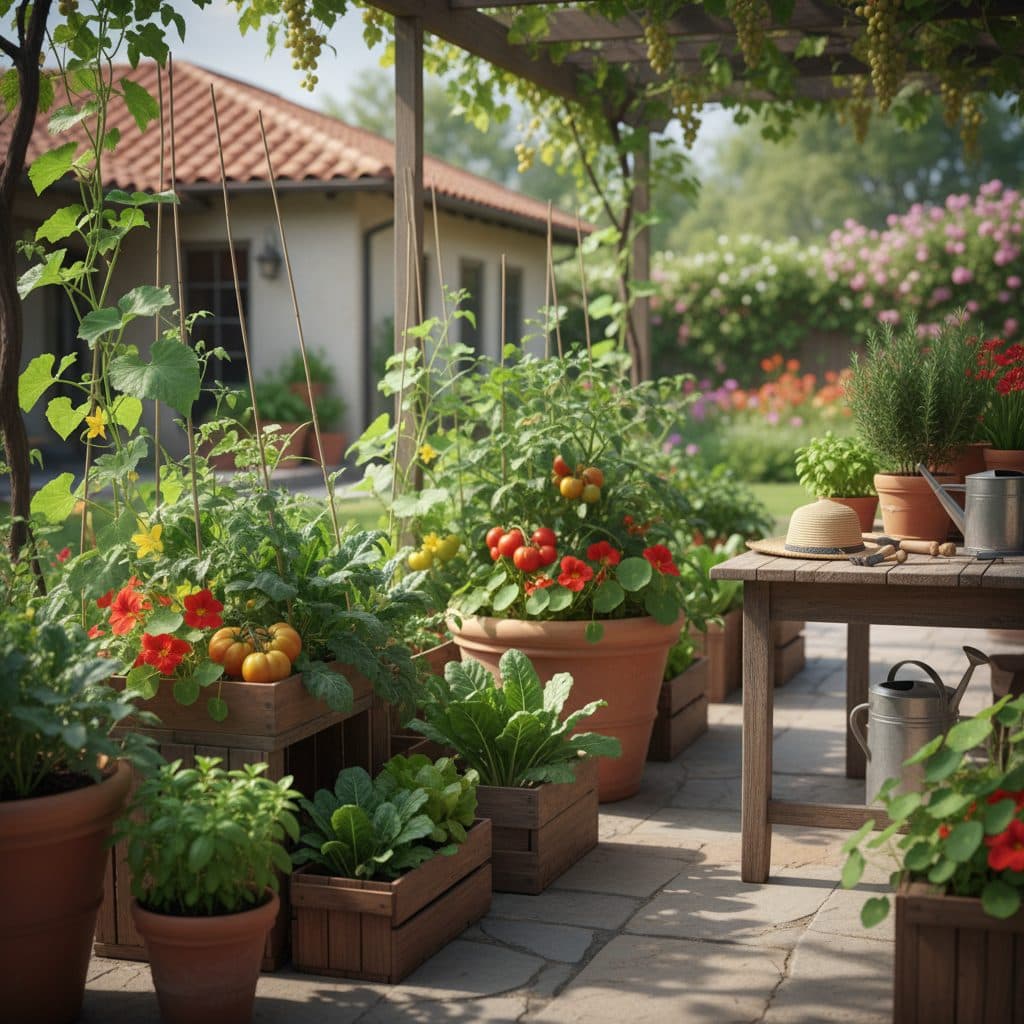
Key takeaways
- Water container plants daily, sometimes twice, providing 1 to 2 gallons per large pot in 90°F+ heat.
- Select heat-tolerant varieties like ‘Black Krim’ tomatoes or ‘Tuscan’ kale for zones 7-10.
- Use self-watering planters or drip irrigation to reduce manual watering by up to 50%.
- Mulch container surfaces with 1 to 2 inches of straw or coco coir to retain soil moisture.
- Provide afternoon shade for sensitive plants, especially when temperatures exceed 95°F.
- Fertilize regularly with a diluted liquid feed, such as 5-1-1 fish emulsion, every 7 to 10 days.
Quick answer: To maintain productive container gardens in 100°F US summer heat, provide daily deep watering, select heat-tolerant varieties, use large, light-colored pots with moisture-retentive soil, and offer afternoon shade.
Summers across the United States, from the humid 90°F days of Florida’s USDA zone 9 to the arid 105°F heat of Arizona’s zone 8, present significant challenges for container gardeners. While ground-planted beds offer some buffer against extreme temperatures and moisture loss, plants in pots and hanging baskets face a much harsher reality. These confined root systems and exposed soil surfaces mean they can dry out 2 to 3 times faster than their in-ground counterparts, demanding constant vigilance and specific strategies to keep them productive [1].
Successfully growing vegetables and herbs in containers and hanging baskets through a brutal US summer is entirely possible with the right approach. It requires a clear understanding of plant needs, soil science, and watering techniques. This guide will walk you through practical steps to ensure your potted peppers, tomatoes, and leafy greens thrive, yielding a bountiful harvest even when daily temperatures consistently climb above 90°F for weeks on end.
Choosing the right containers and soil for heat resilience
The foundation of a heat-resilient container garden begins with selecting appropriate containers and a high-quality potting mix. Larger containers, such as 15-gallon fabric grow bags or 18-inch diameter ceramic pots, offer more soil volume, which translates to greater moisture retention and a more stable root temperature. A 10-gallon pot, for instance, will hold moisture significantly longer than a 5-gallon pot, reducing the need for watering by up to 30% on a 90°F day. Material matters too—porous terracotta pots, while attractive, can lose water through evaporation from their sides, sometimes 20% more rapidly than plastic or glazed ceramic options. Dark-colored containers absorb more solar radiation, increasing soil temperatures by 5°F to 10°F compared to lighter colors, which can stress roots.
optimizing potting mix for summer heat
A superior potting mix is crucial for summer success. It must drain well yet retain sufficient moisture and nutrients. According to USDA guidelines, proper potting mixes for containers should include 30% to 50% organic matter by volume, such as compost or coco coir, to enhance both water retention and drainage [6]. Avoid using garden soil, which compacts easily in pots, restricting root growth and drainage. A good mix might consist of 50% peat moss or coco coir, 25% perlite or vermiculite for aeration, and 25% high-quality compost. This blend ensures adequate drainage, moisture retention, and nutrient availability for plants enduring 95°F temperatures. Consider adding a slow-release granular fertilizer, like a 14-14-14 formulation, at planting time to provide a steady nutrient supply for 3 to 4 months.
- Select containers with a minimum 12-inch diameter for most vegetables.
- Opt for light-colored plastic or glazed ceramic pots to minimize heat absorption.
- Ensure containers have at least three 0.5-inch drainage holes to prevent waterlogging.
- Use a high-quality, peat- or coco coir-based potting mix, not garden soil.
- Consider fabric grow bags for their excellent aeration and temperature regulation.
Mastering summer watering techniques
Watering is the single most critical factor for container gardens during hot US summers. In regions like the Central Valley of California (USDA zone 9) where temperatures routinely hit 100°F, plants may need water twice daily. A 12-inch diameter hanging basket can require 1 gallon or more of water daily [3]. The goal is to keep the soil consistently moist but not waterlogged. One effective method is to water slowly until water drains from the bottom, then wait 15 to 30 minutes and water again. This allows the potting mix to fully rehydrate, especially if it has become very dry and hydrophobic. For larger containers, this might mean delivering 1.5 to 2 gallons of water per plant per day.
strategies for efficient water delivery
To reduce the labor of daily watering, consider self-watering containers. These systems can extend the period between waterings from daily to every 2 to 3 days, even in warm conditions, by providing a reservoir of water that plants draw from as needed [4]. Drip irrigation systems are another excellent investment, especially for multiple containers. A simple drip system can deliver precise amounts of water directly to the root zone, reducing water waste by 30% to 50% compared to overhead watering [2]. Setting a timer to water early in the morning, between 5 AM and 7 AM, minimizes evaporation losses. You can monitor soil moisture levels accurately with a soil moisture meter, which provides a numerical reading from 1 to 10, helping you water only when needed. Consistent moisture, deep watering, and reduced evaporation matter most in 95°F heat.
- Water early in the morning, before 8 AM, to minimize evaporation.
- Use self-watering containers to extend watering intervals by 1 to 2 days.
- Install a drip irrigation system with a timer for automated, efficient watering.
- Check soil moisture 2 to 3 inches deep before watering; the top inch may be dry.
- Consider adding water-retaining crystals to potting mix, following package directions for 1 tablespoon per 1 gallon of soil.
Providing shade and mulching for temperature control
Even the most heat-tolerant plants can suffer from prolonged exposure to intense summer sun, especially when temperatures soar above 95°F. Providing afternoon shade is a simple yet highly effective strategy to mitigate heat stress. For plants in USDA zones 8-10, direct sun exposure between 1 PM and 5 PM can be detrimental. Erecting a temporary shade cloth with 30% to 50% light reduction can lower leaf surface temperatures by 10°F to 15°F, protecting delicate foliage and fruit from sunburn [2]. You can also move smaller containers to a naturally shaded area, such as beneath a taller tree or on the east side of a building, for a few hours each afternoon.
the benefits of mulching containers
Mulching the surface of your container soil is another powerful tool against summer heat and moisture loss. A 1 to 2 inch layer of organic mulch, such as straw, coco coir, or shredded leaves, acts as an insulating barrier. This layer can reduce soil temperature by 5°F to 8°F and decrease surface evaporation by up to 25%, meaning you’ll need to water less frequently [2]. Mulch also helps suppress weeds, which compete with your container plants for precious water and nutrients. For hanging baskets, sphagnum moss or coco coir liners can provide similar insulation and moisture retention benefits. Applying mulch is a quick task that can be done with a lightweight garden hand trowel. These practices ensure cooler roots, reduced water stress, and protection from sunburn for your plants in 100°F conditions.
- Install 30% to 50% shade cloth over containers during peak afternoon sun (1 PM – 5 PM).
- Move smaller pots to naturally shaded spots when temperatures exceed 95°F.
- Apply a 1 to 2 inch layer of straw or coco coir mulch to the soil surface.
- Use light-colored mulch to reflect sunlight and keep soil cooler.
- For hanging baskets, ensure the liner material provides good insulation and moisture retention.
Selecting heat-tolerant varieties and providing adequate nutrition
Not all plants are created equal when it comes to enduring a scorching summer. For container vegetable gardens, choosing varieties known for their heat tolerance can make a significant difference. In USDA zones 7-10, opt for tomato varieties like ‘Florida 91’, ‘Homestead’, or ‘Black Krim’, which are proven to set fruit even when daytime temperatures exceed 90°F. For peppers, ‘Habanero’ and ‘Jalapeño’ varieties generally perform better in heat than bell peppers. Leafy greens like ‘Tuscan’ kale or ‘Malabar spinach’ can withstand higher temperatures than traditional lettuce, which often bolts rapidly above 80°F. Consider ‘Vegetable Hummingbird’ (Sesbania grandiflora) for a unique, heat-loving edible flower and pod producer that thrives in zones 9-11: https://agripure.org/plants/sesbania-grandiflora.
feeding your plants through the heat
Container plants have limited access to nutrients compared to those in the ground, and frequent summer watering can leach nutrients from the soil. Therefore, a consistent feeding regimen is essential. Start with a slow-release granular fertilizer mixed into the potting soil at planting time, providing nutrients for 3 to 4 months. Supplement this with a diluted liquid fertilizer, such as a 5-1-1 fish emulsion or a 2-4-2 organic vegetable feed, applied every 7 to 10 days. During periods of extreme heat (above 95°F), reduce the fertilizer concentration by 50% to avoid stressing the plants further. Foliar feeding with a diluted seaweed extract can also provide micronutrients and help plants cope with heat stress. Regular feeding ensures vigorous growth, strong fruiting, and overall plant health even when temperatures hit 100°F.
- Choose heat-tolerant tomato varieties like ‘Florida 91’ or ‘Homestead’ for zones 7-10.
- Plant peppers such as ‘Habanero’ or ‘Jalapeño’ which perform well in high heat.
- Opt for heat-loving greens like ‘Tuscan’ kale or ‘Malabar spinach’.
- Apply a diluted liquid fertilizer (e.g., 5-1-1) every 7 to 10 days.
- Reduce fertilizer concentration by 50% during extreme heat spells above 95°F.
Pest and disease management in hot conditions
Hot, dry conditions, typical of US summers, especially in regions like the Southwest (USDA zones 8-10), can exacerbate certain pest and disease issues in container gardens. Spider mites, for instance, flourish in temperatures above 85°F and low humidity, rapidly multiplying and causing significant damage to plant foliage. Inspect the undersides of leaves daily for tiny webbing or speckled damage. Aphids can also be a problem, particularly on new growth. Early detection matters; a strong spray of water can dislodge many pests, and for persistent infestations, an insecticidal soap solution (2 tablespoons per gallon of water) applied every 5 to 7 days can be effective.
addressing common summer diseases
While some diseases prefer cooler, damp conditions, others can thrive in summer heat. Powdery mildew, for example, can appear on plants even in dry conditions if humidity is high at night, common in the Southeast (USDA zones 7-9). Ensure good air circulation around your container plants by spacing them at least 6 inches apart. Early blight on tomatoes, characterized by concentric rings on lower leaves, can also be prevalent. Remove affected leaves promptly and ensure plants receive consistent water to reduce stress. A weekly preventative spray of a copper-based fungicide, applied at half strength, can help manage fungal issues. Maintaining plant vigor through proper watering and nutrition, as discussed in previous sections, is your best defense against both pests and diseases, reducing plant stress by up to 40%.
- Inspect plants daily for signs of spider mites, aphids, or other pests.
- Spray affected plants with a strong stream of water to dislodge pests.
- Apply insecticidal soap (2 tablespoons/gallon) every 5 to 7 days for persistent infestations.
- Ensure adequate air circulation by spacing containers at least 6 inches apart.
- Remove any diseased leaves immediately to prevent spread.
Harvesting and succession planting for continuous yields
A brutal summer doesn’t mean an end to harvesting; it often means adapting your harvesting schedule and planting strategy. Many vegetables, especially leafy greens, can become bitter or bolt (go to seed) quickly in temperatures above 80°F. Harvest these crops frequently and in the early morning when temperatures are cooler, typically below 75°F. For fruiting vegetables like tomatoes and peppers, consistent harvesting encourages the plant to produce more. Leaving ripe fruit on the vine can signal the plant to slow production by up to 20%. Pick ripe produce every 1 to 2 days during peak season in USDA zones 6-9.
succession planting for extended harvests
To ensure a continuous supply of fresh vegetables, consider succession planting. This involves planting small batches of seeds or seedlings every 2 to 4 weeks. Even in the heat of summer, you can sow quick-growing, heat-tolerant crops. For example, in late July or early August, as temperatures begin to slightly moderate in northern states like Michigan (USDA zone 5), you can plant another round of bush beans, radishes, or even some heat-tolerant lettuce varieties for a fall harvest. For a comprehensive guide to maximizing small spaces, consider square-foot gardening principles, which can be adapted to large containers. By planning ahead, you can extend your harvest season by 4 to 6 weeks, even through challenging summer conditions.
- Harvest leafy greens in the early morning when temperatures are below 75°F.
- Pick ripe tomatoes and peppers every 1 to 2 days to encourage further production.
- Succession plant heat-tolerant crops like bush beans or radishes every 2 to 4 weeks.
- Plan for fall planting in late July or early August in USDA zones 5-6.
- Remove spent plants promptly to make space for new plantings.
Winterizing containers and planning for next season
As summer fades and temperatures begin to drop below 50°F in regions like the Midwest (USDA zone 5), it’s time to think about winterizing your container garden. This critical step protects your investment in pots and prepares your soil for the next growing season, saving you money and effort. For perennial herbs or small shrubs in containers, move them to a sheltered location, like an unheated garage or a protected patio, when nighttime temperatures consistently fall below 40°F. Insulate vulnerable pots by wrapping them in burlap or bubble wrap, or by grouping them closely together to share residual heat, which can raise ambient temperatures by 2°F to 3°F.
soil rejuvenation and planning
For annual vegetables, once harvesting is complete, empty the containers. The potting mix, having supported a full season of growth and endured numerous waterings, will likely be depleted of nutrients and may have compacted slightly. While you shouldn’t reuse 100% of the old potting mix, you can rejuvenate it. Mix old soil with an equal volume (1:1 ratio) of fresh potting mix and 10% to 20% new compost. This blend will provide a refreshed base for spring planting. Clean and store empty containers in a dry place to prevent cracking from freezing temperatures, especially for ceramic pots. Take notes on what worked and what didn’t—which tomato variety thrived in 90°F heat, or which watering schedule was most effective for your 15-gallon pepper plants. This planning will improve your success rate by 25% for the following season.
- Move perennial containers indoors or to a sheltered spot when temperatures drop below 40°F.
- Insulate vulnerable pots with burlap or bubble wrap to prevent freezing damage.
- Empty annual containers and rejuvenate old potting mix with fresh mix and compost.
- Clean and store empty containers in a dry, protected area.
- Review your gardening notes from the past season to inform next year’s plans.
Water Twice Daily: In 90°F+ heat, some container plants, especially hanging baskets, may require 1 to 2 gallons of water delivered twice daily.
Shade Reduces Heat: Providing afternoon shade with 30% to 50% shade cloth can lower leaf temperatures by 10°F to 15°F during peak sun.
Frequently asked questions
How often should I water my container plants in summer?
In most US regions with summer temperatures consistently above 85°F, you should plan to water container plants daily. During heatwaves exceeding 95°F, some plants, especially those in smaller pots or hanging baskets, may require watering twice a day, delivering 1 to 2 gallons per large container.
What kind of soil is best for container gardens in hot climates?
Use a high-quality, well-draining potting mix that contains a significant amount of organic matter, typically 30% to 50% by volume. A blend of peat moss or coco coir, perlite or vermiculite, and compost works well. That gives both moisture retention and proper aeration for roots in 90°F+ temperatures.
Can I reuse potting soil from last year?
You can partially reuse potting soil, but it’s not recommended to use 100% old soil. Rejuvenate it by mixing old soil with an equal volume of fresh potting mix and 10% to 20% new compost. This replenishes nutrients and improves soil structure, supporting healthy plant growth for another season.
How can I protect my container plants from extreme heat?
Provide afternoon shade, especially between 1 PM and 5 PM, using a 30% to 50% shade cloth or by moving pots to a naturally shaded area. Additionally, apply a 1 to 2 inch layer of organic mulch to the soil surface to reduce soil temperatures by 5°F to 8°F and minimize evaporation.
What vegetables grow well in containers during a hot summer?
Opt for heat-tolerant varieties like ‘Florida 91’ or ‘Homestead’ tomatoes, ‘Habanero’ or ‘Jalapeño’ peppers, and ‘Tuscan’ kale or Malabar spinach. These varieties are known to perform better and set fruit even when daytime temperatures consistently exceed 90°F in USDA zones 7-10.
Are hanging baskets harder to maintain in summer?
Yes, hanging baskets are generally more challenging to maintain in summer because they dry out 2 to 3 times faster than ground-planted beds due to increased air circulation [1]. They often require daily, or even twice-daily, watering, with a 12-inch basket needing 1 gallon or more of water per day in hot weather [3].
References
- Hanging Baskets, Standards, Combination Pots, and Vertical Gardens (1992). Hanging Baskets, Standards, Combination Pots, and Vertical Gardens.
- The Hanging Gardens (2013). The Hanging Gardens.
- Hanging Baskets (1980). Hanging Baskets.
- Gardens, hanging (2023). Gardens, hanging.
- Hanging Baskets (1888). Hanging Baskets.
- USDA Natural Resources Conservation Service (2024). USDA Natural Resources Conservation Service.