Key takeaways
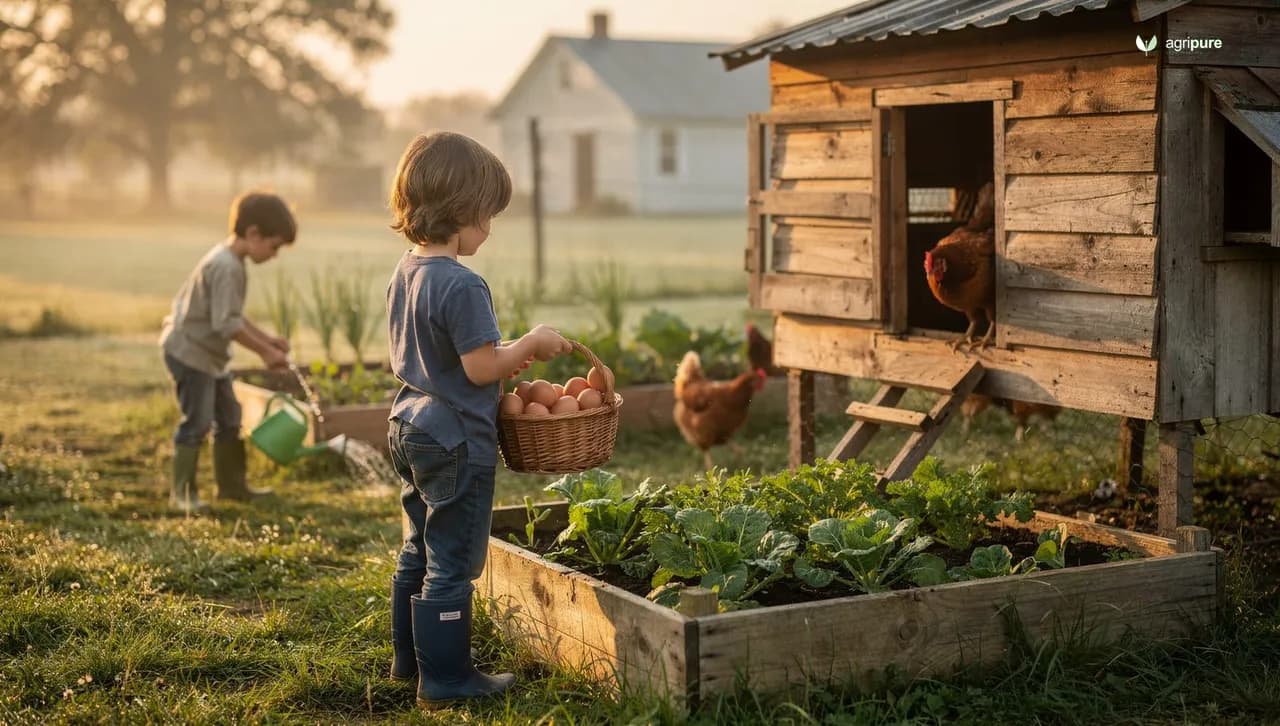
A young child, guided by an adult, carefully collects eggs from a nesting box inside a rustic chicken coop, while another child waters a small garden nearby. The scene is bathed in warm sunlight, showing a homestead setting with a barn in the background.
Homesteading offers a unique classroom where children learn responsibility, confidence, and practical skills through hands-on experiences, strengthening family bonds in the process.
- A homestead teaches kids responsibility, confidence, and practical skills through real work.
- Toddlers as young as 2 can collect eggs; the jobs scale up with age.
- By 4 to 7, kids can tend their own garden plot and water the flock.
- By 8 to 10, many can milk a goat and take full charge of an animal.
- Make it about connection and shared time, not just getting chores done.
A homestead is the best classroom most kids will ever have. Unlike a worksheet, the work is real: the eggs get collected or the hens go hungry, the plot gets watered or the beans wilt. Children raised with age-appropriate chores build responsibility, confidence, and a deep set of practical skills, and they get the rare gift of seeing that their effort genuinely matters to the family.
Why it is worth the mess
Yes, kids slow you down at first, but the payoff is large. Real chores build responsibility and self-confidence, teach practical skills from composting to animal care, and turn children into genuine contributors rather than bystanders. Most of all, shared work is shared time, the part families remember.
Kids gain | From |
|---|---|
Responsibility | Animals and plants that depend on them |
Confidence | Growing and making real things |
Practical skills | Gardening, animal care, food preservation |
Tasks by age
The secret is matching the job to the child. Toddlers of 2 to 4 love collecting eggs; kids 4 to 7 can feed and water the flock and tend their own garden plot, planting, watering, weeding, and harvesting; and by 8 to 10 many can milk a goat and take full charge of an animal. Scale the responsibility up as they grow.
A young child in boots happily collecting eggs from a backyard chicken coop into a basket
Age | Chores they can own |
|---|---|
2 to 4 | Collect eggs, carry small loads |
4 to 7 | Feed and water poultry, tend a garden plot |
8 to 10 | Milk a goat, care for a show animal |
Give them real ownership
Those tasks land deeper when the child owns them. Give a 5-year-old their own bed to plant and harvest, or let a 9-year-old take sole charge of feeding and milking 1 goat, and the lesson shifts from chore to pride. Their own plot in a garden or their own hen in the flock teaches more than any borrowed task.
A child watering and tending their own small raised garden bed of vegetables on a family homestead
Make it about connection
Above all, keep it joyful. The goal is connection, not productivity: pick 1 hands-on task to do together, go slowly, and let the time spent matter more than the result. A child who enjoys the work at 6 is still doing it at 16; one drilled like a recruit is counting days until they can quit.
The together-first rule: do the chore with your child before you expect them to do it alone. The shared doing, side by side at the coop or the bed, is where both the skill and the love of it transfer. Productivity will come; the connection only forms in the doing-together.
The takeaway
Homesteading with kids turns daily work into a lifelong education. Match the chore to the age, from a 2-year-old’s egg basket to a 10-year-old’s goat, give them real ownership of a plot or an animal, and keep it about time together. Do that and you raise capable kids and a homestead that runs on more than 2 hands.
Frequently asked questions
Why is homesteading good for kids?
Real homestead work builds responsibility, self-confidence, and practical skills in a way worksheets cannot, because the stakes are genuine: animals and plants depend on the child. It also creates shared family time, which is often what children remember most.
What homestead chores can young children do?
Toddlers from about age 2 can collect eggs and carry small loads. Children 4 to 7 can feed and water poultry and tend their own garden plot. By 8 to 10, many can milk a goat and take full responsibility for an animal. Match the task to the age and scale up.
How do I get my kids interested in homesteading?
Give them ownership and keep it fun. Let a child have their own garden bed or their own hen, do tasks together rather than assigning them, and focus on connection over output. A child who enjoys the work young keeps doing it as they grow.
At what age can a child care for animals?
Simple animal chores like collecting eggs start around age 2 to 4. Feeding and watering poultry suits ages 4 to 7. By 8 to 10, many children can milk a goat and take sole charge of an animal, especially through programs like 4-H that build that responsibility.
Should homestead chores feel like work for kids?
They should feel like meaningful, shared activity, not drudgery. The aim is connection and skill-building, so do chores alongside your child and emphasize the time together. Chores forced like a job tend to push kids away from the lifestyle.
References
- Our Simple Farm. “Age Appropriate Chores on the Homestead.” oursimplefarm.com
- Azure Farm. “Homesteading With Kids: Valuable Skills to Teach Them.” azurefarmlife.com
- Homesteading Family. “Tips for Gardening & Homesteading With Children.” homesteadingfamily.com
- MorningChores. “Kids on the Homestead: Age Appropriate Chores.” morningchores.com
- Weed ’em & Reap. “Age-Appropriate Farm and Outside Chores.” weedemandreap.com