Key takeaways
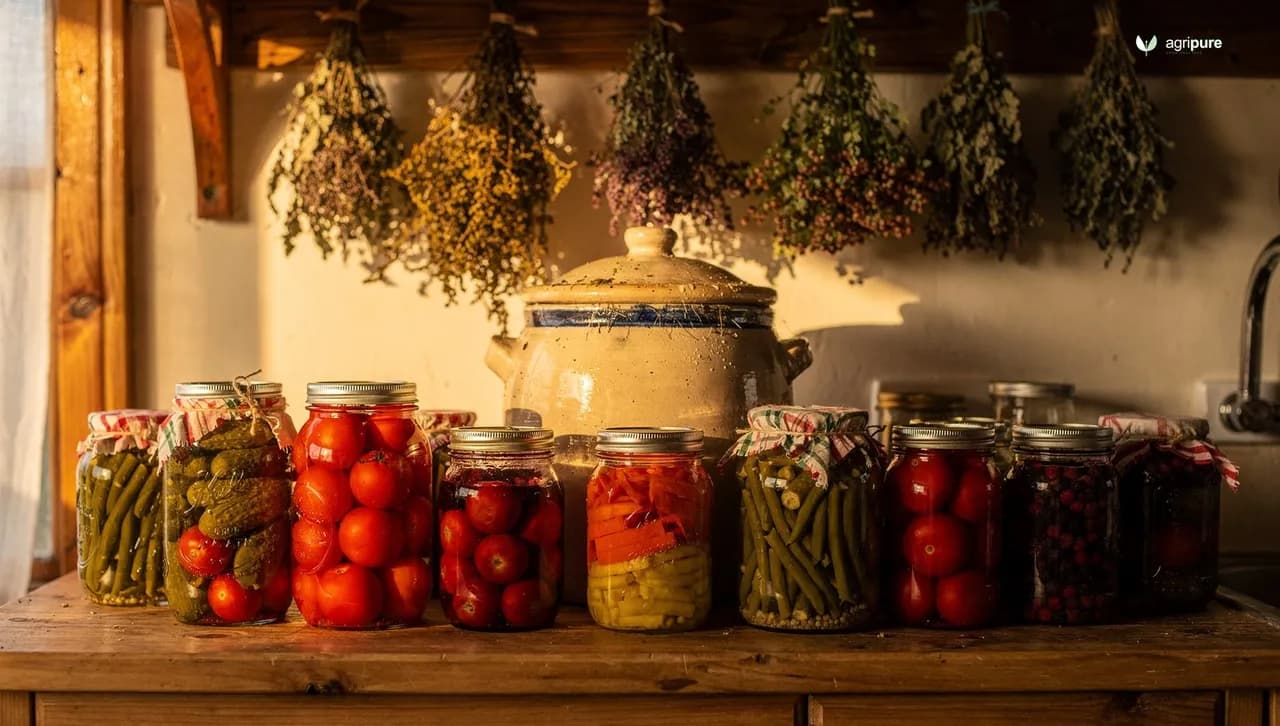
A rustic homestead kitchen counter filled with a bountiful harvest of fresh produce like tomatoes, green beans, and berries, alongside preserving tools such as canning jars, fermentation crocks, and a drying rack. The scene is warm and inviting, illustrating the process of year-round food preservation.
From garden abundance to a year-round pantry: a homestead kitchen ready for preserving the season’s harvest, embodying self-reliance and sustainable living.
- The homestead kitchen turns a short harvest into year-round food through 4 core methods.
- Water-bath canning suits high-acid foods; low-acid foods need a pressure canner for safety.
- Fermenting is the easiest start: cabbage and salt at 2 percent of its weight make sauerkraut.
- Drying and freezing need no special skill and preserve most produce.
- A homestead pantry is built from scratch, jar by jar, over the seasons.
A homestead does not end at the garden gate. The harvest from a productive garden or a flock of backyard hens arrives all at once, and the kitchen is where it becomes a year of meals instead of a week of gluts. Preserving is the skill the old Appalachian homesteads judged a good year by, and it rests on just 4 methods.
The four ways to preserve
Almost everything you grow can be kept by 1 of 4 methods: canning, fermenting, drying, and freezing. Each suits different foods and skill levels, and most homesteaders use all 4 across a season. Start with the 2 easiest, drying and freezing, then add canning and fermenting as confidence grows.
A homestead counter covered with jars of home-canned tomatoes, pickles, and jam beside a large canning pot
Method | Best for |
|---|---|
Canning | Tomatoes, jam, pickles, sauces, beans |
Fermenting | Cabbage, cucumbers, hot sauce, kimchi |
Drying | Herbs, fruit, chilies, mushrooms |
Freezing | Berries, beans, greens, and meat |
Canning: water bath versus pressure
Canning is the workhorse, but it splits in 2 by the acidity of the food, and the split is a safety line, not a preference. Water-bath canning handles high-acid foods like tomatoes, jam, and pickles by boiling sealed jars. Low-acid foods, beans, corn, and meat, must use a pressure canner to reach the temperature that kills botulism spores.
Rows of sealed glass canning jars filled with colorful preserved vegetables cooling on a kitchen towel
Food type | Safe method |
|---|---|
High-acid (tomatoes, fruit, pickles) | Water-bath canning |
Low-acid (beans, corn, meat) | Pressure canning only |
Fermenting is the easiest start
If canning feels daunting, start with fermenting, which needs no heat and almost no gear. Naturally present Lactobacillus bacteria turn sugars into lactic acid, which both sours and preserves the food. The classic first ferment is sauerkraut: shred cabbage, massage in salt at 2 percent of its weight, pack it under its own brine, and wait.
The 2 percent rule: for a safe, crisp ferment, weigh your vegetables and add salt equal to 2 percent of that weight, about 20 grams per kilogram. Too little invites spoilage; too much stalls the bacteria. Keep everything below the brine, and the lactic acid does the rest, no canner required.
Build a pantry from scratch
Those methods all feed 1 goal: a homestead pantry. It is a stock of shelf-stable, from-scratch food, home-canned jars, dried herbs, ferments, whole grains, and baking staples, that turns daily cooking into a draw from your own stores. Build it gradually, 1 batch at a time, the same way you build self-reliance itself.
Pantry layer | Examples |
|---|---|
Home-canned | Tomatoes, sauces, jam, pickles |
Dried and frozen | Herbs, fruit, beans, berries |
Dry staples | Grains, flour, salt, and home-baked basics |
The takeaway
Those 4 methods are the whole homestead kitchen. Preserving is what turns a seasonal glut into year-round food: dry and freeze for an easy start, water-bath can the high-acid foods, pressure can the low-acid ones safely, and ferment for almost free. Put up 1 batch this week, and judge the year by what survives to winter.
Frequently asked questions
What are the main ways to preserve food on a homestead?
Four methods cover almost everything: canning, fermenting, drying, and freezing. Drying and freezing are the easiest to start with, while canning and fermenting take a little more learning. Most homesteaders use all four across a season depending on the crop.
What is the difference between water-bath and pressure canning?
It is a safety line based on acidity. Water-bath canning safely preserves high-acid foods like tomatoes, fruit, and pickles in boiling water. Low-acid foods such as beans, corn, and meat must be pressure canned to reach the higher temperature that kills botulism spores.
How do I start fermenting vegetables?
Begin with sauerkraut. Shred cabbage, weigh it, and massage in salt equal to 2 percent of its weight, about 20 grams per kilogram. Pack it tightly so the brine rises above the cabbage, keep it submerged, and let naturally present bacteria do the work.
Is home canning safe?
Yes, when you follow tested recipes and match the method to the food. Use water-bath canning only for high-acid foods and a pressure canner for low-acid foods. Follow guidance from a trusted source like the National Center for Home Food Preservation to avoid botulism risk.
What goes in a homestead pantry?
A homestead pantry holds shelf-stable, from-scratch foods: home-canned jars, dried herbs and fruit, ferments, whole grains, baking staples, and simple homemade convenience items. It is built gradually, batch by batch, so daily cooking draws from your own stores.
References
- National Center for Home Food Preservation. “Home Food Preservation.” nchfp.uga.edu
- Homesteading Family. “Canning 101: Intro to Canning.” homesteadingfamily.com
- The Backyard Farming Connection. “25 Food Preservation Skills.” backyardfarmingconnection.com
- The Prairie Homestead. “My Favorite Ways to Preserve Food at Home.” theprairiehomestead.com
- Keeping It Holistic. “How to Build a Homestead Pantry From Scratch.” keepingitholistic.com