Key takeaways

The no-dig method: lay cardboard over grass, then cover with a generous layer of nutrient-rich compost to build healthy soil.
- Permaculture gardening turns the design philosophy into 3 hands-on habits: no-dig beds, guilds, and zones.
- No-dig builds soil by layering organic matter on top instead of turning it.
- A guild groups 5 or more plants around an anchor so they feed and defend each other.
- Zones 0 to 5 place each element by how often you visit it.
- Start with 1 bed and 1 technique, then expand over 2 to 3 seasons.
If permaculture is the philosophy, permaculture gardening is the part you do with your hands. It takes 1 big idea, design so the pieces feed each other, and turns it into 3 concrete habits: build soil without digging, plant in guilds, and place everything by zone. Master those 3 and a garden that took weekends to maintain starts maintaining itself.
No-dig: build soil, do not turn it
The first habit overturns the oldest gardening reflex: do not dig. No-dig gardening builds fertility by layering organic matter on top, the way a forest floor does, so soil life stays intact and weeds are smothered rather than churned up. The simplest start is sheet mulching: cardboard over the grass, then 2 to 3 inches of compost on top.

Plant in guilds, not rows
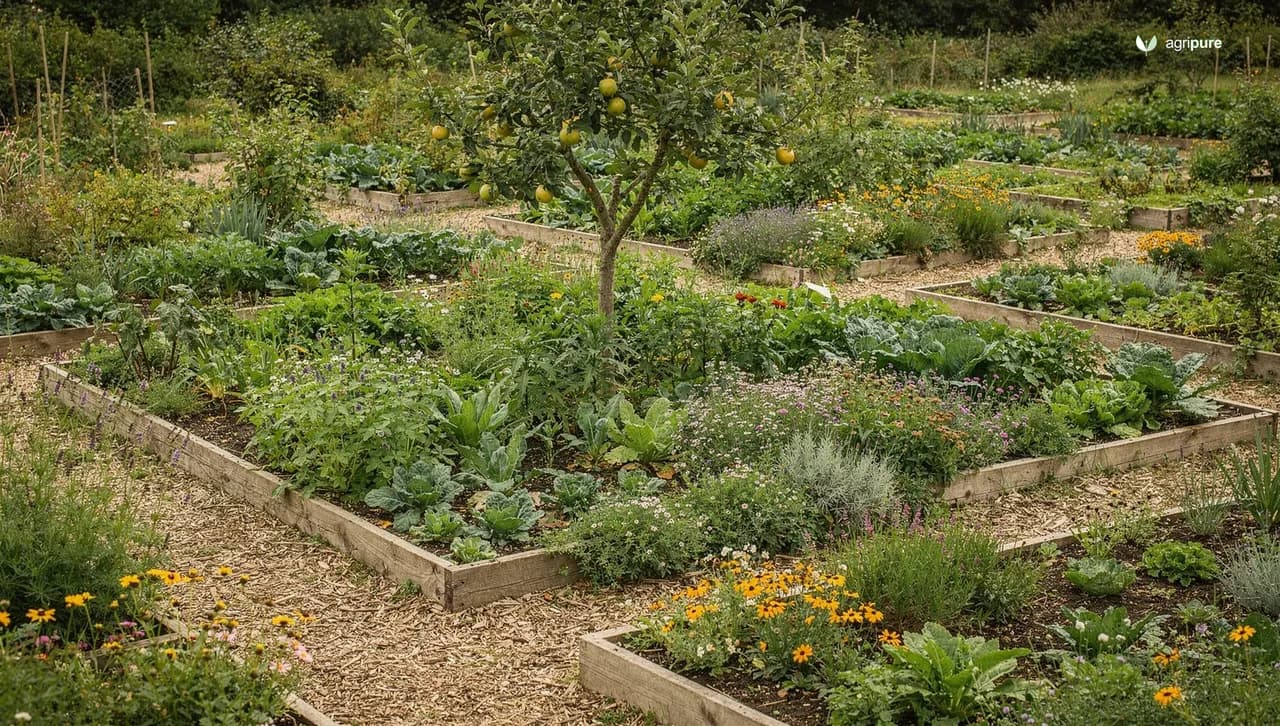
That living soil feeds the second habit: the guild. A guild is a team of 5 or more plants set around 1 anchor, usually a fruit tree, each doing a job. The classic apple guild stacks comfrey to mine nutrients, clover to fix nitrogen, chives to repel pests, and nasturtium to pull in beneficial insects, so the group needs far less feeding than the same plants grown apart. (Use sterile ‘Bocking 14’ Russian comfrey to prevent invasive seeding, and apply strictly as chop-and-drop mulch or external liquid fertilizer; never consume comfrey internally due to hepatotoxic pyrrolizidine alkaloids.)

Guild role | Example plant |
|---|---|
Anchor and yield | A fruit tree such as an apple |
Nutrient miner | Comfrey, with deep roots |
Nitrogen fixer | Clover or another legume |
Pest confuser and insectary | Chives and nasturtium |
Place everything by zone
Those guilds need to sit in the right place, which is where zones come in. Permaculture splits a site into 6 zones, 0 through 5, by how often you visit: zone 1 holds the daily kitchen garden by the door, while zone 5 is left wild. Put the herbs you cut nightly in zone 1 and the orchard you visit weekly in zone 2, and the garden stops wasting your steps.
Zone | What lives there |
|---|---|
1 | Kitchen garden, herbs, the things you touch daily |
2 | Orchard, compost, chicken coop, visited weekly |
3 to 5 | Main crops, pasture, woodlot, then wild land |
Start small and let it mature
Those 3 habits work best rolled out slowly. Plant 1 or 2 no-dig beds before converting the whole yard, and try 1 new technique per season rather than all at once. The first 1 to 2 years take the most hands-on time; after that, as perennials and plant guilds mature, the system does more of the work for you.
The one-bed rule: build a single no-dig bed this season and plant 1 guild in it. You will learn more from 1 bed you tend well than from a whole yard you cannot keep up with. Expand only the parts that thrived, the same way an acre homestead grows one win at a time.
The takeaway
Those 3 habits are permaculture made practical. No-dig builds the soil, guilds build the plant community, and zones build the layout, and together they turn a high-maintenance plot into a low-work system. Start with 1 bed, 1 guild, and zone 1, and let next season build on this one.
Frequently asked questions
What is permaculture gardening?
It is the hands-on practice of permaculture in a garden: building soil with no-dig beds, planting in mutually supportive guilds, and placing each element by zone according to how often you visit it. The goal is a productive garden that needs less work each year.
What is no-dig gardening?
No-dig builds soil by layering organic matter on top rather than turning it. A common method is sheet mulching: lay cardboard over grass, add 2 to 3 inches of compost, and top with straw. It keeps soil life and structure intact and smothers weeds.
What is a plant guild?
A guild is a group of five or more plants placed around an anchor, usually a fruit tree, where each plays a role: nutrient mining, nitrogen fixing, pest control, or attracting beneficial insects. The classic apple guild pairs comfrey, clover, chives, and nasturtium.
What are permaculture zones?
Zones 0 to 5 organize a site by how often you visit each part. Zone 0 is the home, zone 1 the daily kitchen garden, zone 2 the weekly orchard and compost, zones 3 and 4 main crops and woodlot, and zone 5 wild land left mostly alone.
How do I start a permaculture garden?
Start small. Build one or two no-dig beds, plant a single guild, and place them in zone 1 near the door. Try one new technique per season. The first year or two take the most effort; after that the maturing system does more of the work.
References
- Verge Permaculture. “Beginner’s Guide to Permaculture Gardening.” vergepermaculture.ca
- MasterClass. “How to Start a Permaculture Garden.” masterclass.com
- Urban Farm Store. “What Is Permaculture? Principles, Zones & How to Start.” urbanfarmstore.com
- The Ecologist. “A Beginner’s Guide to Permaculture Gardening.” theecologist.org
- USDA Agricultural Research Service. “Plant Hardiness Zone Map.” planthardiness.ars.usda.gov