Key takeaways
A person kneeling in a field, sifting dark, rich soil through their fingers, with a faint wellhead visible in the background.
Soil quality and water access are the two things to check before buying land for a homestead.
- Land is the one homestead choice you cannot undo, so vet it before you commit.
- Water comes first: confirm well, septic capability, and any surface-water rights in writing.
- Loamy, well-draining soil is ideal; a failed perc test means no septic permit.
- Buy land zoned agricultural or rural residential, never commercial or single-family.
- Plan 2 to 5 acres for a garden and chickens, 20 to 30 for full food self-sufficiency.
Of every homestead decision, buying the land is the only one you truly cannot undo. You can rebuild a coop, amend a bed, or move a fence, but you cannot move a dry parcel closer to water or rezone it by wishing. Picking the right state is step 1, covered in best states for homesteading, but the parcel itself is where the money and the risk concentrate. Vet it on water, soil, zoning, and access before you sign.
Water comes first, always
Before anything else, solve water, because no homestead works without it. Confirm the land can support a well, often drilled 100 to 400 feet down, and a septic system, and identify your sources, whether a well, a stream, or rainwater catchment. In western states especially, surface-water rights are often separate from the deed, so get in writing what water use legally comes with the parcel.
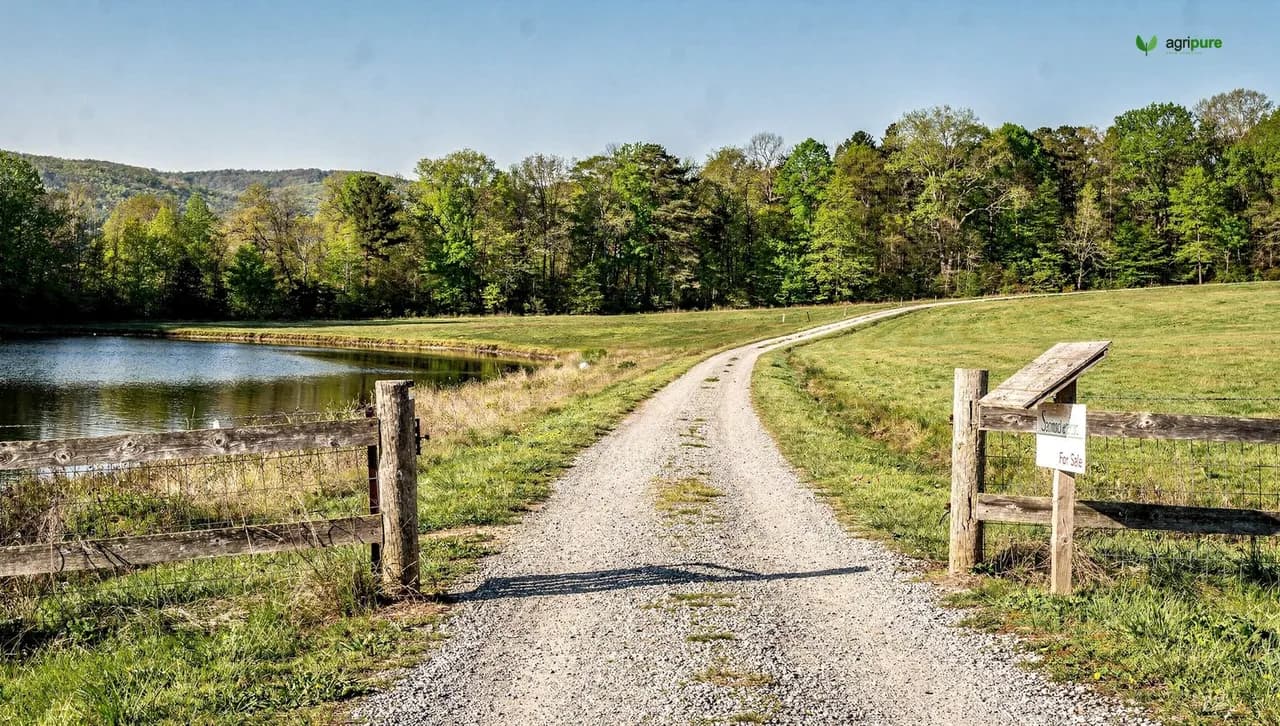
A rural property with a pond and a windmill well pump on green pasture, hills behind, clear day
Water question | Why it matters |
|---|---|
Can it support a well? | Your primary year-round supply |
Will the soil pass a perc test? | No perc, no septic permit |
What water rights convey? | In the West, the deed may not include them |
Soil and the perc test
That water question runs straight into the soil. The ideal is loam, a balanced mix of sand, silt, and clay that drains yet holds moisture; squeeze a moist handful and good loam holds its shape, then crumbles. Just as important, order a perc test, usually $300 to $700, during due diligence: this county test measures drainage, and failing it means no septic permit, which can make a parcel unbuildable.
A hand squeezing a clump of dark loamy soil over a freshly dug test hole in a rural field
Zoning and legal access
Even perfect land is useless if the law forbids your plans. Buy parcels zoned agricultural or rural residential, never commercial or single-family, and call the county planning department with the parcel number and ask 2 plain questions: can you raise livestock, and can you build a home. Confirm legal access too, since a landlocked parcel with no recorded road easement is a trap.
Check before you buy | How to confirm it |
|---|---|
Zoning and land use | Call the county with the parcel number |
Legal road access | Recorded easement, not a handshake |
Title, liens, mineral rights | A title search during escrow |
How much land you need
Those checks done, size the parcel to your goal, not your dreams. A family growing vegetables and keeping a few hens does meaningful homesteading on 2 to 5 acres, the scale of a small homestead. Raising your own beef, grain, and reaching true self-sufficiency pushes you toward 20 to 30 acres or more.
The due-diligence rule: never waive your inspection period to win a parcel. Use it to order a perc test, a title search, and a water-rights check, and to call the county about zoning. A few hundred dollars and 2 weeks of homework here prevents the 1 mistake on a homestead you can never take back.
The takeaway
Buy it on water, soil, zoning, and access, in that order, confirm the perc test and water rights in writing, and match the acreage to your real goals. Spend the 2 weeks of due diligence before you sign, and the rest of the homestead becomes a matter of time and work.
Frequently asked questions
What should I look for when buying land for homesteading?
In order: water, soil, zoning, and legal access. Confirm the land can support a well and septic, that the soil is workable and passes a perc test, that zoning allows livestock and a home, and that there is recorded road access. Verify water and mineral rights too.
What is a perc test and why does it matter?
A percolation (perc) test is a county-required test measuring how fast water drains through the soil. It determines whether you can install a septic system. Failing the perc test means no septic permit, which can make a rural parcel effectively unbuildable, so order one during due diligence.
How much land do I need to homestead?
It depends on your goals. A family growing vegetables and keeping a few chickens can homestead meaningfully on 2 to 5 acres. Raising your own beef, growing grain, and reaching full food self-sufficiency typically needs 20 to 30 acres or more.
Does buying rural land include water rights?
Not always, especially in western states, where surface-water rights are often separate from land ownership. Owning the deed does not guarantee you may use a stream or pond on the property. Always confirm in writing what water rights convey before closing.
What zoning should homesteading land have?
Look for agricultural or rural residential zoning, which generally allows livestock and a primary residence. Avoid commercial and single-family residential zoning, which restrict farm activity. Call the county planning department with the parcel number and ask exactly what you may do.
References
- Landmodo. “How to Buy Land for Homesteading.” landmodo.com
- Rethink Rural. “12 Things to Look for in a Homesteading Property.” rethinkrural.raydientrural.com
- Eartheasy. “Choosing Land for Homestead Living.” learn.eartheasy.com
- LandApp. “What to Know When Picking Property for Homesteading.” landapp.com
- Vermont Real Estate (NE Landmark). “How to Buy Land for Homesteading.” nelandmark.com