Key takeaways

A well-placed rainwater harvesting system can reduce reliance on municipal water and provides a free source for garden irrigation and other non-potable uses.
- Every inch of rain on 1,000 square feet of roof yields about 620 gallons.
- A first-flush diverter sends the dirty first runoff away from the tank.
- Storage ranges from a 50-gallon barrel to multi-thousand-gallon cisterns.
- Rainwater harvesting is legal in most of the US; only a few states restrict it.
- For garden use it needs little treatment; drinking water needs filtration.
Rain is the one water source on a homestead that arrives free and clean, and most of it runs off the roof into the ground. Rainwater harvesting captures it, easing the well and the bill and feeding the garden through a dry spell. It is a cornerstone of off-grid living and sustainable living alike, and the math behind it is simple enough to do on a napkin.
How much you can collect
Start with the 1 number that runs everything: 0.62 gallons per square foot of roof per inch of rain. That means every inch falling on 1,000 square feet of roof yields about 620 gallons. A 2,000 square foot roof in a 32-inch-rain climate can capture on the order of 32,000 gallons a year after system losses, far more than most gardens use.

Roof and rain | Annual yield (approx.) |
|---|---|
1,000 sq ft, 1 inch | About 620 gallons |
2,000 sq ft, 32 inches/year | Around 32,000 gallons |
The parts of a system
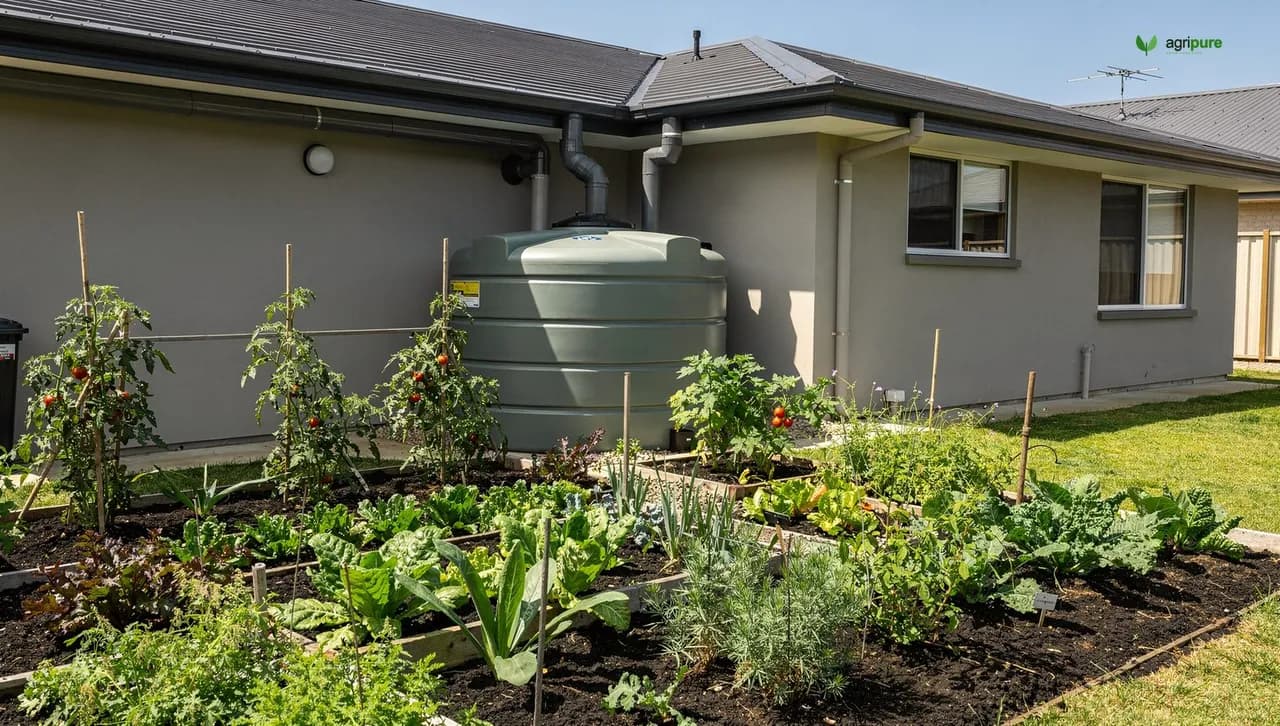
That water needs a clean path from roof to tank. A working system is just 4 parts: gutters to collect, a first-flush diverter to dump the dirty initial runoff, a screened storage tank, and an outlet to the garden. The diverter matters most for quality, since the first flow carries dust and bird droppings off the roof.

Sizing storage and the first flush
Two numbers size the hardware. Storage ranges from a single 50-gallon barrel to cisterns of several thousand gallons; match it to your roof, rainfall pattern, and how long a dry spell you want to bridge. For the first-flush diverter, plan to dump at least 10 gallons per 1,000 square feet of roof for each inch of rain before the clean water flows.
Component | Rule of thumb |
|---|---|
Storage | 50-gallon barrel up to multi-thousand-gallon cistern |
First-flush diverter | Dump 10+ gallons per 1,000 sq ft per inch |
Inlet screen | Always, to keep out debris and mosquitoes |
Know your local law
One quick check saves trouble: the law. Rainwater harvesting is legal in most of the US, with 46 of the lower 48 states either not regulating it or actively encouraging it. The notable exception is Colorado, which limits homes to 2 barrels and 110 gallons total for outdoor use, the same water-rights caution that shapes Texas water rules.
The garden-first rule: harvested rainwater is excellent for irrigation with almost no treatment, which is where most homesteads should start. Using it for drinking is possible but needs filtration and disinfection, so begin by plumbing your tank to the garden and add potable treatment only if you truly need it.
The takeaway
Rainwater harvesting is the highest-return water project on a homestead. Remember the 0.62 gallons per square foot per inch, add a first-flush diverter, size the tank to your dry spells, and check your state’s rules. Start by catching roof water for the garden, and let the free supply grow from there.
Frequently asked questions
How much rainwater can I collect from my roof?
About 0.62 gallons per square foot of roof per inch of rain, so every inch on a 1,000 square foot roof yields roughly 620 gallons. A 2,000 square foot roof in a 32-inch climate can capture on the order of 32,000 gallons a year after system losses.
What is a first-flush diverter and do I need one?
It is a device that dumps the first several gallons of runoff, which carry dust and bird droppings off the roof, before clean water reaches the tank. Plan to divert at least 10 gallons per 1,000 square feet of roof per inch of rain. It greatly improves stored water quality.
How big should my rainwater tank be?
Anywhere from a single 50-gallon barrel to a cistern of several thousand gallons, sized to your roof area, rainfall pattern, and how long a dry spell you want to bridge. Garden users often start with one or two barrels and scale up to a cistern over time.
Is rainwater harvesting legal?
In most of the United States, yes. Forty-six of the lower 48 states either do not regulate rainwater collection or actively encourage it. Colorado is the most restrictive, limiting homes to two barrels totaling 110 gallons for outdoor use, so check your state’s rules.
Can I drink harvested rainwater?
You can, but only after proper filtration and disinfection. For most homesteads, the best starting use is garden irrigation, which needs almost no treatment. Add potable treatment such as filtration and UV or chemical disinfection only if you intend to drink it.
References
- US Department of Energy. “Rainwater Harvesting Systems Technology Review.” energy.gov
- Colorado State University Extension. “Rainwater Collection in Colorado.” extension.colostate.edu
- Oregon State University Extension. “Rainwater Harvesting in Tanks or Cisterns.” extension.oregonstate.edu
- Rain Bird. “Harvesting Rainwater: A Beginner’s Guide.” rainbird.com
- WaterCache. “Rainwater Harvesting 101.” watercache.com