Key takeaways
A homestead scene showing Texas's varied climates: a wooden barn with a rainwater harvesting system, arid land and mesas on one side, and lush vegetation on the other and reflecting the contrast between West Texas and the humid Gulf Coast.
From arid western plains to humid coastal zones, Texas offers a wide range of climates for homesteaders. Adapt your plans to the region, especially with water management like rainwater harvesting.
- Texas spans arid West Texas desert to the humid subtropical Gulf Coast, so region decides what you grow.
- Rural land zoned agricultural or unzoned is the easiest place to homestead off-grid.
- An ag exemption usually needs 10 to 15 acres and farm use in 5 of the past 7 years.
- Rainwater harvesting is fully legal in Texas, even for drinking.
- The state owns surface water, so a stream on your land needs a TCEQ permit to use.
Texas keeps landing on every best states for homesteading list, and for solid reasons: no state income tax, cheap rural land, legal rainwater, and generous agricultural tax breaks. But Texas is less a place than a continent of climates, spanning USDA zones 6 to 9 across more than 170 million acres, and its rules on land and water reward homesteaders who do their homework. Here is what to weigh before you buy and start living off the grid.
Texas is many climates, not one
The first thing to grasp is that Texas has no single climate. It runs from the arid deserts of West Texas, under 10 inches of rain a year, to the humid Gulf Coast with 50 inches, so the region you choose sets your water, soil, and what you can raise. A plan that thrives near Houston will struggle near El Paso, 700 miles west.
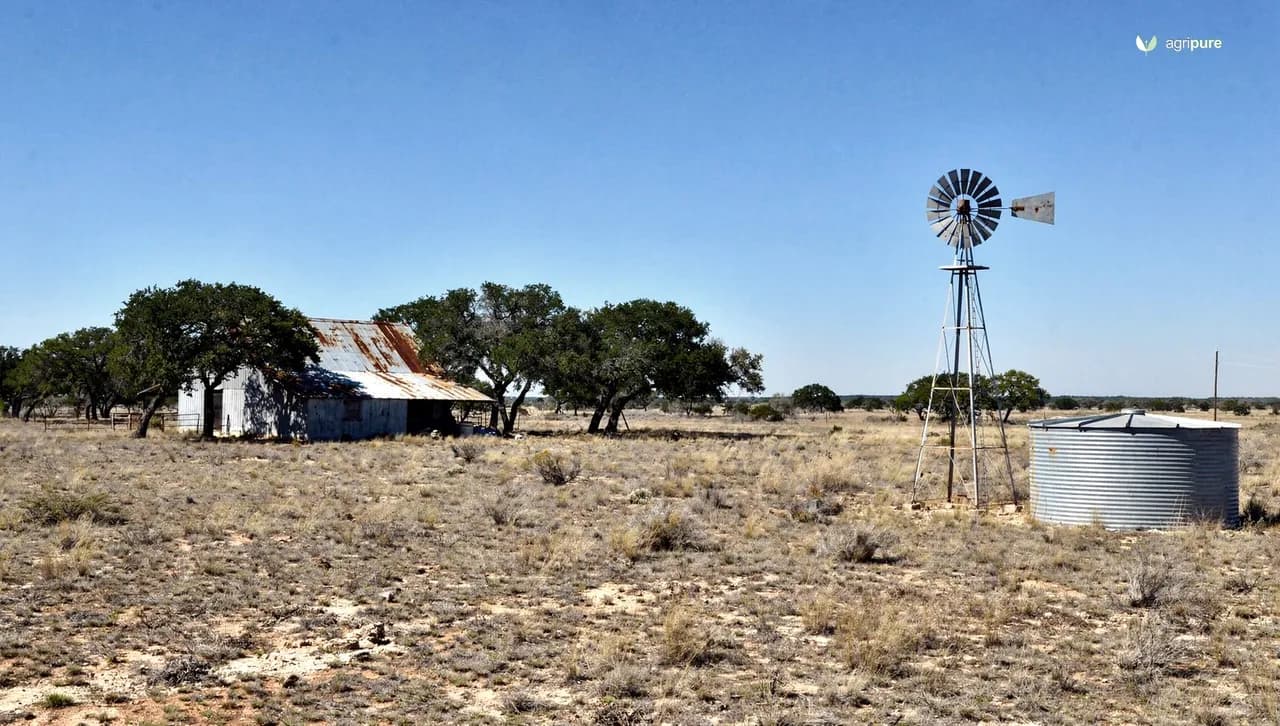
A wide Texas rural landscape with dry grassland, scattered oaks, and a distant ranch under a vast sky
Texas region | Homesteading reality |
|---|---|
West Texas | Arid, cheap land, water is the limiting factor |
Hill Country and Central | Mild, popular, rockier soils |
Gulf Coast and East | Humid, long season, more rain and pests |
Land and zoning
That climate map pairs with a friendly land map. Texas has vast rural acreage zoned agricultural or not zoned at all, which is where off-grid building is easiest; residential and commercial zoning bring far more restrictions. County rules decide the details, so 2 parcels 1 mile apart can differ sharply, and you should vet each one the same way you would judge any acre.
Land type | Off-grid friendliness |
|---|---|
Agricultural or unzoned rural | Most freedom to build and live off-grid |
Residential or commercial | Many codes and restrictions |
The agricultural exemption
That ag land carries a real prize: the agricultural exemption, which taxes land on its farm value rather than market value and can slash the bill. Counties usually want 10 to 15 acres, used for agriculture in at least 5 of the past 7 years, and producing income. It is the single biggest reason Texas property taxes become manageable for homesteaders.
A large rainwater collection tank beside a Texas farmhouse with gutters feeding it, dry land around
Water: own the rain, not the stream
Water is where Texas surprises newcomers. The state owns the surface water, so even a creek crossing your land needs a TCEQ permit to use. But rainwater is the opposite: harvesting it is completely legal, even for drinking, and a stock-tank exemption lets you build ponds capturing up to 200 acre-feet a year for home and livestock use.
The rain-first rule: in much of Texas, plan your homestead around captured rainwater and a well, not the creek on the deed. Surface water needs a state permit, while rooftop rainwater is yours to keep. In the dry west, a good catchment and tank matter more than the acreage itself.
The takeaway
Texas rewards the prepared homesteader. As 1 of the states with no income tax, it offers cheap rural land, legal rainwater, and ag exemptions on 10-plus acres, but the climate you choose and the county you land in decide the rest. Pick your region for water and season, buy ag or unzoned land, and plan around the rain. Then start building the homestead itself.
Frequently asked questions
Is Texas a good state for homesteading?
Yes, for the prepared. Texas offers no state income tax, large amounts of cheap rural land, fully legal rainwater harvesting, and agricultural tax exemptions. The catch is its huge range of climates and county-level rules, so the region and parcel you choose matter enormously.
How many acres do you need for an ag exemption in Texas?
Usually 10 to 15 acres, though it varies by county and the type of agriculture. The land must have been used for agriculture in at least five of the past seven years and be used to produce income. The exemption taxes land on farm value, sharply lowering property tax.
Is rainwater harvesting legal in Texas?
Yes, and Texas is one of the best states for it. Rainwater counts as drainage water and is completely legal to capture, even for drinking. The state also offers a stock-tank exemption allowing ponds that capture up to 200 acre-feet a year for domestic and livestock use.
Can I use a creek or stream on my Texas property?
Not freely. The state of Texas owns surface water, so even a stream or lake on your land requires a permit from the Texas Commission on Environmental Quality before you can use it. This is why many Texas homesteaders rely on rainwater and wells instead.
Where in Texas is best for homesteading?
It depends on your priorities. West Texas has the cheapest land but scarce water; the Hill Country and Central Texas are mild and popular but rockier; the Gulf Coast and East Texas are humid with long growing seasons but more rain and pests. Match the region to your water and crop plans.
References
- Homesteading Simple. “Homesteading in Texas.” homesteadingsimple.com
- Primal Survivor. “Texas Off-Grid Laws.” primalsurvivor.net
- Texas Farm Credit. “Ag Exemptions and Why They Are Important.” texasfarmcredit.com
- Texas Hill Law Group. “A Guide to Water Rights in Texas.” thlg.law
- Bertie’s Homestead. “Homesteading in Texas: Everything You Need to Know.” bertieshomestead.com