Key takeaways
An aerial shot of a diverse group of people, representing homesteaders, gathered around a large topographical map on an outdoor wooden table, pointing to different regions and discussing land features. In the background, a lush vegetable garden, a small wooden barn, and a few chickens are visible under a clear sky, conveying a sense of rural self-sufficiency.
Choosing the right state for your homestead involves more than just a list of ‘best places.’ It requires careful consideration of critical factors like land cost, water rights, and local regulations. Examine the data and compare your needs to what each region offers to make an informed decision.
- Tennessee, Idaho, Missouri, Oklahoma, West Virginia, Texas, and Oregon top most homesteading lists.
- Judge a state on land cost, water rights, growing season, taxes, and zoning, not vibes.
- Tennessee has no income tax and a 9-month growing season; rural property tax runs $400 to $900.
- Missouri offers flexible land use, good soil, and no statewide rainwater-harvesting ban.
- County and township rules often matter more than the state, so always check locally.
Every “best states for homesteading” list looks authoritative until you realize they rank different things. The honest answer is that the best state is the one whose land, water, and law fit your plan, whether that is a market garden, a herd, or off-grid living. Still, a handful of states keep topping the lists for good reasons, and knowing how to weigh them matters more than the ranking itself.
What actually makes a state good
Before any ranking, know the 5 levers that decide it. Land cost sets your entry price, water rights decide whether you can use the rain and streams on your land, growing season sets what you can raise, and taxes and zoning decide what it costs to keep and what is legal to build. Weigh those 5, not the marketing.
Lever | Ask |
|---|---|
Land cost | What does usable acreage actually cost here? |
Water rights | Can I harvest rain and use my own stream? |
Growing season | How many frost-free months and what zone? |
Taxes and zoning | Income and property tax, and what is legal to build? |
The states that keep topping the lists
Weighed on those levers, the same names recur. Tennessee, Idaho, Missouri, Oklahoma, West Virginia, Texas, and Oregon lead most 2026 rankings, each for a different mix of cheap land, friendly law, or long seasons. There is no single winner, only the best fit for your priorities, much like choosing how to use a single acre.
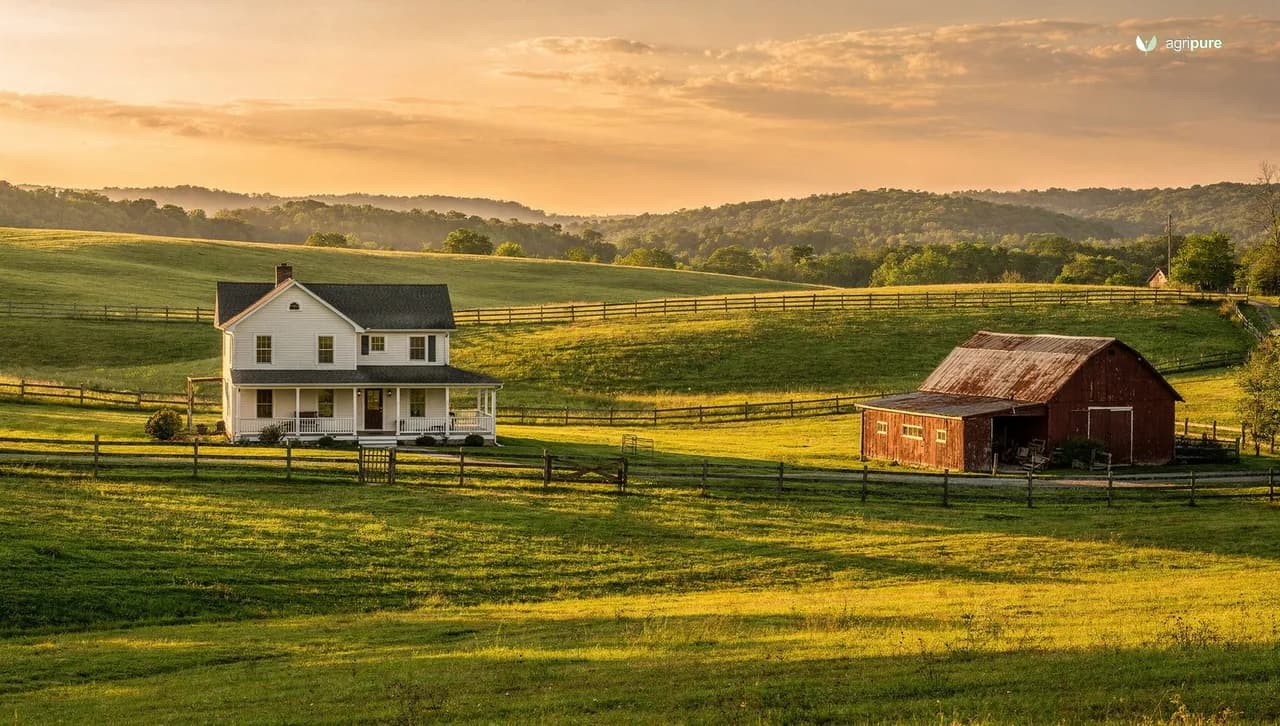
A wide rural American landscape of green pasture, woodlots, and a distant farmhouse under a big sky
State | Draw for homesteaders |
|---|---|
Tennessee | No income tax, long season, strong community |
Missouri | Flexible land use, good soil, friendly water rules |
Idaho | Cheap rural land and space, though water rights bind |
Texas | No income tax, legal rainwater, ag exemptions |
Tennessee and Missouri up close
Two of those deserve a closer look. Tennessee pairs no state income tax with rural property tax of just $400 to $900 a year and a growing season that runs 9 of 12 months. Missouri counters with excellent soil for row crops and pasture, flexible land use, and no statewide ban on rainwater harvesting, with less water-rights red tape than Idaho.
A productive small farm with a red barn, vegetable rows, and grazing animals on green rolling land
Check the county, not just the state
Those state-level perks can vanish at the county line. Zoning, septic rules, water use, and even whether you can live in an RV while you build are usually set by the county or township, so 2 parcels 1 mile apart can have very different rules. Vet the specific property, not just the state.
The one-mile rule: never judge a property by the state ranking alone. Call the county planning and health departments about the exact parcel before you buy, since zoning, septic approval, and water use are decided locally. The friendliest state can still hold a county that bans what you came to do.
The takeaway
Those lists are a starting point, not an answer. The best state for homesteading is the one whose land, water, and law fit your plan: Tennessee and Missouri lead for many, but the parcel and its county decide what you can actually do. Shortlist on the 5 levers, then verify locally before you commit to the land.
Frequently asked questions
What is the best state for homesteading?
There is no single best state; it depends on your goals. Tennessee, Idaho, Missouri, Oklahoma, West Virginia, Texas, and Oregon top most 2026 lists. Tennessee and Missouri are especially popular for low taxes, long seasons, and friendly land and water rules.
Why is Tennessee good for homesteading?
Tennessee has no state income tax, low rural property taxes of about $400 to $900 a year, and a growing season that runs roughly nine of twelve months. It also has one of the strongest homesteading and farming communities in the country.
What should I look for when choosing a homesteading state?
Weigh five levers: land cost, water rights, growing season, taxes, and zoning. Together they decide your entry price, what you can grow, what it costs to keep, and what is legal to build. The cheapest land is no bargain if you cannot use the water.
Does the state or the county matter more?
Often the county. Zoning, septic rules, water use, and RV or outbuilding rules are usually set locally, so two parcels a mile apart can have very different rules. Always verify the specific property with county planning and health departments before buying.
Which states have the friendliest water laws?
States in the wetter East and Midwest, like Tennessee and Missouri, generally have simpler water rules and allow rainwater harvesting. Western states like Idaho use complex prior-appropriation water rights, which can limit how you use water on your own land.
References
- EcoFlow. “Best States for Homesteading: 2026 Guide.” energy.ecoflow.com
- World Population Review. “Best States to Homestead.” worldpopulationreview.com
- HomeBiogas. “10 Best States for Homesteading.” homebiogas.com
- Rediscover Rural. “Best States for Homesteading in 2026.” rediscoverrural.com
- LandApp. “Best States for Homesteading.” landapp.com