Key takeaways

Silvopasture combines trees, forage, and livestock on the same land. It is an old practice within modern agroforestry that improves animal welfare and makes fuller use of the land.
- Silvopasture is the deliberate integration of trees, forage, and grazing on the same land.
- It is one of the 5 USDA agroforestry practices, designed to work like an open savannah.
- Rotational grazing with short grazing periods is the key to protecting the trees.
- Shade cuts livestock heat stress and keeps forage growing later into a dry season.
- Grazing income cash-flows the land while the tree crop matures.
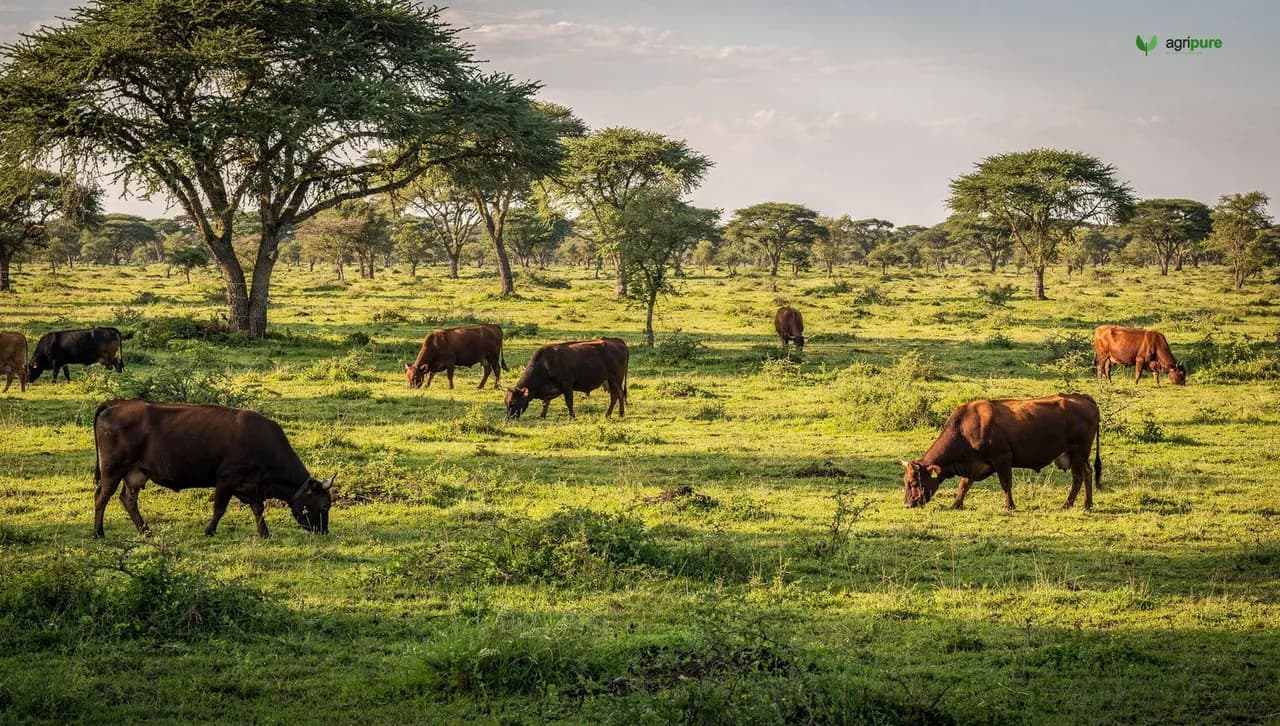
Silvopasture is the most productive answer to a simple question: why graze an open field when the same acre could grow trees too? It is the deliberate integration of trees, forage, and livestock on 1 piece of land, 1 of the 5 agroforestry practices, and it is designed to function like a savannah, not a forest. Done well, the trees and the herd make each other better.
What silvopasture is
The word says it: silva, Latin for trees of a region, joined to pasture. The point is deliberate integration, widely spaced trees over managed forage that livestock graze, not animals turned loose in a woodlot. That spacing is the whole design: enough canopy for shade, enough sun for grass, like a 30 percent shaded savannah.
Silvopasture is | Silvopasture is not |
|---|---|
Trees spaced over sown or native forage | Cattle set loose in dense woods |
Rotational grazing to spare the trees | Continuous grazing that strips bark and roots |
A planned 2 or 3 layer system | An afterthought on leftover ground |
How it works on the ground
That design only holds with management, and the key tool is rotational grazing. Short grazing periods of a few days, followed by weeks of rest, maximize forage regrowth and keep stock from compacting roots or stripping young bark. Most systems pair improved or native grasses with nitrogen-fixing legumes and a planned fertility program.

What it gives you
That management buys 3 returns at once. The grazing income cash-flows the land while the trees mature into timber, nuts, or fruit, so you earn in year 1 and again in year 20. The shade cuts livestock heat stress, lifting performance for everything from cattle to a backyard flock, and it holds soil moisture so forage keeps growing weeks later into a dry summer.

Return | How it shows up |
|---|---|
Cash flow | Grazing pays while the tree crop grows |
Animal welfare | Shade cuts heat stress and lifts performance |
Resilience | Shade holds moisture, extending forage in drought |
Establishing it without killing the trees
Those gains hinge on getting young trees through the early years, when a hungry herd is their biggest threat. Either plant trees into existing pasture and protect them with guards for 3 to 5 years, or thin an existing woodlot and sow forage beneath, with the same design-first patience good systems reward. Keep animals off newly planted trees until the bark is too high and tough to strip.
The bark-height rule: young livestock will strip and snap a sapling in an afternoon. Fence stock out, or use sturdy tree guards, until the trees are tall enough that the lowest browse line is above the animals’ reach. Lose this step and you lose the 20-year half of the system.
The takeaway
Those 3 layers make silvopasture the densest acre in agroforestry. It is a planned savannah, not a grazed woodlot: space the trees, sow the forage, graze in short rotations, and protect the saplings for their first 3 to 5 years. Start with 1 paddock, prove the rotation, and let the trees grow into profit.
Frequently asked questions
What is silvopasture?
Silvopasture is the deliberate integration of trees, forage, and grazing livestock on the same land. It is one of the five USDA agroforestry practices and is designed to function like an open savannah, with widely spaced trees over managed pasture rather than animals loose in a forest.
How is silvopasture different from just grazing in woods?
Grazing in dense woods compacts soil, strips bark, and offers little forage. Silvopasture is planned: trees are spaced for partial shade, forage is sown beneath, and livestock are rotated in short bouts so the trees, grass, and animals all thrive together.
What animals work in silvopasture?
Cattle, sheep, goats, and poultry all suit silvopasture, along with horses and even game animals. The choice depends on your trees and forage; goats browse woody growth, while cattle and sheep favor the grasses between the trees.
What are the main benefits of silvopasture?
It stacks three returns: grazing income that cash-flows the land while the tree crop matures, reduced livestock heat stress from shade that lifts animal performance, and better drought resilience because shade holds soil moisture and extends forage growth.
How do I establish silvopasture without losing the trees?
Either plant trees into existing pasture and protect them with guards for three to five years, or thin a woodlot and sow forage beneath. Keep livestock off young trees until the bark is tall and tough enough to survive browsing.
References
- USDA National Agroforestry Center. “Silvopasture.” fs.usda.gov
- USDA Climate Hubs. “Silvopasture.” climatehubs.usda.gov
- University of Minnesota Extension. “Silvopasture.” extension.umn.edu
- Mississippi State University Extension. “Silvopasture: Grazing Systems Can Add Value to Trees.” extension.msstate.edu
- Wikipedia. “Silvopasture.” en.wikipedia.org