Key takeaways
A gardener's hands sift through a composting pile, with dried brown leaves and branches on top, fresh kitchen scraps and grass in the middle, and dark, finished compost at the base.
Converting kitchen and yard waste into compost is a basic practice in organic gardening. It makes free, high-quality fertilizer that improves soil health.
- Composting turns kitchen and yard waste into free, soil-feeding fertilizer.
- Aim for roughly 2 to 4 parts brown (carbon) to 1 part green (nitrogen).
- Hot composting is fast and kills weed seeds; cold composting is slow but effortless.
- Keep the pile as damp as a wrung sponge and turn it for air.
- A stinky pile needs more browns; a cold pile that will not heat needs more greens.
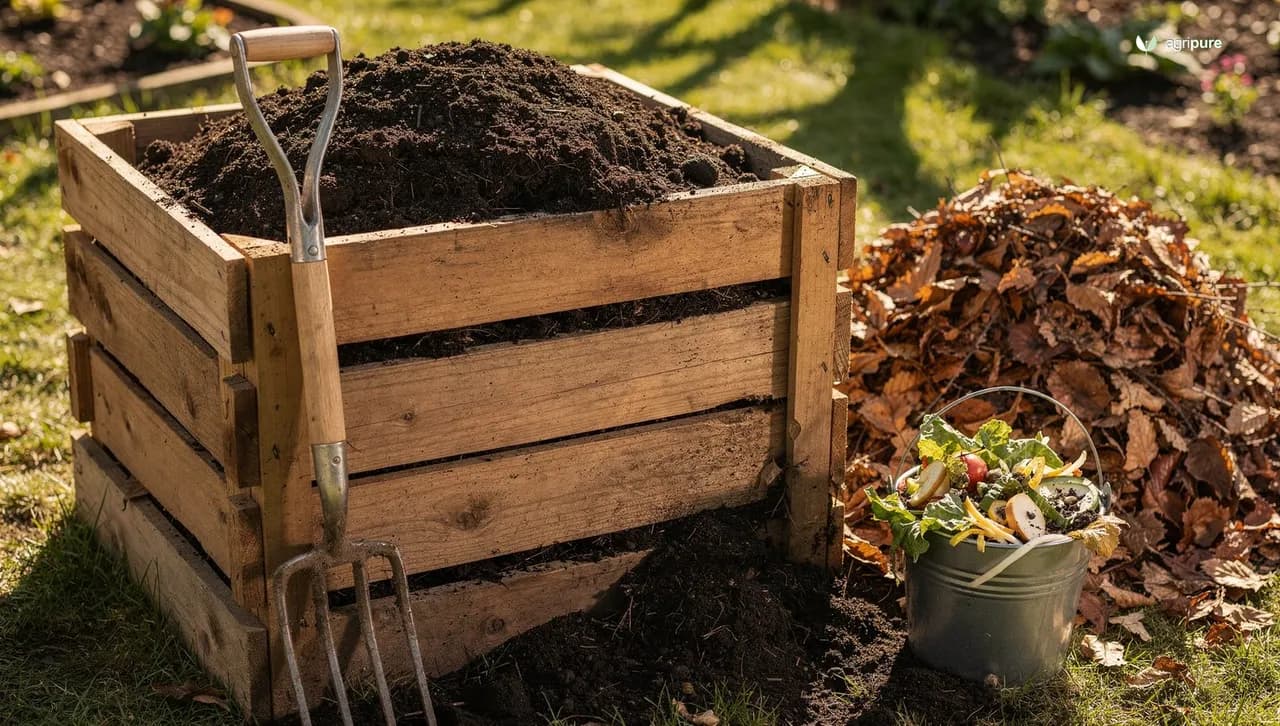
Composting is the engine room of every organic garden, and it costs nothing. It turns kitchen scraps and yard waste into the dark, crumbly material that feeds living soil, the same amendment that anchors organic fertilizing. The whole craft comes down to 3 things: the right mix, enough air and water, and knowing how to fix a pile that sulks.
Browns and greens
Compost runs on a balance of 2 ingredients: browns (carbon, like leaves, straw, and cardboard) and greens (nitrogen, like scraps and grass). Aim for roughly 2 to 4 parts brown to 1 part green, an easy rule being 2 buckets of brown for every 1 of green. Get that ratio close and the microbes do the rest.
A compost pile layered with brown leaves and straw and green kitchen scraps and grass clippings
Browns (carbon) | Greens (nitrogen) |
|---|---|
Dry leaves, straw, cardboard | Vegetable scraps, fresh grass |
Wood chips, shredded paper | Coffee grounds, plant trimmings |
Hot versus cold composting
That mix can run 2 speeds. Hot composting stacks the right ratio with air and moisture to drive microbes hot, breaking down in weeks while killing weed seeds and pathogens. Cold composting is the lazy route: pile scraps and leaves and wait about 12 months, no turning, no fuss. Both make great compost; pick by how fast you need it.
A row of three wooden compost bins in a backyard, one full of fresh material and one of finished dark compost
Hot composting | Cold composting |
|---|---|
Ready in weeks | Ready in about 12 months |
Kills weed seeds and pathogens | May leave some seeds viable |
Needs the ratio, air, and turning | Needs only patience |
Get the air and water right
Ratio aside, a pile needs air and moisture to work. Keep it as damp as a wrung-out sponge, never soggy, and turn it every few weeks to feed oxygen to the microbes. A pile that is too dry stalls; one that is too wet and airless turns to anaerobic sludge. Those 2 dials, water and air, do most of the work.
Fix a pile that misbehaves
When a pile acts up, the cause is almost always the balance. A stinky, soupy pile has too many greens and too much water, so add browns and turn it. A pile that will not heat up needs more greens to raise the nitrogen. A sour, rotten smell means it has gone airless, so turn it and add chunky material like twigs for aeration.
Problem | Fix |
|---|---|
Stinky and soupy | Add browns, turn, let it dry |
Will not heat up | Add greens to raise nitrogen |
Sour, rotten smell | Turn it and add chunky browns for air |
The sponge-and-balance rule: nearly every compost problem traces to 2 things, the brown-to-green balance and the moisture. Before reaching for additives or accelerators, squeeze a handful: too wet, add browns and turn; not heating, add greens. Fix those 2 and the pile sorts itself out.
The takeaway
Composting is free fertilizer hiding in your trash. Get the 2 to 4 parts brown to 1 green ratio close, keep it sponge-damp and aired, and choose hot for speed or cold for ease. Read the smell to fix it, spread the finished compost like mulch, and in weeks or months you will turn waste into the best soil food a garden can get.
Frequently asked questions
What is the right ratio of browns to greens in compost?
Aim for roughly 2 to 4 parts brown (carbon-rich material like leaves and straw) to 1 part green (nitrogen-rich material like scraps and grass). An easy rule is 2 buckets of brown for every 1 bucket of green. Getting the balance close lets the microbes work efficiently.
What is the difference between hot and cold composting?
Hot composting combines the right ratio with air and moisture to heat the pile, breaking material down in weeks and killing weed seeds and pathogens. Cold composting is simply piling scraps and leaves and waiting about 12 months with no turning. Both produce good compost.
How wet should a compost pile be?
As damp as a wrung-out sponge, moist but not dripping. Too dry and the pile stalls; too wet and airless and it turns to smelly anaerobic sludge. Check by squeezing a handful, and add water or dry browns to adjust.
Why does my compost smell bad?
A bad smell usually means too many greens, too much water, or not enough air. Add brown material like leaves or shredded cardboard, turn the pile to introduce oxygen, and add chunky material like twigs for aeration. That fixes most odor problems quickly.
Why won’t my compost pile heat up?
Most often it needs more greens to raise the nitrogen level, bringing the carbon-to-nitrogen ratio closer to ideal. It may also be too dry or too small. Add fresh green material, moisten to sponge-dampness, and make sure the pile is at least a cubic yard for hot composting.
References
- Epic Gardening. “Compost Basics: How to Balance Greens and Browns.” epicgardening.com
- HOTBIN Composting. “All About Greens and Browns.” hotbincomposting.com
- Homesteading Family. “Home Composting Troubleshooting & FAQs.” homesteadingfamily.com
- Little Green Bucket. “Compost Ratios, Demystified.” littlegreenbucket.com
- The Everhopeful Gardener. “Hot Composting.” theeverhopefulgardener.com