Key takeaways

Raised beds give you better soil conditions and a longer growing season, which means bigger harvests.
- Raised beds let you control the soil from day one and warm up earlier in spring.
- Build beds at least 6 inches deep, or 12 to 18 inches for root and deep crops.
- A simple, reliable fill is 50 percent topsoil and 50 percent compost.
- Fill deep beds cheaply by adding logs and branches at the bottom.
- Beginners can start with a single bed and a bagged raised-bed mix.
If your native soil is heavy clay, rock, or contaminated, a raised bed lets you sidestep it and garden in soil you build yourself. It is the quickest on-ramp to good organic soil, the backbone of urban homesteading, and a forgiving place to learn. Two decisions make or break a raised bed: how deep you build it and what you fill it with.
Why raised beds work
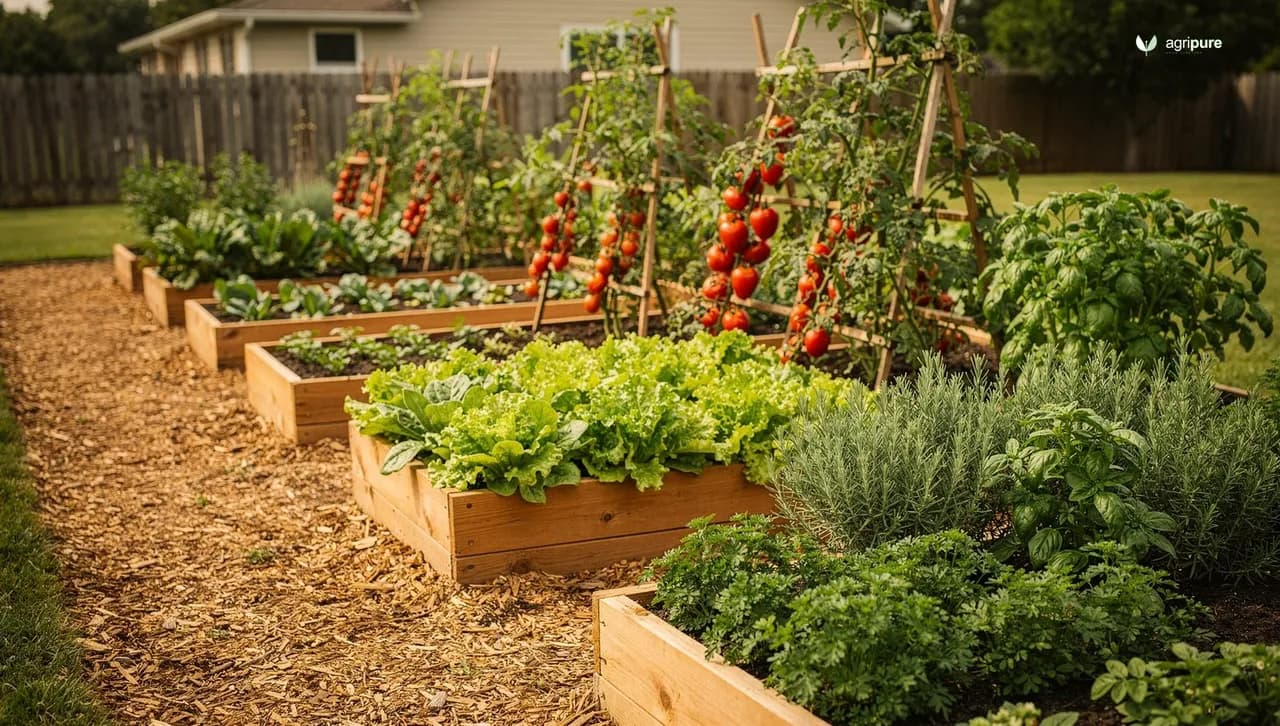
Start with what a raised bed buys you. By lifting the soil, you warm it earlier for spring planting, keep it from compacting underfoot, improve drainage, and put a clean edge between bed and weeds. For many gardeners, those 4 wins are worth the build alone.
Raised bed advantage | Why it matters |
|---|---|
Warms earlier in spring | Plant sooner, longer season |
No foot compaction | Roots and water move freely |
Better drainage | Fewer rot and disease problems |
Clean edges | Less weeding from the lawn |
How deep to build
That control starts with depth, and depth depends on what you grow. A bed of at least 6 inches suits leafy greens and herbs, but root crops like carrots want 12 inches, and tomatoes, squash, and other deep feeders do best with 12 to 18 inches. When in doubt, build deeper; roots always find a use for it.

Crop | Minimum bed depth |
|---|---|
Leafy greens and herbs | 6 inches |
Root crops like carrots | 12 inches |
Tomatoes, squash, deep feeders | 12 to 18 inches |
Fill it with the right mix
That depth needs the right fill, and a simple recipe beats a fancy 1. A reliable mix is 50 percent topsoil and 50 percent compost, which gives both structure and fertility. Fill the bed to the top so roots get the full depth, and for tall beds, save money by layering logs, branches, and leaves at the bottom under at least a foot of soil and compost.

Start simple
That recipe scales down to 1 bed. If you are brand new, build or buy a single bed, fill it with a bagged raised-bed mix that already blends compost and organic matter, and grow 1 season before expanding. Top it with mulch and let the soil settle in.
The settle rule: fresh raised-bed soil drops 1 to 3 inches in the first few weeks as it settles and compost breaks down. Fill to the very top at the start, then top up with compost each spring. A bed that looks overfull in April is usually just right by June.
The takeaway
Those 2 decisions are the whole game. Raised bed gardening is about building good soil on top of bad: go at least 6 inches deep, 12 or more for roots, and fill with a half-and-half topsoil and compost mix. Start with 1 bed, mulch it well, and let the soil you built do the rest.
Frequently asked questions
How deep should a raised garden bed be?
At least 6 inches for leafy greens and herbs, 12 inches for root crops like carrots, and 12 to 18 inches for tomatoes, squash, and other deep feeders. When unsure, build deeper, since roots use the extra depth and deeper beds hold moisture better.
What is the best soil mix for a raised bed?
A simple, reliable mix is 50 percent quality topsoil and 50 percent compost, which balances structure and fertility. Mel’s Mix, equal parts compost, peat or coir, and vermiculite, is another popular recipe. Beginners can just buy a bagged raised-bed mix.
How do I fill a raised bed cheaply?
For deep beds, layer logs, branches, leaves, and other woody material at the bottom, then add at least a foot of good soil and compost on top. The wood breaks down slowly, feeding the bed for years while cutting how much soil you must buy.
Why use raised beds instead of in-ground rows?
Raised beds warm earlier in spring for a longer season, never get compacted underfoot, drain better, and keep lawn weeds at the edge. They also let you build good soil immediately, which is invaluable if your native soil is poor or contaminated.
Do raised beds need to be filled to the top?
Yes. Fill to the very top so roots get the full depth, knowing the soil will settle 1 to 3 inches in the first weeks. Top up with a layer of compost each spring to replace what breaks down and keep the bed productive.
References
- University of Maryland Extension. “Soil to Fill Raised Beds.” extension.umd.edu
- Utah State University Extension. “Raised Bed Gardening.” extension.usu.edu
- Homestead and Chill. “How to Fill Raised Garden Beds with Organic Soil.” homesteadandchill.com
- The Beginner’s Garden. “How to Choose Quality Raised Bed Soil.” journeywithjill.net
- Planet Natural. “Complete Beginner’s Guide to the Best Raised Bed Soil.” planetnatural.com