Key takeaways
An older Appalachian woman with weathered hands and a warm expression is seated on a rustic wooden porch, canning jars filled with fresh vegetables. Around her are baskets overflowing with heritage crops like corn, green beans, and squash. In the background, gently rolling, verdant mountains extend under a clear sky.
A timeless scene of Appalachian self-reliance: A homesteader preserves the bounty of her harvest, embodying the traditional skills and deep connection to the land that have sustained mountain communities for generations.
- Appalachian homesteading is a centuries-old tradition of mountain self-reliance, not a recent trend.
- Heritage crops centered on corn, beans, squash, and potatoes, with apple and peach trees.
- Saving and trading heirloom seeds kept varieties adapted to the region alive.
- The work followed a seasonal cycle: plant in spring, preserve in summer, harvest in fall.
- Its skills, canning, foraging, and seed saving, are exactly what new homesteaders want back.
Before homesteading was a hashtag, it was simply how families lived in the Appalachian mountains. Appalachian homesteading is the deep root of American self-reliance: gardening, canning, foraging, hunting, and seed saving, carried down through generations across the 13 states of Appalachia, from Georgia to Pennsylvania. Its skills are now the same ones drawing people back to the land, which is why the region tops many homesteading-state lists.
A tradition, not a trend
The first thing to understand is the depth. For 200 years, mountain families lived by subsistence farming, growing food, raising stock, and making what they needed, because the terrain and distance left little choice. That history is why Appalachian skills feel so solid: they were refined over generations, not assembled from blog posts.
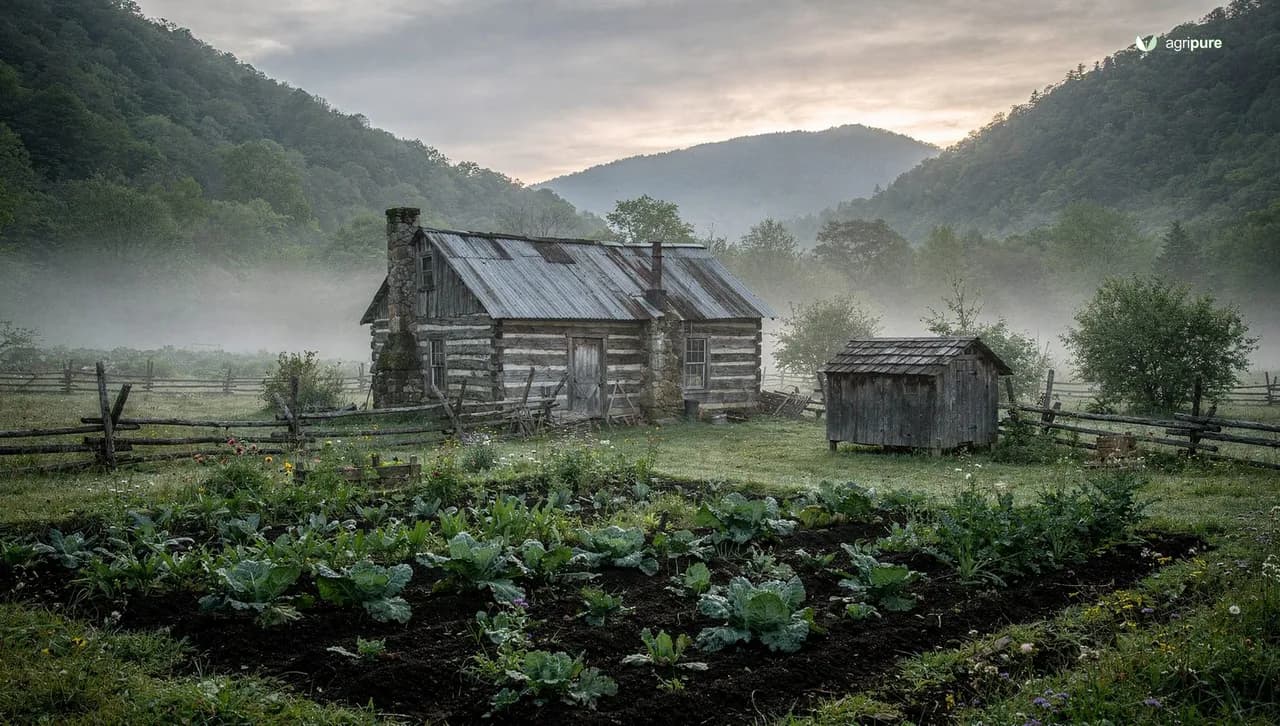
A weathered log cabin homestead in a green Appalachian hollow with a vegetable garden and split-rail fence
Appalachian self-reliance | How it was done |
|---|---|
Food | Gardens, orchards, and foraged greens |
Meat | Hogs, chickens, hunting, and fishing |
Storage | Canning, smoking, drying, and root cellars |
Heritage crops and heirloom seeds
Those gardens grew a specific palette. Frontier homesteads centered on 4 staples, corn, beans, squash, and potatoes, the first 3 grown together as the Three Sisters, with apple and peach trees for fruit, all chosen to suit thin mountain soil and a short season. Families saved and traded heirloom seeds across generations, breeding varieties tuned to their exact hollow, the original organic gardening soil partnership.
A traditional mountain kitchen garden with rows of corn, climbing beans, squash, and potatoes beside a wooden cabin
Heritage staple | Role on the homestead |
|---|---|
Corn | Cornmeal, feed, and the bean trellis |
Beans and squash | Protein and storage, the Three Sisters |
Apples and peaches | Fresh fruit, cider, and dried stores |
The seasonal cycle
Those crops ran on a strict seasonal rhythm across 3 working seasons. Spring meant planting and preparation, summer meant tending and the first wave of preserving, and fall was the great harvest and the race to put food by before winter. Miss a season’s window in the mountains and you felt it by February.
Skills worth bringing back
That rhythm demanded skills now being rediscovered. The 3 at the center, canning, foraging, and seed saving, are joined by sustainable habits the mountains used long before the word existed: crop rotation, cover cropping, and natural pest control. The cultural mix deepened the toolkit, from Scots-Irish land clearing to German log-building to African crops like okra and yams.
The put-it-by rule: the old Appalachian measure of a good year was not what you grew but what you kept. A full root cellar and rows of canned jars in October meant a safe winter. Judge your own homestead the same way, by what survives to February, not just what filled the basket in July.
The takeaway
Those skills are Appalachia’s gift to the new homestead movement. Appalachian homesteading is self-reliance with 200 years of practice behind it: heritage crops from saved seed, a strict seasonal cycle, and a pantry judged by what lasts the winter. Plant the old staples, learn to put food by, and you carry the tradition forward.
Frequently asked questions
What is Appalachian homesteading?
It is the centuries-old tradition of mountain self-reliance in the Appalachian region: growing food, raising livestock, foraging, hunting, canning, and saving heirloom seeds. Unlike the modern trend, it grew out of necessity over 200 years and refined a deep, practical skill set.
What crops did Appalachian homesteaders grow?
Staples were corn, beans, squash, and potatoes, with apple and peach trees for fruit. Families saved and traded heirloom seeds, breeding varieties adapted to their specific hollow’s thin soil and short mountain growing season.
Why are heirloom seeds important in Appalachia?
Because they were locally adapted. Generations of saving and trading seed produced varieties tuned to a particular valley’s soil, climate, and pests. Preserving these heirlooms keeps that hard-won genetic adaptation, and the region’s food heritage, alive.
What skills define Appalachian homesteading?
Canning and food preservation, foraging, hunting, seed saving, and building with local timber, supported by sustainable practices like crop rotation and cover cropping. These are precisely the skills the modern homesteading revival is working to recover.
Is Appalachia good for homesteading today?
Yes. The region offers affordable rural land, a strong farming heritage, reliable rainfall, and states like Tennessee and West Virginia that rank highly for homesteaders. The mountain climate suits orchards, gardens, and small livestock with the old seasonal rhythm.
References
- The Appalachian Homestead. “Welcome.” appalachianhomestead.org
- Homesteading Tips101. “Appalachian Homesteading: Full Overview.” homesteadingtips101.com
- Fiveable. “Frontier Life and Subsistence Farming (Appalachian Studies).” fiveable.me
- Blue Ridge National Heritage Area. “Appalachian Homestead Farm and Preserve.” blueridgeheritage.com
- Our Home & Heritage. “Homesteading.” ourhomeandheritage.com