Key takeaways
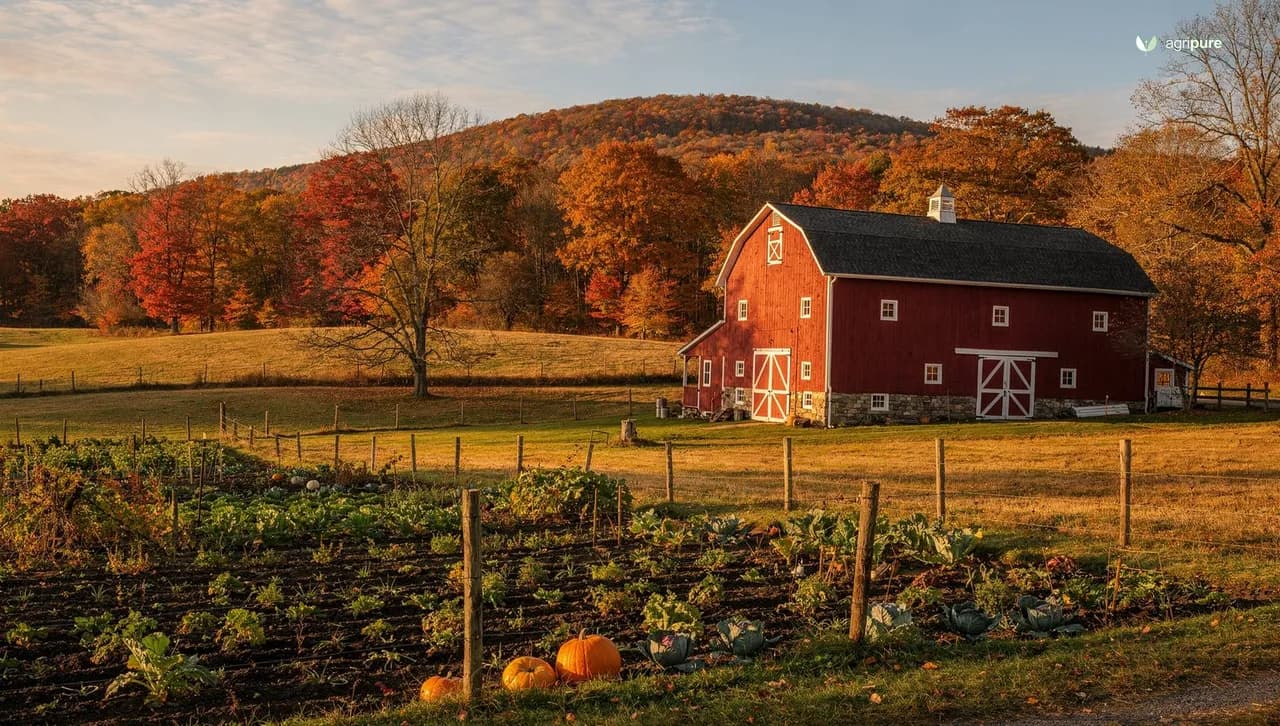
A photorealistic image showing a small homestead in rural Pennsylvania. In the foreground, dark, fertile soil holds thriving late-season vegetables like kale and pumpkins. A rustic wooden fence separates the garden from a small flock of chickens grazing near a barn with a dark green roof. Rolling hills and fields with trees in early autumn colors stretch into the background under a clear sky.
A Pennsylvania homestead with fertile soil and a long growing season suited to sustainable living.
- Pennsylvania has fertile soil and a four-season climate spanning USDA zones 5 to 7.
- The land sweet spot runs from Gettysburg through Harrisburg up toward Scranton.
- Rural agricultural zoning is the most homesteading-friendly and allows off-grid building.
- Septic systems are tightly regulated, requiring permits, certified design, and inspections.
- 1 to 2 acres can support a garden and a few livestock to start.
Pennsylvania rarely tops the flashy best-states lists, yet it offers much of what homesteaders want: fertile soil, a genuine 4-season climate, affordable rural land, and a culture that respects farming. It shares the heritage of Appalachian homesteading in its hills. The 2 things to study before you buy are the region and the septic rules.
Climate and what grows
Start with a climate that simply works. Pennsylvania spans USDA zones 5 to 7, with fertile soil and a reliable 4-season cycle that suits a wide range of crops and livestock, from orchards and berries to hogs and a dairy goat. Reliable summer rain means you rely less on irrigation than in the arid West.
A Pennsylvania farm landscape with a classic bank barn, green fields, and a wooded ridge in autumn
Pennsylvania offers | Why it helps |
|---|---|
USDA zones 5 to 7 | Orchards, berries, and hardy vegetables |
Fertile soil | Less amendment to grow well |
Summer rainfall | Less dependence on irrigation |
Where to look for land
That growing climate is best paired with the right region. The homesteading sweet spot is the arc from Gettysburg through Harrisburg up toward Allentown and Scranton, where land is reasonably priced, rural, and close enough to amenities. The laws and taxes in this band tend to favor agricultural and homesteading use, the same land due-diligence applies as anywhere.
Region | Character |
|---|---|
South-central (Gettysburg to Harrisburg) | Fertile, fair-priced, ag-friendly |
Northeast (toward Scranton) | Rural, wooded, lower land cost |
Off-grid and septic rules
Pennsylvania is workable for off-grid life, with 1 firm rule to plan around. Rural agricultural zoning is the most flexible, generally allowing homes, farming, and alternative energy, much like off-grid living anywhere. The catch is septic: the state tightly regulates it, requiring permits, a certified system design, and regular inspections to protect groundwater.
A rural Pennsylvania property with a farmhouse, a bank barn, and solar panels under a clear sky
Start small on one or two acres
You do not need a big spread to begin here. As a guideline, 1 to 2 acres can support a productive garden and a few head of livestock, the same scale as homesteading on an acre. Begin with beds and a small flock, learn the 4-season rhythm, and expand into orchard and pasture over 2 to 3 years.
The septic-first rule: in Pennsylvania, confirm a parcel can pass a perc test and get a septic permit before you fall in love with it. The state’s rules are strict for a reason, groundwater, and a lot that cannot be permitted for septic is a lot you cannot legally live on. Verify it during your due-diligence window.
The takeaway
Pennsylvania is a strong homesteading state. It pairs fertile zone 5 to 7 soil with fair rural land and ag-friendly rules, asking mainly that you respect its septic regulations. Buy in the Gettysburg-to-Scranton arc, confirm the septic, and start on 1 to 2 acres. The 4 seasons will do the rest.
Frequently asked questions
Is Pennsylvania good for homesteading?
Yes. Pennsylvania offers fertile soil, a reliable four-season climate across USDA zones 5 to 7, affordable rural land, and a culture friendly to farming. Its main requirement is strict septic regulation, but its growing conditions and land prices make it a strong choice.
Where is the best place to homestead in Pennsylvania?
The sweet spot is the arc from Gettysburg through Harrisburg up toward Allentown and Scranton, where land is reasonably priced, rural, and near amenities, with laws and taxes that favor agricultural use. South-central and northeastern Pennsylvania are both popular.
Can you live off-grid in Pennsylvania?
Yes, especially on rural agricultural land, which generally allows homes, farming, and alternative energy. The key constraint is septic: Pennsylvania requires permits, a certified system design, and regular inspections, so confirm a parcel can be permitted before buying.
How much land do you need to homestead in Pennsylvania?
As a guideline, 1 to 2 acres can support a productive garden and a few livestock. That is enough to grow most of a household’s vegetables and keep chickens or a goat, with room to expand into orchard and pasture as you gain experience.
What grows well in Pennsylvania?
With USDA zones 5 to 7, fertile soil, and summer rainfall, Pennsylvania supports orchards and berries, hardy vegetables, and small livestock like hogs, poultry, and dairy goats. The four-season climate suits cold-hardy fruit trees and a long succession of garden crops.
References
- The Land Geek. “Off-Grid Laws in Pennsylvania.” thelandgeek.com
- Texas Real Food. “Homesteading in Pennsylvania.” texasrealfood.com
- Probst Team. “Homesteading in 2025: Southern PA.” probstteam.com
- Plan Your Homestead. “Homesteading Guides.” planyourhomestead.com
- Rural Living Today. “Best States for Homesteading.” rurallivingtoday.com