Key takeaways
A photorealistic image of an Alaskan homestead. A rustic log cabin with a smoking chimney stands amidst thriving raised garden beds filled with kale and cabbage, protected by a tall fence. The sky is bright with the extended twilight of a summer evening, illuminating the surrounding dense pine forest.
An Alaskan homestead garden growing fast under the long summer daylight, despite a short season and harsh winters.
- Alaska’s growing season is short, about 105 days from late May to early September.
- Up to 20 hours of summer daylight pushes hardy crops to grow fast.
- Winters can hit -60F, so insulated homes and ample firewood are non-negotiable.
- Grow cold-hardy crops like kale, cabbage, and root vegetables, and extend with greenhouses.
- Remoteness and wildlife like moose and bears demand real self-reliance and fencing.
Alaska is homesteading on hard mode, and for some that is exactly the appeal. The last frontier offers space and independence unmatched in the lower 48, but it demands respect for a brutal climate: a season measured in weeks, summer days that barely end, and winters that can reach 60 below. It is the opposite extreme from homesteading in Texas, and it rewards preparation above all.
The short, bright season
Everything starts with the calendar. Alaska’s growing season runs only about 105 days, from late May to early September, but it has a secret weapon: up to 20 hours of daylight at the solstice, which drives hardy crops to grow with startling speed. The trick is racing the frost on both ends.
A lush Alaskan summer vegetable garden under a bright low sun, cabbages and greens growing fast beside a cabin
Alaska factor | What it means |
|---|---|
105-day season | Start seeds indoors, plant out fast |
20-hour summer days | Rapid growth for hardy crops |
Early, hard frosts | Protect both ends of the season |
Build for sixty below
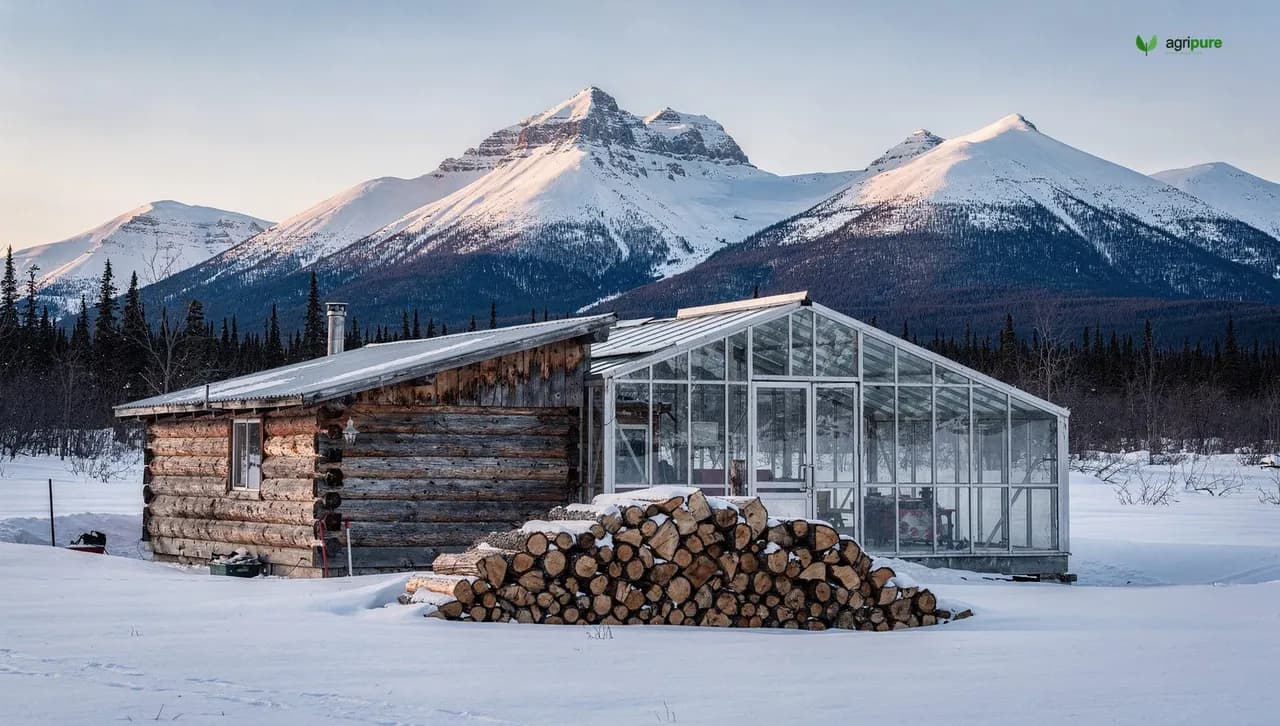
That short summer is bracketed by a long, severe winter. In the Interior, temperatures can fall to -60F with months of deep cold and darkness, so shelter is survival, not comfort. Insulated, well-sealed buildings and a generous firewood supply are the first investments, ahead of any garden, and pair naturally with off-grid systems sized for low sun.
A snug Alaskan log cabin with a large woodpile and smoking chimney in deep winter snow, spruce forest around
Grow cold-hardy, then extend the season
Within that window, crop choice is everything. Focus on cold-hardy vegetables that shrug off frost, kale, cabbage, carrots, and other roots, which thrive in cool soil and long light. Then stretch the 105 days with cold frames, row cover, and a greenhouse, the same raised-bed and protection tricks used everywhere, turned up for the cold.
Remote, wild, and self-reliant
Beyond the cold lies the distance. Many Alaskan homesteads sit hours from the nearest supplies or emergency help, so deep self-reliance is essential. Wildlife raises the stakes too: gardens and livestock need sturdy fencing against moose and bears, which treat an unprotected plot as a buffet.
Alaska challenge | The homesteader’s answer |
|---|---|
Remoteness | Stockpile supplies, learn to fix everything |
Moose and bears | Strong fencing and secure food storage |
Winter darkness | Firewood, stored food, and backup power |
The warm-first rule: in Alaska, the garden is the reward, not the first task. Get a sealed, insulated, well-heated home and a 1-winter firewood supply in place before you plan a single bed. Survive your first January comfortably, then build the homestead outward from there.
The takeaway
Alaska is the deep end of the homestead world. It pays back the prepared with space and independence, but only after you respect the numbers: a 105-day season, 20-hour summer days, and -60 winters. Build warm first, grow cold-hardy and under cover, and plan for distance and wildlife. Do that and the last frontier becomes a home.
References
- USDA Climate Hubs. “Agriculture in Alaska.” climatehubs.usda.gov
- The Natural Living Site. “Homesteading in Alaska: Thriving in the Last Frontier.” thenaturallivingsite.com
- Lehman’s. “The Challenges of Gardening in Alaska.” blog.lehmans.com
- Homesteading Simple. “Homesteading in Alaska.” homesteadingsimple.com
- Alaska Cold Climate Permaculture Institute. “Homestead Design.” alaskapermaculture.com