Key takeaways

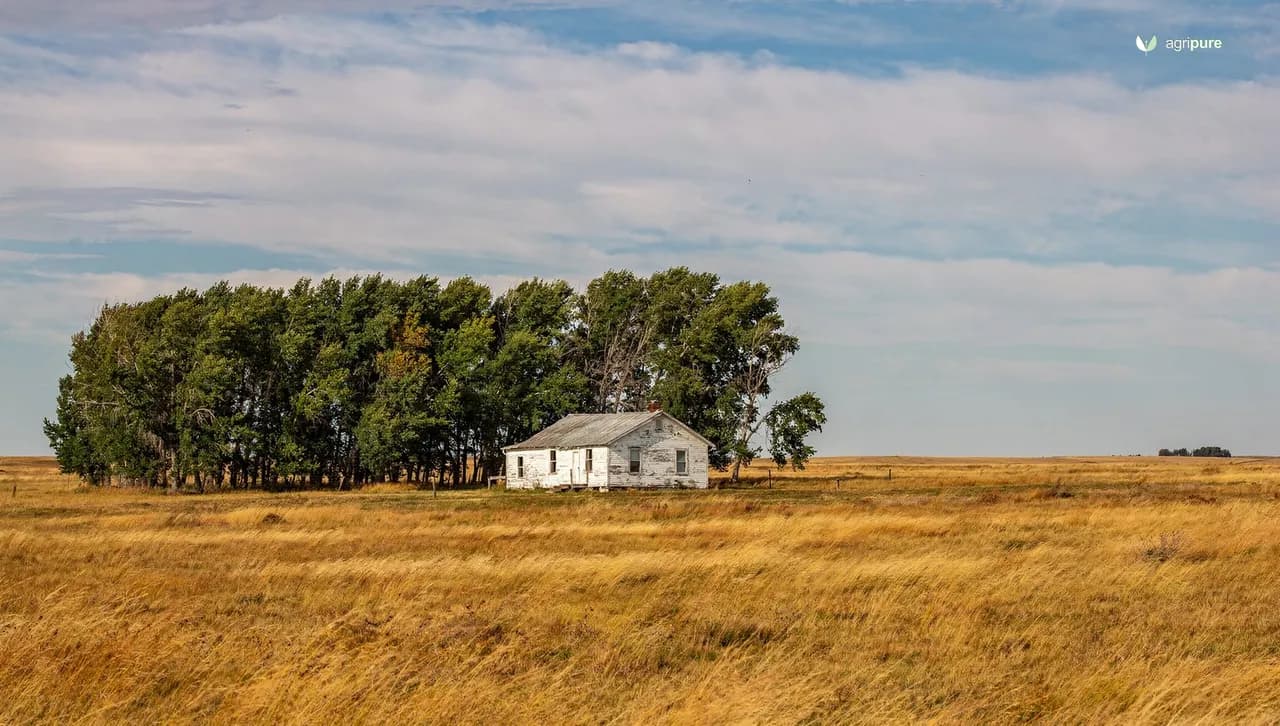
Established windbreaks protect homesteads from the prairie's relentless wind and recurring drought, and help keep farmland productive.
- The Great Plains are a semiarid transition zone of low rain, frequent drought, and high wind.
- The 1930s Dust Bowl showed what plowing the prairie without protection costs.
- The federal shelterbelt project planted 217 million trees in 18,599 miles of windbreaks.
- Field shelterbelts cut wind erosion and raise crop yields by 12 to 15 percent.
- Prairie homesteading lives or dies on windbreaks, water capture, and drought-hardy choices.
The prairie is the most demanding ground in American homesteading, and the most instructive. The Great Plains punish the unprepared with wind, drought, and brutal temperature swings, but they also taught the country its hardest land lesson in the 1930s. Homesteading the plains today means heeding that lesson: plant trees, catch water, and lean on the windbreaks that turned dust back into farmland.
The prairie’s hard climate
Start by respecting the conditions. The Great Plains are a semiarid transition zone between the humid East and the arid West, marked by just 10 to 20 inches of rain a year, mostly in summer, with frequent droughts, big temperature extremes, and relentless wind. That wind and dryness are not a nuisance here; they are the central design problem.

Prairie condition | What it means for a homestead |
|---|---|
Low, summer-only rain | Water capture is non-negotiable |
Frequent drought | Choose drought-hardy crops and stock |
Relentless wind | Windbreaks protect soil, crops, and home |
The Dust Bowl lesson
That climate wrote a warning in the 1930s. Settlers plowed under the deep-rooted native prairie to grow grain, and when the rains failed after 1930, the wind tore away the topsoil by the ton, darkening skies across the continent. The Dust Bowl is the permanent lesson of the plains: strip the cover and the wind takes the farm.
What broke the prairie | The fix that followed |
|---|---|
Plowing up native grass | Keep living roots and cover in the soil |
No wind protection | Plant shelterbelts across the fields |
Shelterbelts: the prairie’s answer
The response became the largest tree-planting in US history. The federal Great Plains Shelterbelt project planted 217 million trees in 18,599 miles of windbreaks across 30,223 farms in 6 states. The payoff was concrete: shelterbelts cut wind erosion and raise crop yields by 12 to 15 percent on the fields they protect.

Homesteading the plains today
Those lessons translate straight into a modern plan. Plant a 3 to 5 row windbreak on your windward side first, capture every drop of water with swales and tanks, keep the soil covered with cover crops and mulch, and choose drought-hardy varieties, the same patient build as any acre. It is the same water-first thinking that any dry-country homestead needs.
The windbreak-first rule: on the prairie, the first thing you plant is not a garden but a windbreak. A multi-row belt of trees on the windward edge cuts wind speed, holds soil moisture, and lifts every crop behind it by 12 to 15 percent. Everything else grows better in its shelter.
The takeaway
The prairie rewards humility and trees. Homesteading the Great Plains means designing around wind, drought, and cover: plant the windbreak first, catch the water, keep living roots in the soil, and choose hardy crops. Heed the Dust Bowl’s lesson and the plains become some of the most productive ground there is.
Frequently asked questions
What makes prairie homesteading challenging?
The Great Plains are a semiarid transition zone with low, mostly-summer rainfall, frequent droughts, extreme temperature swings, and relentless wind. Water capture and wind protection are the central design problems, and ignoring them is what caused the Dust Bowl.
What was the Dust Bowl and what did it teach?
In the 1930s, settlers plowed under the deep-rooted native prairie for grain, and when drought struck, wind stripped the bare topsoil by the ton across the plains. The lesson is permanent: keep living roots and cover in the soil and shelter fields from wind, or lose the farm.
What is the Great Plains Shelterbelt?
It was a federal project launched after the Dust Bowl that planted about 217 million trees in 18,599 miles of windbreaks across more than 30,000 farms in six states. The trees reduced wind erosion and protected homes, livestock, and crops across the plains.
Do windbreaks really increase crop yields?
Yes. Field shelterbelts cut wind speed and reduce soil moisture loss, raising crop production on the sheltered fields by an average of 12 to 15 percent. They also protect homes, livestock, and soil and provide wildlife habitat, which is why they remain central to plains farming.
How do I start homesteading on the prairie?
Plant a multi-row windbreak on your windward side first, then capture water with swales and tanks, keep soil covered with cover crops and mulch, and choose drought- and wind-hardy crops and livestock. Build everything else in the shelter of the windbreak.
References
- Wikipedia. “Great Plains Shelterbelt.” en.wikipedia.org
- Oklahoma Historical Society. “Shelterbelts.” okhistory.org
- Encyclopedia of the Great Plains. “Shelterbelts.” plainshumanities.unl.edu
- Farm Progress. “Remembering and Rebuilding First Shelterbelts.” farmprogress.com
- USDA Forest Service. “Possibilities of Shelterbelt Planting in the Plains Region.” npshistory.com