abundance · playbook
Abundance years — the economics of a mature Pakistani agroforest
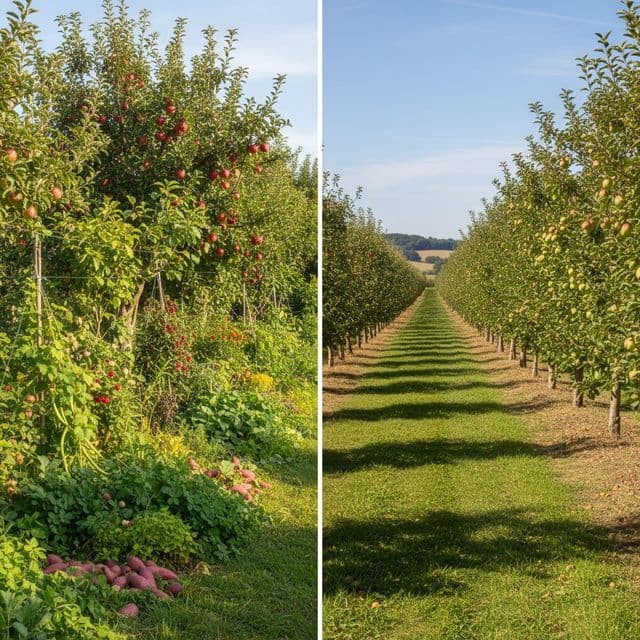
a mature syntropic grove yields across seven vertical layers and most of the year, and your role shifts from planter to harvester and to designer of the next plot.
Free PDF playbook
Get the full Abundance years — the economics of a mature Pakistani agroforest as a PDF
Enter your email and we will send you straight to the download. You will also get one short field note a week, one stage, one species, one tool.
No spam. Unsubscribe anytime.
1. Farm‑gate revenues for mature Pakistani multi‑strata agroforestry systems – PARC and PHDEC report commodity-wise farm returns, but not many fully documented “seven‑layer” syntropic systems. Data are mostly for fruit-tree–plus–intercrop systems: – Kinnow citrus (Punjab): PARC/Agri‑Market data compiled in a value‑chain study for USAID’s Agriculture Policy Project show typical gross farm‑gate revenue of about Rs 350,000–450,000 per ha per year for mature kinnow orchards in Sargodha under good management, excluding intercropped fodder/vegetables (Government of Pakistan, Ministry of National Food Security & Research; see also PHDEC “Citrus Sector Study,” 2017). – Mango (southern Punjab & Sindh): PHDEC’s “Mango Sector Strategy” (2016) and PARC mango production economic
What's inside
- 01What changes when the grove matures
- 02The seven layers in a Punjab food forest
- 03Twelve months, twelve harvests: the production calendar
- 04Integrating livestock under the canopy
- 05Closing the fertility loop: soil in a mature grove
- 06Seed saving and propagating your own stock
- 07Water in a mature grove
- 08Biodiversity and pest balance
- 09Succession planning: designing the next plot
- 10Economics of a mature multi-yield grove
- 11Worked example: two acres near Faisalabad, year ten
- 12What can go wrong at year ten
- 13What good looks like at year ten