Key takeaways
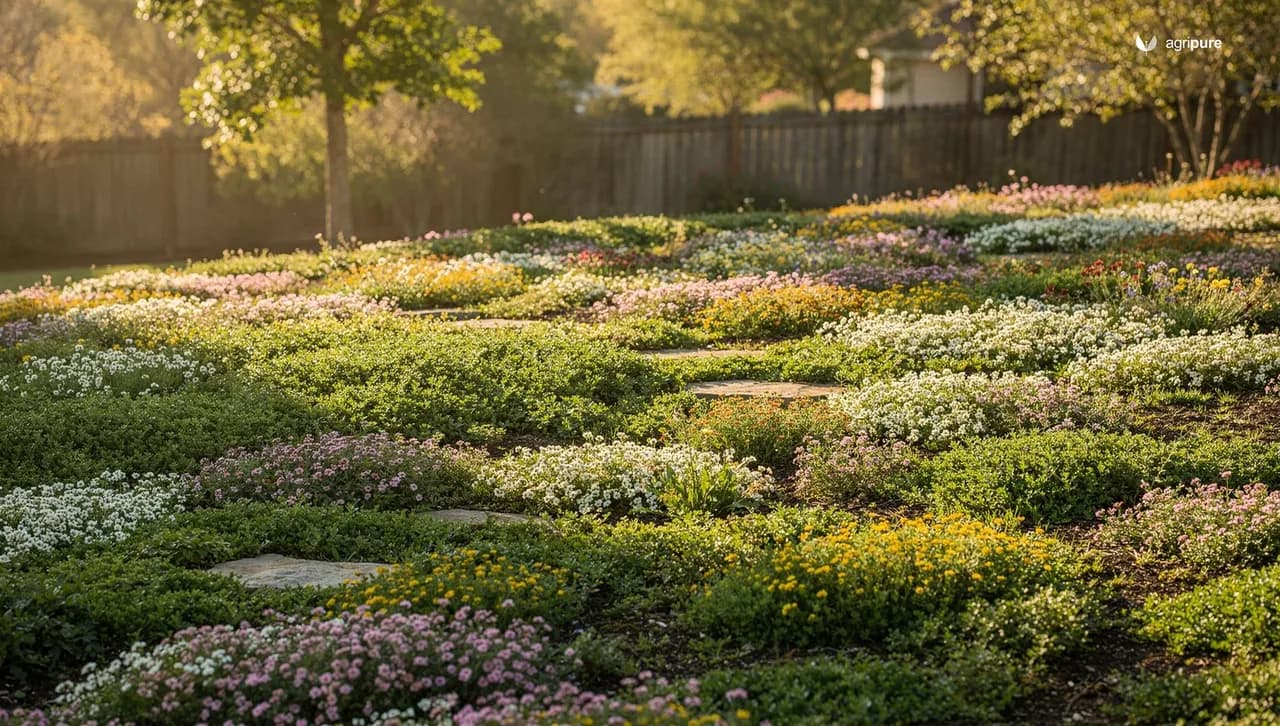
A photorealistic garden scene featuring three distinct ground cover applications: a gentle slope covered with robust, soil-stabilizing plants and biodegradable netting; a stone pathway bordered by resilient, low-growing ground cover suitable for light foot traffic; and an area of dry shade beneath a tree where shade-tolerant ground covers flourish. The image highlights various functional ground cover solutions in a natural, well-maintained outdoor setting.
Choosing the right ground cover can transform challenging garden spots. From stabilizing slopes to creating lawn-free paths in dry shade, selecting plants suited to specific conditions ensures thriving, low-maintenance landscapes.
- Match the plant to the job: a sunny slope, dry shade, and a path you walk on each need different ground covers.
- On slopes, pick species with a vigorous, extensive root system and hold the soil with biodegradable netting until they knit together.
- Creeping thyme (1 to 3 inches tall, USDA zones 4 to 8) takes light foot traffic and tucks between pavers; white clover fixes its own nitrogen for a low-input lawn.
- Most ground covers need two or three years to fill in, and closer spacing buys faster cover with less erosion and weeds.
- Avoid the spreaders extension programs list as invasive — periwinkle, pachysandra, and ajuga jump the bed and colonize woods.
A ground cover is any low, spreading plant (usually under 12 inches tall) that you use instead of bare mulch or lawn, and the trouble starts when 1 plant gets asked to do every job. A thyme that thrives in a hot path will rot in damp shade; the vinca that carpets a shady bank will also climb your fence and seed into the woods. Choose by site first, then by looks.
This guide groups the best ground covers by the 5 problems they solve (sunny slopes and erosion, dry shade, foot traffic between pavers, damp shade, and lawn replacement), with the USDA zones, spacing, and the 1 caution that ruins more plantings than any pest: a vigorous spreader in the wrong place.
What makes a ground cover work: 3 numbers
Before the plant list, 3 numbers decide whether a planting succeeds. Spread habit comes first. Colorado State University Extension notes that species spreading by rhizomes, stolons, offsets, or tip layering develop rapidly into a dense cover, which is exactly what shades out weeds and holds soil. Spacing of 8 to 12 inches comes second: Penn State Extension is clear that the right distance depends on each plant’s habit and rate of growth, and that closer spacing gives faster coverage with less opportunity for erosion or weeds.
The third number is patience. Most perennial ground covers need two or three years to establish properly, so the first season is about getting roots down, not instant carpet. Good soil prep pays off here — CSU recommends working 3 to 5 cubic yards of compost into each 1,000 square feet before planting, and building the living soil underneath makes every later season easier.
Read your site in 3 steps
- Light: count the hours of direct sun. Full sun is 6 or more hours; anything under 3 hours is real shade and rules out most flowering mats.
- Moisture: a slope that drains in minutes wants drought-tough plants; a low, damp corner wants the opposite.
- Traffic: decide honestly whether you will walk on it. Most ground covers take light foot traffic at best, and a few take none.
Sunny slopes and erosion control
A bank that sheds water and bakes in afternoon sun is the hardest ground cover job, and the wrong plant just slides off with the next storm. The rule from Colorado State University Extension is direct: a ground cover used to prevent erosion on a steep slope should have a vigorous growth habit and an extensive root system. Shallow-rooted mats look fine on flat ground but fail on a 30-degree pitch.
For dry, sunny slopes, the workhorses are creeping junipers at 6 to 18 inches, which knit a woody mat with deep roots, and low-water perennials like juniper relatives that tolerate poor soil. Until the plants close ranks over 2 seasons, hold the bare soil between them. Penn State Extension recommends a temporary biodegradable cover (natural-fiber netting, paper-based weed barrier, or untreated burlap) and warns against plastic landscape cloth, which increases runoff and erosion on a slope.
Spacing on slopes: tighten it. Closer plants close the canopy a season sooner, and every month of bare soil on a slope is a month of erosion. Stagger plants in a diamond pattern rather than straight rows so water can’t channel between them.
A steep garden bank planted with spreading low junipers and creeping perennials, with jute netting visible holding bare soil between young plants.
A selection guide: 5 use cases by zone
Each of these 5 ground covers earns its place in one situation and struggles in others. This table sorts the most reliable choices by the job they do, with mature height, USDA zone range, and foot-traffic tolerance for each.
Use case | Good choice | Height | USDA zones | Foot traffic |
|---|---|---|---|---|
Between pavers | Creeping thyme | 1-3 in | 4-8 | Light to moderate |
Lawn alternative | White clover | 4-8 in | 3-10 | Good |
Dry shade | Pennsylvania sedge | 6-12 in | 3-8 | Light |
Sunny slope | Creeping juniper | 6-18 in | 3-9 | None |
Damp shade | Wild ginger | 4-8 in | 4-6 | None |
Across all 5 use cases the pattern holds: the more foot traffic a spot sees, the lower and tougher the plant has to be, and the shadier and drier the corner, the shorter your list of options gets.
Dry shade, lawn alternatives, and foot traffic
Dry shade under mature trees is where most lawns give up, and a few ground covers thrive there instead. Penn State Extension singles out Pennsylvania sedge (Carex pensylvanica) as having grassy leaves, suppressing weeds, and being drought tolerant — a rare combination for a spot that gets little light and competes with tree roots for water. It reads as a soft, no-mow meadow at 6 to 12 inches.
For a true lawn replacement you can walk on, white clover at 4 to 8 inches is hard to beat. Penn State notes it acts as a built-in fertilizer by fixing atmospheric nitrogen, so a clover lawn needs 0 nitrogen feeding, stays green in summer, and tolerates foot traffic once established. For paths and patios, creeping thyme is the classic choice between pavers.
Why creeping thyme works between stones
Creeping thyme stays at 1 to 3 inches tall and is hardy from USDA zones 4 to 8, per University of Illinois Extension, so it never needs mowing and releases scent when stepped on. The Morton Arboretum notes it is drought tolerant and that traffic-tough cultivars like ‘Annie Hall’ withstand foot traffic better than the species. Tuck plugs into 4 to 6 inch gaps between pavers and it knits into a fragrant, walkable carpet within two seasons.
The spreading-versus-invasive caution
The same vigor that makes a ground cover fill in fast is what turns the wrong species into a problem. A plant that spreads by runners does not respect your bed edge, and at least 3 of the most-sold ground covers are now flagged as invasive. University of Maryland Extension is blunt: avoid periwinkle (Vinca major and Vinca minor), Japanese spurge (Pachysandra terminalis), and carpet bugleweed (Ajuga reptans) — all sold widely, all known to escape gardens and colonize woodlands.
Choose vigor you can contain. A clumping sedge stays where you put it; a stoloniferous mint or ajuga will travel 2 to 3 feet a year. Native ground covers and well-behaved spreaders give you cover without the cleanup, and pairing them with a thick no-dig planting approach keeps buried weed seed from competing while your chosen plants knit together.
Check before you plant: a species that is fine in one region may be invasive in another. Search your state extension or the regional invasive-plant list before buying any aggressive runner — Wisconsin, for example, lists the all-green form of moneywort on its DNR invasive plants list.
How to plant and establish a ground cover
Even the right plant fails on bare, unprepared ground. Start by clearing existing weeds completely, because perennial weeds left in place will outcompete young plugs for the first 2 years. Then prep the soil — work in 3 to 5 cubic yards of compost per 1,000 square feet, since a dense cover develops fastest where the soil has good aeration and drainage.
Space the plants to your timeline and slope: 8 to 12 inches apart for most beds, tighter for fast cover or erosion control. A simple hand trowel and cultivator makes quick work of setting dozens of plugs and teasing apart pot-bound roots so they spread.
The first-season checklist: 4 steps
- Water deeply through the first season; new plantings need consistent moisture until roots reach down, usually the whole first summer.
- Mulch the gaps with 2 inches of wood chips or shredded leaves to block weeds while the cover closes — see how to mulch a bed.
- Spot-weed monthly for the first 2 years; after the canopy closes, the planting suppresses most weeds itself.
- Plant in spring or fall so roots establish before summer heat or winter cold.
A backyard lawn of low white clover in flower replacing turf grass, dotted with small white blooms in soft afternoon light.
Conclusion
Choosing a ground cover is a site decision before it is a plant decision. Read the light, the moisture, and the foot traffic, then pick a species whose habit fits — creeping thyme for sunny paths, white clover for a low-input lawn, sedge for dry shade, juniper for a slope. Space it tight enough to close in 2 seasons, keep the aggressive runners out, and the planting will hold the ground and shade out weeds for years with almost no work.
Frequently asked questions
What is the best ground cover for a steep slope?
For erosion control on a steep slope, choose a plant with a vigorous growth habit and an extensive root system, such as creeping juniper or a tough native. Hold the bare soil between young plants with biodegradable netting or burlap, never plastic, which increases runoff.
What ground cover can I walk on?
Creeping thyme stays 1 to 3 inches tall and takes light to moderate foot traffic between pavers, and white clover tolerates foot traffic well once established. Most other ground covers handle only occasional steps, so keep a stepping-stone path through them.
How far apart should I space ground cover plants?
Spacing depends on the plant’s habit and growth rate, but closer spacing gives faster coverage with less erosion and fewer weeds. Many ground covers go in 8 to 12 inches apart, and you can tighten that on slopes to close the canopy a season sooner.
Which ground covers are invasive and should be avoided?
University of Maryland Extension flags periwinkle (Vinca major and Vinca minor), Japanese spurge (Pachysandra terminalis), and carpet bugleweed (Ajuga reptans) as invasive. They spread by runners, escape gardens, and colonize woodlands, so check your state invasive list before planting any aggressive spreader.
How long does ground cover take to fill in?
Most perennial ground covers need two or three years to establish and form a dense, weed-suppressing carpet. The first season is for root growth, so water deeply, mulch the gaps, and spot-weed monthly until the canopy closes.
References
- University of Illinois Extension — Creeping Thyme (HortAnswers)
- The Morton Arboretum — Creeping thyme
- Penn State Extension — Lawn Alternatives
- Penn State Extension — Native Groundcovers for Tough Sites
- University of Maryland Extension — Lawn Alternatives
- Colorado State University Extension — Ground Cover Plants
- Colorado State University Extension — Xeriscaping: Ground Cover Plants
- North Carolina Extension Gardener Plant Toolbox — Asarum canadense (Wild Ginger)