Key takeaways

A healthy soil food web underlies organic gardening. Enriching the soil with organic fertilizers like compost and aged manure builds a living ecosystem that feeds plants over the long term.
- Organic fertilizer feeds the soil food web, which then feeds the plant, slowly and steadily.
- Compost is the base: a 2 to 3 inch layer worked in before planting does most of the work.
- Rank manures by strength: cow is mild, horse is balanced, chicken is hot and must be composted.
- NPK tells you nitrogen for leaves, phosphorus for roots and fruit, potassium for overall vigor.
- Always age or compost manure to avoid burning plants and spreading weed seeds.
The difference between chemical and organic feeding is who you feed. A synthetic fertilizer feeds the plant directly; an organic one feeds the soil food web, the bacteria, fungi, and worms that then feed the plant. That is why a no-dig garden and any serious homestead lean on compost and manure: build the soil once and it pays you back for years. Here are the 3 organic fertilizers worth knowing and how to use them.
Compost: the base fertilizer
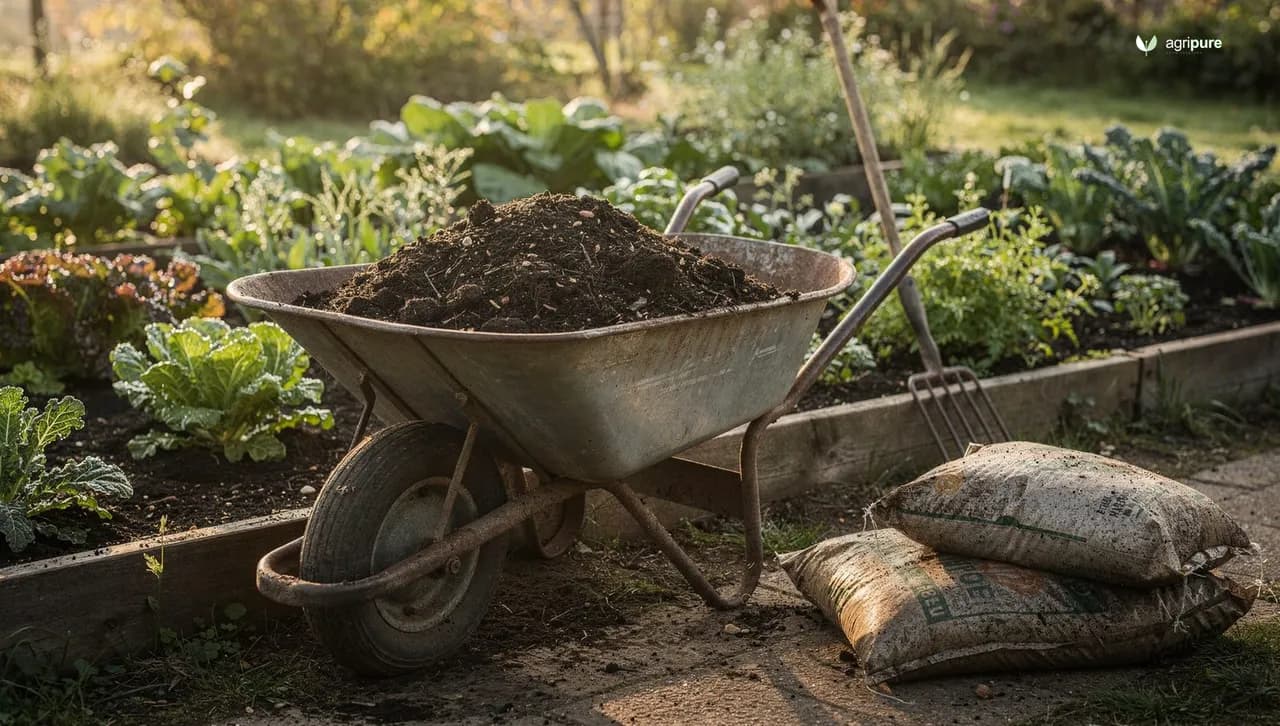
Start with the 1 fertilizer that is nearly free: compost. Made from food scraps, leaves, and yard waste, it feeds soil microbes, improves structure, and releases nutrients slowly so nothing leaches or burns. A 2 to 3 inch layer worked into the top of a bed before planting is the single best thing you can do for it.

Manures, ranked by strength
That compost pairs well with manure, but manures are not equal, so rank them by nitrogen. Cow manure is mild and safe for most crops; horse manure is balanced and high in organic matter; chicken manure is the hottest, rich in nitrogen and ideal for leafy greens, but it will burn plants unless fully composted first. If you keep a backyard flock, that last one is free.

Manure | Strength and use |
|---|---|
Cow | Mild, safe for most vegetables |
Horse | Balanced, high organic matter, age it for weed seeds |
Chicken | Hot, high nitrogen, must be composted to avoid burning |
Reading the NPK numbers
Those amendments all carry an NPK ratio, the 3 numbers on every bag. They are the percentages of nitrogen, phosphorus, and potassium: N drives leafy growth, P builds roots and fruit, and K supports overall vigor and disease resistance. Match the ratio to the job, high N for greens, balanced for fruiting crops, and you stop guessing.
Nutrient | What it feeds |
|---|---|
N (nitrogen) | Leafy green growth |
P (phosphorus) | Roots, flowers, and fruit |
K (potassium) | Overall vigor and disease resistance |
How to apply it without burning anything
Those materials only help if applied right, and the golden rule is patience. Always use aged or composted manure, spread at roughly 1.5 to 3 kg per square meter and worked into the top few inches before planting. Top beds with a 2 to 3 inch compost layer each season, and let the soil life carry it down.
The burn test: if manure still smells sharp or looks like its source, it is not ready, spread it now and it will scorch roots and seedlings. Finished compost and aged manure smell like forest floor, dark and sweet. When in doubt, wait another month; soil rewards the patient gardener.
The takeaway
Those 3 amendments cover almost every garden. Compost is the base, manure is the boost, and NPK is the dial, and all 3 work by feeding the soil rather than the plant. Spread 2 to 3 inches of compost, age your manure, and read the numbers, and the soil will do the rest, season after season.
Frequently asked questions
What is the best organic fertilizer for a vegetable garden?
Compost is the best all-round choice: it is nearly free, feeds the soil microbiome, improves structure, and releases nutrients slowly. A 2 to 3 inch layer worked into beds before planting does most of the feeding most gardens need.
Which manure is best for the garden?
It depends on your crop. Cow manure is mild and safe for most vegetables, horse manure is balanced and high in organic matter, and chicken manure is the richest in nitrogen, excellent for leafy greens but only after it is fully composted to avoid burning.
What do the NPK numbers mean?
NPK is the percentage of nitrogen, phosphorus, and potassium in a fertilizer. Nitrogen drives leafy growth, phosphorus builds roots and fruit, and potassium supports overall vigor and disease resistance. Match the ratio to whether you are growing greens or fruit.
Can I use fresh manure in the garden?
No. Fresh manure can burn plants with excess nitrogen and carry weed seeds and pathogens. Always age or compost it first, then spread about 1.5 to 3 kg per square meter and work it into the top few inches before planting.
How often should I add compost?
Top your beds with a 2 to 3 inch layer of compost at least once a season, ideally before planting. In a no-dig garden you simply lay it on the surface and let worms and soil life carry it down, no digging required.
References
- Oregon State University Extension. “Choosing the Right Fertilizer for Your Garden.” extension.oregonstate.edu
- Utah State University Extension. “Selecting and Using Organic Fertilizers.” extension.usu.edu
- University of New Hampshire Extension. “Organic & Natural Fertilizers for the Home Garden.” extension.unh.edu
- Epic Gardening. “Organic Fertilizer Types and How to Use Them.” epicgardening.com
- Farmers’ Almanac. “Natural Garden Fertilizers.” farmersalmanac.com