Key takeaways

Thoughtful companion planting, such as pairing basil and chives with peppers, naturally supports plant health, deters common pests, and builds a more resilient organic garden ecosystem.
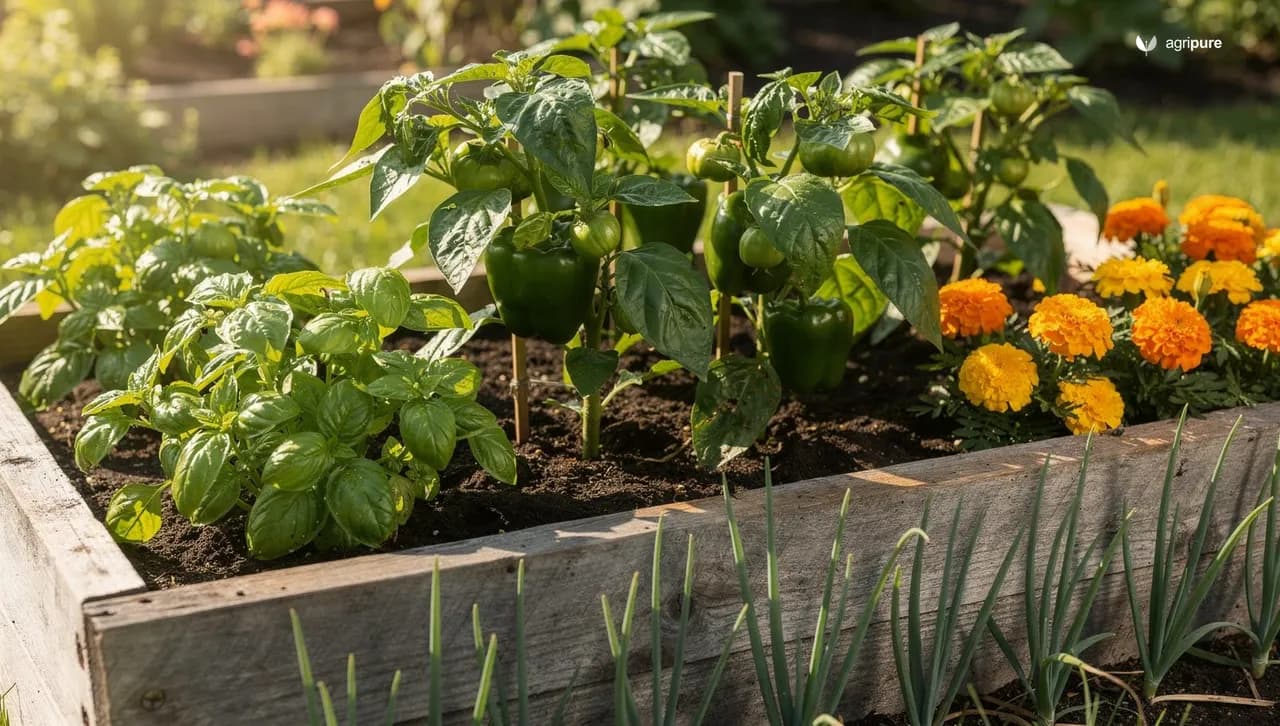
- Basil masks plants from thrips and reduces pest egg-laying nearby, and 1 basil plant per 2 peppers shares the same warm, full-sun bed.
- Alliums (onions, chives, leeks) antagonize aphid colonization on neighboring crops in peer-reviewed trials, with no competition for a pepper’s root zone.
- Low greens like lettuce and spinach finish before peppers fill in, so they share the bed without fighting for light.
- Fennel may exude allelopathic compounds and brassicas are heavy feeders, so both belong well away from a pepper bed.
- Most online charts mix science with lore: many popular pairings are not backed by research, so plant for sun, spacing, and beneficials first.
Peppers want 18 to 24 inches of elbow room, a steady drink of water, and a long warm season, and the plants you set around them either support that or quietly steal it. A row of onions 8 inches off the pepper line costs nothing and may cut aphid pressure; a fennel plant 2 feet away can stunt everything around it.
The trouble is that most companion-planting charts mix solid science with garden lore that nobody can trace. Here is what the research actually supports for peppers: which herbs, alliums, low greens, and flowers earn a spot, and which 3 or 4 neighbors do more harm than good, plus the spacing that decides whether a “good” companion is a help or just another mouth at the table.
Why basil and herbs belong next to peppers
Aromatic herbs are the most research-backed of the 7 pepper neighbors here, and basil leads the list. Penn State Extension reports that interplanting basil with tomatoes (peppers’ close nightshade relative) masks the plants from thrips, and that surrounding tomatoes with basil reduced egg-laying by adult hornworms. University of Minnesota Extension adds that a few studies found basil and marigolds cut thrip populations in tomatoes in both field and greenhouse conditions. Peppers share basil’s appetite for full sun and warm, evenly moist soil, so the pairing costs you nothing in care.
The second job herbs do is feeding the predators that eat pepper pests. Penn State notes that calendula attracts many beneficial insects that feed on aphids, and that cilantro and dill draw at least 4 useful groups: lacewings, ladybugs, parasitic wasps, and syrphid flies. Let a few sweet basil plants flower at the end of the season and the blooms pull in sweat bees too.
Plant them close, but not on top
Match the herb to the gap you have. There are 3 placements that work well around a pepper, because an herb that shades a young pepper is a problem, not a partner.
- Tuck-in: 1 basil plant per 2 peppers, set 10 to 12 inches off the stem so it never overtops the crop.
- Border: a low edging of cilantro or dill along the bed feeds beneficials without crowding the root zone.
- Let it bloom: allow a couple of herbs to flower for pollen and nectar once the peppers have set fruit.
One caveat: the thrip and hornworm data come from tomato trials, not peppers directly. The mechanism, scent masking and beneficial-insect support, carries across nightshades, but treat it as strong indirect evidence, not a guarantee on every pest.

Alliums, low greens, and pollinator flowers
The second tier of pepper companions earns its place by deterring pests and using space well. Alliums have the best peer-reviewed case: a 2021 study in Scientific Reports found that the leek Allium porrum, grown as a companion, antagonized aphid colonization of a neighboring host plant. A 2017 review in the journal Insects catalogs how repellent and non-host companions like onions interfere with the way aphids find and settle on a crop. Set chili peppers 8 to 12 inches from a row of onions, chives, or garlic and you get that effect with almost no root competition.
Low-growing greens solve a timing problem. Lettuce and spinach mature in 30 to 45 days, long before a pepper’s canopy fills in around day 70, so they harvest out of the same bed without ever shading the crop. Use them as a living mulch that keeps the soil cooler and holds moisture while peppers are still small.
Flowers that pull their weight
Pollinator flowers feed beneficials and, in the case of marigolds, can suppress soil nematodes — but only under strict conditions. Clemson Extension is clear that French and African marigolds must be grown for at least 2 months as a solid stand and turned under; scattered among vegetables they do little for nematodes. So plant marigolds for their flowers and aphid-predator draw in-season, and reserve the nematode trick for a dedicated cover crop the season before peppers go in.
What to keep away from peppers
A few neighbors do measurable harm, and they fall into 3 groups. Fennel is the clearest case: it is reported to outcompete neighbors for light, nutrients, and water and may exude allelopathic substances that inhibit other plants’ growth, which is why fennel is best grown alone in a container 2 to 3 feet from any bed. Brassicas (cabbage, kale, broccoli) are heavy feeders that pull nitrogen and water hard; in a shared bed they simply outdraw a pepper. And piling peppers next to other heavy-feeding nightshades like tomatoes invites the same pests and diseases to concentrate.
The bean question is more nuanced than the charts suggest. Clemson notes that legumes fix nitrogen through Rhizobium bacteria, which sounds ideal — but that nitrogen mostly stays with the bean until it dies back, so a living bean plant is competing for the same bed space and water now, not feeding the pepper this season. Keep bush beans at least 18 inches away in their own row rather than interplanted tight.
The honest version: “avoid” usually means “don’t crowd,” not “chemical warfare.” Fennel’s allelopathy is real but modest in most home-garden conditions; brassica and bean conflicts are mostly plain competition for nitrogen, water, and light at a 12-inch spacing.
A field guide to pepper companions
Each candidate has a real benefit and a real cost, and the difference usually comes down to spacing. This table sorts the common pepper neighbors by what they actually do and how close you can safely set them.
Companion | Main benefit | Spacing from pepper | Verdict |
|---|---|---|---|
Basil | Masks scent, deters thrips | 10-12 in | Plant it |
Onion / chives / leek | Antagonize aphid colonization | 8-12 in | Plant it |
Lettuce / spinach | Living mulch, early harvest | 6-10 in | Plant it |
Marigold / calendula | Feeds aphid predators | 12-18 in | Plant it |
Bush beans | Nitrogen, but only after die-back | 18+ in (own row) | Space it out |
Brassicas (cabbage, kale) | None; heavy feeder competes | Separate bed | Keep apart |
Fennel | None; allelopathic risk | 2-3 ft / own pot | Keep apart |
Across all 7 entries, the pattern is simple: herbs and alliums earn their spot by deterring pests, low greens through timing, and the 3 plants to avoid all lose on competition rather than poison.
Planning the bed and spacing it right
Good companion planting is mostly good bed design. Start with the peppers on their own grid, 18 to 24 inches apart in rows about 24 inches wide, then fit companions into the gaps that grid leaves rather than squeezing them onto the pepper line. A standard 4 by 8 foot raised bed holds 8 to 10 peppers down the center with room for a basil-and-allium fringe along both long edges.
Sequence the planting by maturity so nothing competes at the wrong time. Sow lettuce and spinach 3 to 4 weeks before the peppers go out, harvest them as the pepper canopy expands, and slot warm-season basil in at transplant time. The same staggering keeps the bed productive while the peppers, which won’t shade the soil until roughly day 70, are still small.
A simple bed layout
Here is a layout that keeps every companion in its lane on a 4 by 8 foot bed:
- Center line: 8 to 10 peppers at 18 to 24 inch spacing, staked or caged.
- Long edges: alternate basil and onion sets 10 inches off the peppers.
- Corners: 1 marigold or calendula each, for pollinators and predators.
- Early filler: lettuce down the gaps, pulled by the time peppers bush out.
Spacing beats species: a “good” companion set 4 inches from a pepper stem competes for the same water and light and becomes a “bad” one. Hold the gaps in the table above and most pairings behave.

Conclusion
Pepper companion planting is less about magic pairings and more about matching neighbors to sun, spacing, and pest pressure. Basil and alliums earn their 8 to 12 inch spot by deterring pests, low greens use the bed’s first 30 to 45 days, and fennel and brassicas stay out because they compete — not because of folklore. Plan the pepper grid at 18 to 24 inches first, fit the companions into the gaps, and the bed mostly tends itself.
Frequently asked questions
What grows best with peppers?
Basil and alliums such as onions, chives, and leeks have the best research support, set 8 to 12 inches away. Low greens like lettuce and spinach share the bed’s early weeks, and marigolds or calendula draw the predators that eat aphids.
Can peppers and tomatoes be planted together?
They can, since both are warm-season nightshades with similar needs, but plant them at least 18 inches apart in their own rows. Crowding two heavy feeders together concentrates shared pests and diseases and forces them to compete for the same nitrogen and water.
Why should you not plant fennel near peppers?
Fennel outcompetes neighbors for light, nutrients, and water and may release allelopathic compounds that inhibit nearby plants. Grow it alone in a container 2 to 3 feet from the bed rather than interplanting it with peppers or most other vegetables.
Do marigolds actually protect peppers?
Marigolds feed aphid predators in-season, but their nematode benefit only appears when grown as a solid stand for at least 2 months and turned under. Scattered among peppers they do little for nematodes, so set 1 per corner mainly for pollinators and beneficials.
How far apart should pepper companions be planted?
Keep peppers 18 to 24 inches apart, then set basil and alliums 8 to 12 inches off the stem, flowers 12 to 18 inches out, and beans in their own row. Spacing, more than species, decides whether a companion helps or competes.
References
- University of Minnesota Extension — Companion planting in home gardens
- Penn State Extension — Herbs Make Good Plant Partners and Companions
- Baudry et al., Scientific Reports (2021) — Leek as a Companion Plant Against Aphids
- Ben-Issa et al., Insects (2017) — Companion Plants for Aphid Pest Management
- Clemson Cooperative Extension — Root-Knot Nematodes in the Vegetable Garden
- Clemson Cooperative Extension — Plant Partners: 5 Benefits of Companion Planting