Key takeaways
Patience at the start, discipline at the end: Okra thrives in warm soil, growing tall to yield pods every 1-2 days for up to 12 weeks.
- Okra is a heat lover: wait until soil hits at least 65°F at a 4-inch depth before sowing, with 70 to 95°F the sweet spot for fast germination.
- Soak the hard seed 6 hours to overnight before planting; a quick nick or sanding of the coat raises the stand further.
- Give the plants room (9 to 12 inches apart, rows 3 to 6 feet) because a single stalk runs 3 to 5 feet tall.
- First pods come 55 to 65 days after sowing; pick every 1 to 2 days while pods are 2 to 3 inches and still tender.
- Leaving mature pods on the plant inhibits new pod development; pick promptly and a row crops for up to 12 weeks.
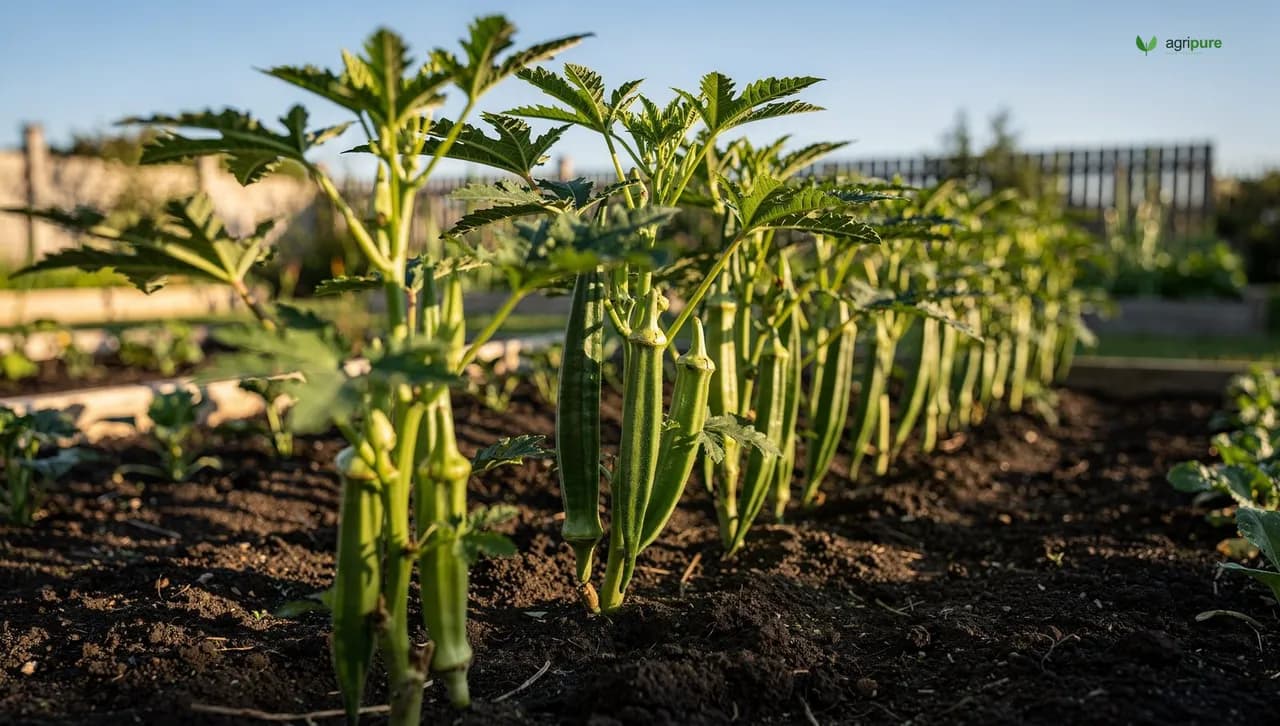
Okra rewards patience at the start of the season and discipline at the end of it. The seed will sit and rot in cold ground, so most of the failures I see come from sowing 2 to 3 weeks too early. Get the soil warm first, and the plant turns into one of the most productive things in a summer garden: a 5-foot stalk that hands you a pod every other day for 10 to 12 weeks.
This is a seed-to-harvest walkthrough for warm regions: how to wake up the stubborn seed, when the soil is actually ready, how far apart to space tall plants, and the every-1-to-2-day picking rhythm that keeps pods tender and the plant cropping. The numbers below come straight from cooperative extension trials, not garden folklore.
Wake up the seed before you sow
Okra seed has a hard, water-resistant coat, which is why a dry sowing germinates slowly and unevenly. The fix is moisture and a little abrasion. Alabama Cooperative Extension advises soaking seeds for 6 hours before planting, while University of Georgia Extension goes further and recommends soaking several hours or overnight to improve germination. Either way, the goal is to soften that coat so water reaches the embryo within a day or two instead of a week.
Scarifying (physically scratching the coat) stacks onto the soak. A light pass with fine sandpaper or a single shallow nick from a nail clipper is enough; the point is to thin the coat, not to wound the seedling inside. On a tough lot of seed, soaking plus scarifying can lift germination from a patchy 50% to near-complete within 7 days.
Soak, scarify, sow
Keep it to 3 simple moves the night before planting, and you remove most of the guesswork from stand establishment.
- Scarify: rub each seed twice across fine-grit sandpaper, or nick the coat opposite the pale germination eye.
- Soak: drop the seed in room-temperature water for 6 hours to overnight, but no longer to avoid souring it.
- Sow promptly: plant the swollen seed about 1/2 to 1 inch deep into warm, moist soil the same morning.
Start ahead under cover: in shorter-season areas, sow soaked seed into cells 3 to 4 weeks before your warm-soil date and transplant carefully; okra resents root disturbance, so move it before the taproot circles the cell.
Wait for warm soil: the heat lover’s rule
This is the single decision that separates a strong okra patch from a thin one. Okra is a warm-season crop with tropical ancestry, and the seed simply will not perform in cool ground. University of Georgia Extension is specific: only plant when soils have warmed to at least 65°F at a 4-inch depth. Clemson Cooperative Extension puts the optimum germination range higher still, at 70 to 95°F, which is why okra so often outgrows beans and corn once real summer heat arrives.
In practice that means sowing 2 to 4 weeks after your last frost, not on the frost date itself. A $10 soil thermometer pushed 4 inches down, read mid-morning for several days, beats any calendar. Unlike a cool-season crop you can direct-sow early (the way you would start onions from sets), okra punishes an early start, so if the reading stalls below 65°F, lay black plastic or a dark mulch for a week to bank heat before you sow.
Cold soil is the usual culprit. If a sowing fails to come up in 7 to 10 days, the ground was almost certainly under 65°F. Re-sow rather than waiting; okra catches up fast once nights stay warm.
Seed-to-harvest okra at a glance
Each stage of an okra crop has a number worth hitting, and they chain together: warm soil sets up fast germination, correct spacing sets up tall healthy stalks, and timely picking sets up weeks of pods. This table lays out the full sequence so you can plan a sowing date backward from the heat you expect.
Stage | Target | Why it matters |
|---|---|---|
Seed prep | Soak 6 h to overnight; scarify | Softens the hard coat for an even stand |
Sow timing | Soil at least 65°F (70-95°F best) | Cool ground rots seed and thins the row |
Spacing | 9-12 in apart, rows 3-6 ft | Tall 3-5 ft stalks need air and light |
First harvest | 55-65 days after sowing | Pods at 2-3 in are tender, not woody |
Picking rhythm | Every 1-2 days | Keeps pods tender and plant productive |
Crop length | Up to 10-12 weeks | A picked plant keeps setting until frost |
Read down the 6 stages and the logic is plain: warm soil earns a full stand, generous spacing earns tall productive plants, and frequent picking earns the long 12-week run. Miss any one of the 3 and the crop underperforms even if the other two are right.
Spacing for tall, productive plants
Okra builds a single dominant stalk 3 to 5 feet tall rather than low bushy foliage, and crowding it costs yield. University of Illinois Extension recommends spacing plants 9 to 12 inches apart within the row, with rows a generous 3 to 6 feet apart. That row width feels extravagant until the plants fill in; by midsummer the broad leaves close the gap and you will be glad of the picking aisle.
Sow a little thick to insure against gaps, then thin once seedlings are 3 inches tall to hit the final 9 to 12 inch spacing. Good airflow across that 3 to 6 foot row width keeps the foliage dry and cuts disease pressure on those big leaves. The same warm-soil, full-sun, give-it-room logic applies to other summer crops, similar to the discipline needed when growing tomatoes in a hot bed.
From transplant to full stalk
If you started seed in cells, harden the seedlings off over 4 to 5 days before they go out, and set them at the same 9 to 12 inch spacing. For a deeper look at the botanical character of the crop (its 5-petaled hibiscus-family flowers and ribbed pod structure), the okra plant profile is worth a read alongside this guide.
- Thin early: remove the weakest seedlings by the time they are 3 inches tall so the keepers never compete.
- Mulch the row: a 2 to 3 inch layer of organic mulch holds the warmth and moisture okra wants through a hot summer.
- Stake in wind: in exposed plots, a stake per plant keeps a top-heavy 5-foot stalk from leaning after rain.
The every-1-to-2-day pod harvest
Harvest is where okra is won or lost. The pods grow shockingly fast in heat, going from tender to fibrous in a few days, so the picking interval is short and non-negotiable. Clemson Cooperative Extension states plainly that okra must be harvested at least every two days, while pods are 2 to 3 inches long and still tender. Pick higher than 4 inches and most varieties turn woody on you.
The deeper reason to keep up is the plant’s biology: leaving mature pods on the stalk inhibits further pod development and reduces productivity, in Clemson’s words. Every pod you let go to seed tells the plant its job is done. Pick clean and often, by contrast, and the same source reports a row will crop for up to twelve weeks (Penn State Extension puts the run at 10 to 12 weeks). Wear sleeves: many varieties carry tiny spines that itch.
Reading the tender window
Pod tenderness is a narrow window, often lasting just 1 to 2 days in peak heat above 90°F.
- Pick at 2 to 3 inches: snap or cut the pod cleanly where it joins the stalk; it should yield with little force.
- Test the tip: if the pod tip bends rather than snaps, it has gone past tender; compost it and move on.
- Strip the over-mature pods: remove any you missed, even oversized ones, to keep the plant setting new fruit.
Conclusion
Okra asks for two things and gives back a great deal. Wake the hard seed with a 6-hour-to-overnight soak, hold off sowing until the soil clears 65°F, give each tall stalk 9 to 12 inches of room, and then commit to the every-1-to-2-day pick. Do that and a short row will feed you tender pods for the full 10 to 12 weeks of summer heat, right up to the first frost.
Frequently asked questions
What soil temperature does okra need to germinate?
Okra needs warm ground: at least 65°F at a 4-inch depth before you sow, with 70 to 95°F the optimum range for fast, even germination. Cool soil rots the seed and thins the stand, so wait 2 to 4 weeks past your last frost.
Should I soak okra seeds before planting?
Yes. Soaking the hard seed for 6 hours to overnight softens the coat and speeds germination, and lightly scarifying it with sandpaper or a nail clipper helps even more. Sow the swollen seed promptly into warm, moist soil the same day.
How far apart should okra plants be spaced?
Space okra plants 9 to 12 inches apart within the row, with rows 3 to 6 feet apart. The plants build a single stalk 3 to 5 feet tall, so the generous spacing gives them the air, light, and picking room they need.
How often should I harvest okra?
Pick every 1 to 2 days while pods are 2 to 3 inches long and still tender. Frequent harvesting keeps pods from turning woody and, because mature pods inhibit new ones, keeps the plant setting fruit for the whole season.
How long does okra keep producing?
A well-watered, regularly picked okra plant crops for about 10 to 12 weeks, continuing until the first frost. Letting pods mature on the stalk shortens that run by signaling the plant to stop setting new fruit.
References
- Clemson Cooperative Extension — How to Grow Okra in South Carolina
- University of Georgia Extension — Home Garden Okra
- University of Illinois Extension — Growing and Harvesting Okra
- Alabama Cooperative Extension System — Grow More Okra
- Penn State Extension — The Joy of Okra in the Garden and on the Table