Key takeaways
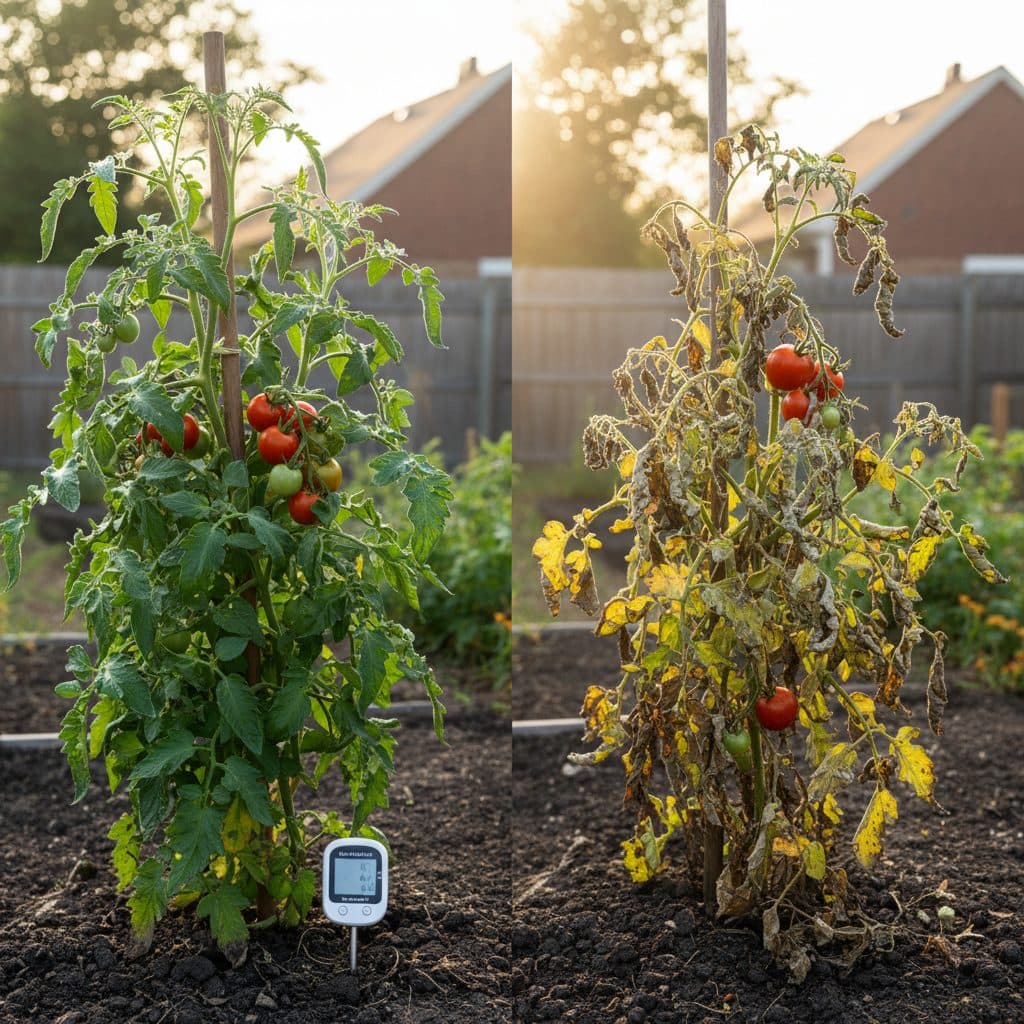
- Carefully observe symptom patterns on leaves, stems, and fruit to differentiate plant problems.
- Nutrient deficiencies often show symmetrical patterns and progress from older to newer leaves, depending on nutrient mobility.
- Plant diseases typically present with irregular patterns, lesions, or wilting, and can spread from plant to plant.
- Herbicide damage often appears suddenly, with distinct patterns like cupping, twisting, or bleaching, and can affect multiple plant species in an area.
- Soil testing and understanding your crop’s growth stage are the first things to check for accurate diagnosis.
- Maintaining detailed records of weather, applications, and observations helps track and solve plant health issues over time.
Quick answer: Identifying plant problems involves careful observation of symptom patterns, location, and progression, differentiating between nutrient deficiencies (symmetrical, mobile/immobile nutrients), plant diseases (irregular, spreading), and herbicide damage (sudden, distinct patterns). Soil testing and record-keeping matter most for accurate diagnosis.
In the fertile fields of California’s Central Valley or the rich soils of a Kansas cucurbit patch, growers face a constant challenge: identifying what ails their plants. A yellowing leaf or stunted growth could signal a dozen different problems, from a simple nutrient shortage to a devastating disease or even accidental herbicide exposure. Misdiagnosis can lead to wasted time, money, and potentially significant crop loss, impacting yields by 10% to 50% or more in severe cases.
This article aims to equip US growers with the knowledge to distinguish between three common culprits: nutrient deficiencies, plant diseases, and herbicide damage. We will focus on key indicators, patterns, and diagnostic steps, particularly for popular crops like tomatoes and cucurbits, often grown across USDA zones 5 through 10. Understanding these differences is the first step toward effective and timely intervention, so your plants thrive from seedling to harvest.
The foundational steps in plant problem diagnosis
Accurate plant problem diagnosis begins with systematic observation and a clear understanding of your crop’s growth stage. For instance, a tomato plant in USDA zone 7 exhibiting yellowing lower leaves during fruit set might point to a nitrogen deficiency, as the plant directs resources to developing fruit. Conversely, similar symptoms on a young seedling could indicate entirely different issues, such as damping-off disease. A thorough diagnosis can save a grower hundreds of dollars per acre in unnecessary treatments.
systematic observation and record keeping
Start by examining the entire plant, from roots to new growth, noting the location and pattern of symptoms. Are symptoms uniform across the field, or are they localized to specific rows or areas, perhaps near a fence line or a sprayer path? Observe if symptoms are symmetrical on individual leaves or if they appear randomly. For example, a cucurbit plant showing wilting on one side of the plant, but not the other, might suggest a vascular wilt disease. Keep detailed records, including planting dates, weather conditions, recent fertilizer applications, and any pesticide treatments. These records, especially over a growing season of 100 to 120 days, provide useful context for diagnosis. Consider using a soil moisture meter to track water levels accurately, as both overwatering and underwatering can mimic other issues.
- Observe symptom location: Are problems on old leaves, new leaves, or evenly distributed?
- Note symptom pattern: Are symptoms symmetrical, irregular, localized, or widespread across 50% of the crop?
- Check environmental factors: Consider recent temperature fluctuations, rainfall, or high winds over the last 24-48 hours.
- Review application history: Document all fertilizer, pesticide, and herbicide applications, including rates and dates, for the past 30 days.
- Examine root health: Gently dig around the plant to inspect for root discoloration, rot, or stunted growth, which can impact 75% of nutrient uptake.
Unraveling nutrient deficiencies: specific signs
Nutrient deficiencies often present with distinct, symmetrical patterns on leaves, making them somewhat easier to diagnose than diseases or herbicide damage. The key is understanding nutrient mobility within the plant. Mobile nutrients, like nitrogen (N), phosphorus (P), and potassium (K), can be translocated from older leaves to newer, actively growing tissues. This means symptoms of their deficiency typically appear first on older, lower leaves. Conversely, immobile nutrients, such as calcium (Ca), boron (B), iron (Fe), and magnesium (Mg), cannot be moved from mature tissues, so their deficiency symptoms emerge on new growth and upper leaves. For example, a tomato plant in Florida’s sandy soils (USDA zone 9) might show blossom end rot, a classic sign of calcium deficiency, affecting 20% of its fruit.
common deficiencies in tomatoes and cucurbits
Magnesium deficiency can lead to significant physiological stress in plants, often causing interveinal chlorosis (yellowing between veins) on older leaves, with veins remaining green.fermented soybean meal for a slow-release nitrogen boost.
- Nitrogen (N): Uniform yellowing of older leaves, stunted growth, affecting 25-50% of leaf area.
- Phosphorus (P): Dark green or purplish discoloration on older leaves, poor root development, often seen in 15% of young plants.
- Potassium (K): Yellowing and browning (necrosis) along the margins of older leaves, weak stems, reducing fruit size by up to 10%.
- Magnesium (Mg): Interveinal chlorosis on older leaves (veins remain green), sometimes affecting 30% of the foliage.
- Iron (Fe): Interveinal chlorosis on new leaves, with veins remaining green, common in alkaline soils (pH above 7.0).
Identifying plant diseases: patterns and spread
These unraveling nutrient deficiencies points carry into this section, too.
Plant diseases, caused by fungi, bacteria, viruses, or nematodes, often exhibit irregular patterns and can spread from plant to plant, sometimes rapidly. Unlike nutrient deficiencies, disease symptoms are rarely symmetrical and can appear as spots, lesions, cankers, galls, or wilting. The timing and environmental conditions play a significant role; many fungal diseases, for instance, thrive in warm, humid conditions, like those found in the southeastern US (USDA zones 8-10) during summer. A common early blight on tomatoes might start as small, dark spots with concentric rings on older leaves, eventually causing significant defoliation, potentially reducing yields by 20-30%.
key disease indicators in tomatoes and cucurbits
For tomatoes, common diseases include early blight, late blight, fusarium wilt, and bacterial spot. Early blight often appears as target-like spots on leaves, while late blight can cause large, water-soaked lesions that quickly turn brown or black, leading to rapid plant collapse within 7-10 days. Fusarium wilt causes yellowing and wilting on one side of the plant or a single branch, often starting from the bottom up. Cucurbits are susceptible to powdery mildew (white, powdery patches on leaves), downy mildew (yellow spots on upper leaf surfaces, purplish spores underneath), and bacterial wilt (sudden wilting without yellowing, often confirmed by a milky sap test from a cut stem). Understanding the specific disease cycle and its preferred conditions is vital for effective management. Companion planting can sometimes help deter pests that transmit diseases, reducing disease incidence by 5-10%.
- Irregular spots or lesions: Often with distinct borders, varying in color from yellow to brown or black, affecting 10-40% of leaf surface.
- Wilting: Can be sudden and widespread, or gradual and localized to specific branches or plants, impacting 50% of a row quickly.
- Fungal growth: Powdery or downy patches on leaves, stems, or fruit, typically covering 1-2 square inches.
- Stunting or distortion: Malformed leaves, stems, or fruit, often caused by viral infections, reducing marketability by 70%.
- Vascular discoloration: Cutting into a stem reveals brown or black streaking in the vascular tissue, indicating a wilt disease.
Herbicide damage: distinct patterns and sudden onset
That work on identifying plant diseases sets up what follows here.
Herbicide damage can be particularly challenging to diagnose because its symptoms often mimic those of nutrient deficiencies or viral diseases. However, herbicide injury typically appears suddenly, often within a few days to a week after application, and exhibits distinct patterns that can affect multiple plant species in an area. For example, glyphosate drift from an adjacent field in Nebraska (USDA zone 4) could cause yellowing and stunting in a non-target tomato crop, affecting plants in a clear drift pattern. Herbicide-induced radical damage can also impact antioxidative systems in plants, leading to widespread cellular damage (Herbicide-Induced Radical Damage and Antioxidative Systems [2]).
recognizing herbicide injury symptoms
Different types of herbicides cause different symptoms depending on their mode of action (Herbicide Site of Actions and Potential Damage to Zea mays and Glycine max. [5]). Growth regulator herbicides (e.g., 2,4-D, dicamba) often cause characteristic symptoms like leaf cupping, strapping (narrow, elongated leaves), twisting of stems, and epinasty (downward bending of petioles). These symptoms can be quite dramatic and affect 75% of the new growth. Photosynthesis-inhibiting herbicides (e.g., atrazine) typically cause interveinal chlorosis or necrosis, starting from the leaf margins, on older leaves. Pigment-inhibiting herbicides (e.g., clomazone) lead to bleaching or whitening of new growth. Amino acid synthesis inhibitors (e.g., glyphosate) cause general yellowing, stunting, and eventual plant death, often starting from the newest growth. Always consider the proximity to other agricultural operations, recent wind patterns, and the timing of any nearby spraying activities when diagnosing suspected off-target damage (Diagnosing Suspected Off-Target Herbicide Damage to Cotton [3]). A reflective indoor grow tent can protect sensitive plants from external contaminants like drift if you’re growing in a controlled environment.
- Sudden onset: Symptoms appear rapidly, often within 1-7 days after exposure, affecting 80% of exposed plants.
- Distinct patterns: Symptoms often follow a drift pattern, affecting plants closest to the source more severely, or appearing in rows if from sprayer contamination.
- Specific leaf deformities: Cupping, strapping, twisting, or bleaching of new growth, impacting 60% of developing leaves.
- Multiple species affected: Non-target weeds or other crops in the vicinity may show similar symptoms, across a 10-foot radius.
- Lack of pathogen signs: No visible fungal growth, bacterial ooze, or insect pests near the damage.
Integrated strategies for accurate diagnosis and prevention
This builds directly on herbicide damage.
An integrated approach combining careful observation, soil analysis, and historical data is the most reliable way to diagnose plant problems and prevent future issues. Regular soil testing, ideally every 2-3 years, provides a baseline for nutrient levels and pH, helping to anticipate and correct deficiencies before they impact your crop, potentially increasing yields by 10-20%. For example, knowing your soil in upstate New York (USDA zone 5) has a pH of 6.0-6.5 can guide your fertilizer choices for optimal nutrient availability. Remember, a healthy plant is more resilient to both diseases and environmental stressors.
proactive measures and expert consultation
Beyond initial diagnosis, consider implementing preventative measures. Crop rotation, for instance, can reduce disease pressure by 30-50% over several seasons. Selecting disease-resistant varieties for your specific region and climate (e.g., a VFFNTA-resistant tomato for a region with nematode issues) is another effective strategy. Maintain good field sanitation, removing diseased plant debris promptly to prevent further spread. If symptoms remain unclear after your initial assessment, or if a significant portion of your crop (e.g., 15% or more) is affected, do not hesitate to send samples to your local university extension office or a plant diagnostic lab. These experts have specialized equipment and knowledge to identify pathogens or chemical residues with a high degree of accuracy, often within 3-5 business days. Investing in a basic garden hand-tool set can help you collect soil and plant samples efficiently for testing.
- Regular soil testing: Conduct tests every 2-3 years to monitor nutrient levels and pH, informing fertilizer applications.
- Crop rotation: Rotate crops every 3-5 years to break disease cycles and improve soil health, reducing pathogen buildup by 40%.
- Disease-resistant varieties: Choose plant varieties known to tolerate or resist common diseases in your area, improving success rates by 25%.
- Good sanitation practices: Remove and destroy diseased plant material promptly, preventing spread to healthy plants within a 50-foot radius.
- Consult experts: When in doubt, send samples to a university extension or diagnostic lab for definitive identification, especially for novel symptoms affecting 5% or more of your crop.
Key differences: deficiency, disease, and herbicide damage
Characteristic | Nutrient Deficiency | Plant Disease | Herbicide Damage |
|---|---|---|---|
Onset | Gradual, over weeks | Gradual or sudden, over days to weeks | Sudden, within 1-7 days |
Pattern | Symmetrical, uniform on specific leaves (old/new) | Irregular, localized spots/lesions, often asymmetrical | Distinct patterns (drift, rows), often symmetrical on new growth |
Spread | Does not spread plant-to-plant | Can spread plant-to-plant or within plant | Does not spread, but affects exposed plants in a pattern |
Symptoms | Chlorosis, necrosis, stunting, specific discoloration | Spots, lesions, wilting, cankers, galls, fungal growth | Cupping, twisting, bleaching, stunting, epinasty |
Affected plants | Specific crop, uniform within affected area | Specific crop or cultivar, often patchy spread | Multiple plant species (including weeds) in affected area |
Location | Often related to soil type or pH (e.g., sandy soils, high pH) | Related to environmental conditions (e.g., humidity, rain) and pathogen presence | Related to nearby spraying activities or contaminated equipment |
Soil pH impact: A soil pH outside the optimal range of 6.0-7.0 can reduce nutrient availability by 30-50% for many vegetable crops, leading to deficiency symptoms.
Yield loss potential: Undiagnosed or misdiagnosed plant problems can lead to crop yield losses ranging from 10% to over 50% in a single growing season.
Herbicide drift distance: Herbicide drift can travel significant distances, with fine spray particles potentially affecting non-target crops up to 0.5 miles or more under certain wind conditions.
Frequently asked questions
How quickly do nutrient deficiency symptoms appear?
Nutrient deficiency symptoms typically develop gradually over several weeks, sometimes 2-4 weeks, as the plant slowly depletes its reserves or as soil conditions worsen. For example, nitrogen deficiency often shows up on older leaves after 3-4 weeks of insufficient supply.
Can a plant have both a disease and a deficiency at the same time?
Yes, it is quite common for plants to experience multiple stresses simultaneously. A plant weakened by a nutrient deficiency, such as a lack of potassium, may become more susceptible to certain diseases, potentially increasing disease severity by 15-20%. Accurate diagnosis requires careful observation of all symptoms.
What is the first step if I suspect herbicide damage?
If you suspect herbicide damage, the first step is to review recent spraying activities in your area, including your own applications and those of neighbors, within the last 1-7 days. Note wind direction and speed (e.g., 5-10 mph) during those times and observe the pattern of damage on your plants and nearby weeds.
How can I prevent nutrient deficiencies in my garden?
Preventing nutrient deficiencies starts with regular soil testing, ideally every 2-3 years, to understand your soil’s composition and pH. Based on test results, amend your soil with appropriate fertilizers or organic matter, such as compost or <a href=”https://agripure.org/shop/fermented-soybean-meal-organic-fertilizer-plant-nutrient-booster-for-soil-enrichment-and-growth-promotion-slowrelease-fertilizer”>fermented soybean meal</a>, to maintain balanced nutrient levels for your crops, aiming for 1-2 inches of compost annually.
Are there specific growth stages where plants are more vulnerable to certain problems?
Yes, plants are often more vulnerable during specific growth stages. For instance, young seedlings are highly susceptible to damping-off diseases, while plants in the fruit-set stage (e.g., tomatoes and cucurbits) have increased nutrient demands, making them prone to deficiencies like calcium or potassium if not adequately supplied, potentially impacting 20-30% of fruit development.
References
- Magnesium deficiency can lead to significant physiological stress in plants, often causing interveinal chlorosis (yellowing between veins) on older leaves, with veins remaining green.Magnesium deficiency can lead to significant physiological stress in plants, often causing interveinal chlorosis (yellowing between veins) on older leaves, with veins remaining green..
- Herbicide-Induced Radical Damage and Antioxidative Systems (2020). Herbicide-Induced Radical Damage and Antioxidative Systems.
- Diagnosing Suspected Off-Target Herbicide Damage to Cotton (2018). Diagnosing Suspected Off-Target Herbicide Damage to Cotton.
- 269 Vitamin D Deficiency Promotes Vascular Damage and Disease Activity in a Murine Model of Systemic Lupus Erythematosus (2016). 269 Vitamin D Deficiency Promotes Vascular Damage and Disease Activity in a Murine Model of Systemic Lupus Erythematosus.
- Herbicide Site of Actions and Potential Damage to Zea mays and Glycine max. (2020). Herbicide Site of Actions and Potential Damage to Zea mays and Glycine max..
- USDA Natural Resources Conservation Service (2024). USDA Natural Resources Conservation Service.