Key takeaways
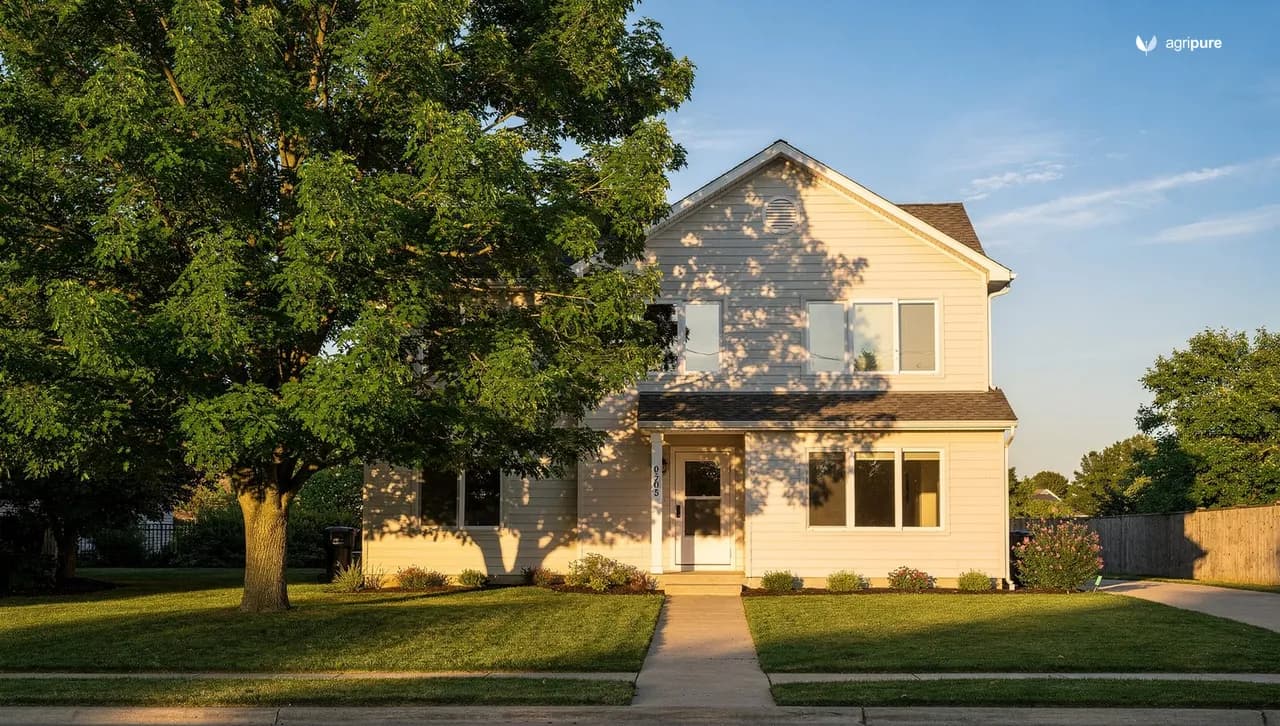
A large, mature red maple tree with its characteristic broad canopy shades the west-facing wall of a light-colored modern house during the late afternoon, illustrating effective home cooling through strategic tree planting.
Placing a fast-growing shade tree like the red maple well can cool your home and add curb appeal for decades. Choosing the right species avoids common pitfalls of weaker, record-breaking growers.
- The fastest shade trees, like hybrid poplar at 5 to 8 feet a year, also have the weakest wood and the shortest useful life.
- Silver maple grows quickly but buckles sidewalks, clogs drain tiles, and can invade sewer pipes — keep it far from the house.
- A red maple adds 10 to 12 feet in five to seven years and still lasts decades, a better speed-to-longevity trade than the record-breakers.
- Shade on the west and south walls does the most cooling — air under a canopy runs up to 25 degrees F cooler than over nearby blacktop.
- Skip weak, invasive picks like Bradford pear, which splits apart at 15-plus years and is now listed as an invasive plant.
A hybrid poplar can put on 5 to 8 feet of height in a single year, which is exactly why people plant it and exactly why they regret it. Inside 20 years the same tree is a brittle, surface-rooted liability leaning over the patio you bought it to shade.
Speed is the easy part. The hard part is buying speed that does not come with split limbs, lifted pavement, and roots in the sewer line 15 years later. Here is how to read growth rates honestly, place a canopy where it actually cools the house, and choose fast growing shade trees that still earn their spot when your kids are grown.
What fast actually costs you
Growth rate and wood strength pull in opposite directions, and almost every regret starts by ignoring that. Trees that race upward lay down low-density, brittle wood, while the slower growers build the dense fiber that survives ice and 50 mph gusts. The Morton Arboretum is blunt about the tuliptree: its fast growth rate causes the tree to be somewhat weak-wooded, even though it reaches a stately 70 to 90 feet tall and 35 to 50 feet wide.
That trade shows up in the numbers. A record-setting hybrid poplar gaining 5 to 8 feet a year rarely stays sound past 20 years, while a red maple adding a respectable 10 to 12 feet in five to seven years can shade a yard for 60. The right question is how many useful, structurally sound years that speed buys you, not the raw rate on the tag.
Read the growth rate honestly
Sort your candidates into 3 honest tiers before you fall for a nursery tag that just says fast.
- Sprinters (4 feet a year and up): hybrid poplar, silver maple, willow — fast screens, but plan to remove them.
- Sound middle (2 to 3 feet a year): red maple, bald-cypress, tuliptree — quick enough to matter, strong enough to keep.
- Slow and permanent (under 1.5 feet a year): oaks and many native picks worth waiting on for the long lawn.
Reframe the goal: aim for usable shade in 7 to 10 years from a tree that lasts 50, not record height in 5 from one you cut down in 20.
Sunlight filtering through the broad green summer canopy of a mature deciduous shade tree seen from below against a blue sky.
Roots, pipes, and how close to the house
The damage from a fast tree usually happens underground, years before a limb ever falls. Vigorous surface roots are the price of vigorous top growth, and the classic offender is silver maple. Clemson Cooperative Extension warns that its very vigorous root system will buckle sidewalks and clog drain tiles, and the Morton Arboretum adds that those roots can invade sewer pipes. A tree set 8 feet from the foundation to shade a window fast becomes a $6,000 plumbing bill by year 12.
Distance is the cheapest insurance you can buy. A large shade tree that will spread 40 feet wants its trunk at least 20 feet from the house and farther still from a septic field or lateral line. A fast-growing native like the European hackberry tolerates tough urban sites, but even a well-behaved species belongs out where its mature canopy and root plate have room.
Plan for the cleanup: fast trees drop fast — twigs, seed, and storm limbs. Site them where a season of debris is a 30-minute job, not a roof-gutter problem every storm.
A field comparison of fast growing shade trees
Each species trades speed for something — wood strength, root behavior, or longevity. This table sorts the common picks by how fast they grow, how long they last, and the risk they carry near a house.
Tree | Growth rate | Mature size | Watch for |
|---|---|---|---|
Hybrid poplar | 5-8 ft/yr | 40-50 ft | Short-lived, brittle, greedy roots |
Silver maple | 3-5 ft/yr | 50-70 ft | Buckles walks, invades pipes |
Tuliptree | ~2-3 ft/yr | 70-90 ft | Somewhat weak-wooded, very tall |
Red maple | 2-2.5 ft/yr | 40-60 ft | Surface roots near turf |
Bald-cypress | 1-2 ft/yr | 50-70 ft | Light, dappled shade only |
Bradford pear | fast | 30-40 ft | Splits at 15+ yr, invasive |
Read down the table and a pattern jumps out. The top two rows buy raw speed at the cost of strength and roots, the middle three hit the practical sweet spot, and the last row is the one to leave at the nursery no matter how cheap it is.
Placing canopy for cooling
A fast tree in the wrong spot cools nothing and still cracks your driveway. Placement decides whether all that growth turns into a lower power bill. The U.S. Department of Energy reports that shading and evapotranspiration can drop nearby air temperatures by as much as 6 degrees F, and that air directly under a canopy runs up to 25 degrees F cooler than the air over nearby blacktop. Peer-reviewed modeling by Simpson and McPherson in the Journal of Arboriculture put real numbers on how much that shade can cut residential cooling demand.
Aim the canopy, do not just plant it. The Department of Energy advises that deciduous trees with high, spreading crowns belong on the south and west, where they block the high summer sun and the brutal late-afternoon angle, then drop their leaves to let winter warmth back in. A 40-foot crown placed to shade the west wall and the air conditioner outweighs the same tree stuck in a back corner where nothing benefits.
- West side: the highest-value spot — it blocks the hot 3 to 6 pm sun and the wall that heats most.
- South side: a high, spreading crown shades the roof through the noon-to-afternoon peak.
- Over the AC unit: shading the condenser eases its load on the worst 90-degree-plus days.
Picks that last and the ones to skip
With the trade-offs clear, the shortlist gets short. For most yards in zones 4 through 9, a red maple is the honest answer: Clemson calls it a valuable shade tree, it grows a brisk 10 to 12 feet in five to seven years, and it tops out at a manageable 40 to 60 feet. Where soil stays wet, a bald-cypress grows 1 to 2 feet a year and has been used successfully even as a street tree. For dry, tough sites, fast natives such as hackberry shrug off heat and poor soil.
The skip list matters just as much. Avoid Bradford and callery pear entirely — Clemson notes its narrow branch angles cause trees to split in half, with severe splitting in older trees past 15 years, and it now sits on invasive-plant lists. Treat any super-fast tree as a temporary screen, and pair it with a few slow, permanent natives planted the same year. Good tree-and-crop design and a thick mulch ring do more for a young tree than any growth booster.
Match the tree to your zone and site
- Cold and wet (zones 3-6): red maple, bald-cypress, hackberry — fast enough, sound for decades.
- Hot and dry (zones 7-9): hackberry and other heat-tough natives over thirsty poplars.
- Never, anywhere: Bradford pear, and weak weedy spreaders like chinaberry that seed into every bed.
Mulch beats fertilizer: a 3-inch ring of organic mulch kept off the trunk does more for first-year root growth than any spike or feed.
A young deciduous shade tree freshly planted in a lawn with a wide ring of wood-chip mulch around its base on a clear morning.
Conclusion
Fast growing shade trees are worth planting, but only with eyes open. The 5-to-8-foot-a-year record-holders are screens you remove in 20 years; a red maple at 10 to 12 feet in five to seven years, placed 20 feet out on the west or south side, buys cooling that lasts a lifetime. Pick the speed your site can carry, skip the splitters and invaders, and let mulch and distance do the rest.
Frequently asked questions
What is the fastest growing shade tree?
Hybrid poplar is among the fastest, gaining up to 5 to 8 feet a year, with willows and dawn redwood close behind at 3 to 4 feet. That speed comes with brittle wood and a short useful life, so treat the fastest trees as temporary screens rather than permanent shade.
How far from my house should I plant a shade tree?
Set a large shade tree at least 20 feet from the foundation, and farther from septic lines, because vigorous roots can buckle walks, clog drain tiles, and invade sewer pipes. A 40-foot mature crown needs that room above ground as much as below it.
Which fast growing tree is both quick and long-lived?
Red maple is the best all-around balance for zones 4 through 9, adding 10 to 12 feet in five to seven years and reaching 40 to 60 feet while staying structurally sound for decades. Bald-cypress is a strong choice for wet sites at 1 to 2 feet a year.
Where should I plant a tree to cool my house?
Plant deciduous trees with high, spreading crowns on the south and west sides, where they block the hot late-afternoon sun and shade the wall and air conditioner. Air under a canopy can run up to 25 degrees F cooler than over nearby blacktop.
Why should I avoid Bradford pear?
Bradford and other callery pears have narrow branch angles that cause the trees to split in half, with severe splitting common past 15 years, and they have escaped into the wild and are listed as invasive plants in many states. Choose a native shade tree instead.
References
- Arbor Day Foundation — The Fastest Fast Growing Trees
- Clemson Cooperative Extension HGIC — Maple
- Clemson Cooperative Extension HGIC — Bald-cypress
- Clemson Cooperative Extension HGIC — Bradford Pear
- The Morton Arboretum — Tuliptree
- The Morton Arboretum — Silver maple
- U.S. Department of Energy — Landscaping for Shade
- Simpson & McPherson, Journal of Arboriculture (1996) — Potential of Tree Shade for Reducing Residential Energy Use