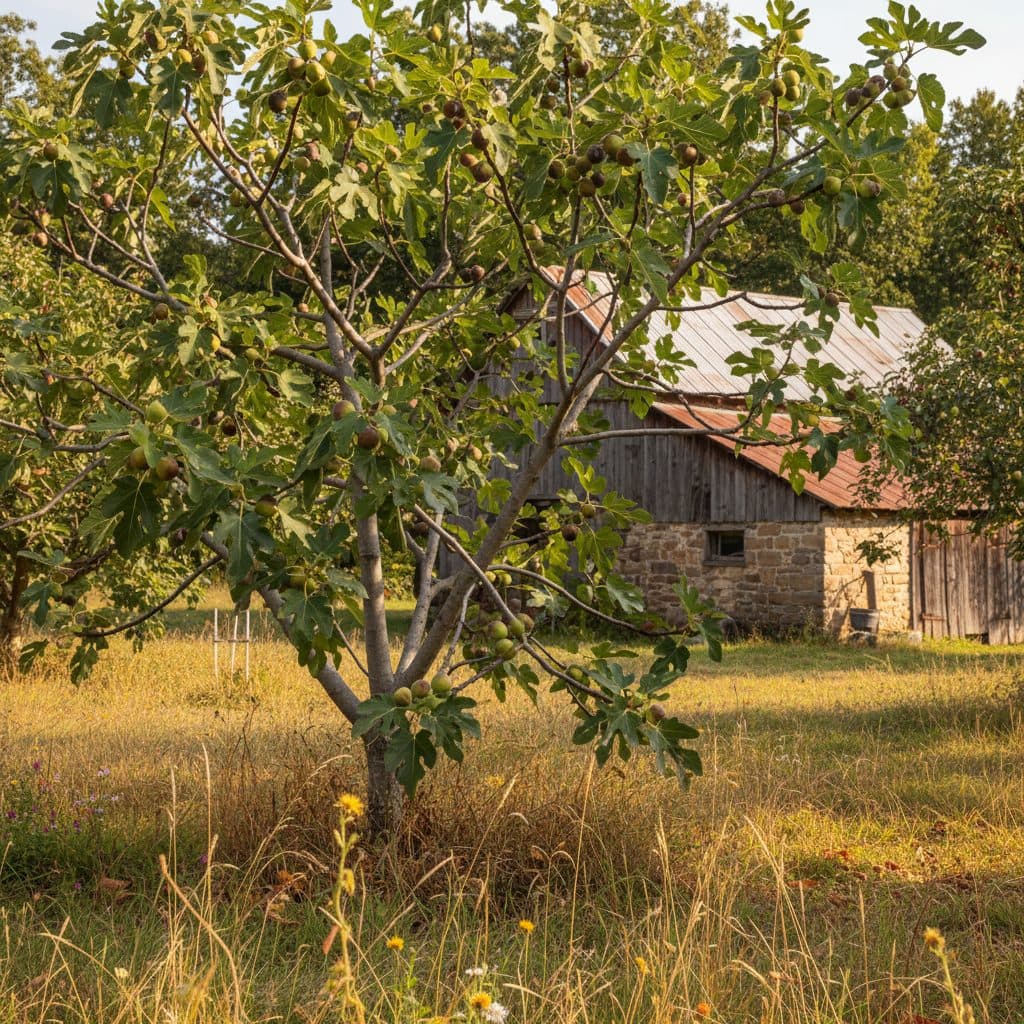
Key takeaways
- Consistent soil moisture is critical; fig trees require 1 to 1.5 inches of water per week during fruiting.
- Ensure proper soil pH, ideally between 6.0 and 6.5, for optimal nutrient uptake.
- Protect ripening fruit from birds and other pests, which can take a large share of the crop.
- Prune fig trees annually to maintain vigor and light penetration, removing no more than 25% of the canopy.
- Select fig varieties suited to your USDA hardiness zone to avoid cold damage and promote ripening.
- Address nutrient deficiencies with balanced fertilization, avoiding excessive nitrogen that promotes leaf growth over fruit.
Quick answer: Fig fruit drop in USDA Zone 7 is often caused by inconsistent watering, nutrient imbalances, temperature fluctuations, or pest pressure. Solutions include consistent irrigation, maintaining soil pH between 6.0-6.5, balanced fertilization, and proper pruning.
In the warmer parts of the United States, like USDA zone 7 and above, fig trees (Ficus carica) are common in home orchards, producing sweet fruit from late summer into fall. However, the joy of a potential harvest can quickly turn to frustration when figs drop prematurely or simply refuse to ripen. For instance, a grower in coastal North Carolina may watch a large share of the crop fall before it matures, an issue that can usually be traced to a handful of environmental and cultural factors.
Understanding why your fig tree isn’t performing as expected is the first step toward a successful harvest. From the sun-drenched valleys of California, where figs are a major crop, to backyard gardens in Texas, the principles of good fig care remain consistent. Addressing issues like inconsistent watering, nutrient imbalances, or pest pressure can significantly improve your tree’s productivity, potentially increasing your yield from a few dozen fruits to over 50 pounds per mature tree.
Water stress and temperature fluctuations
Fig trees are surprisingly resilient, but they are also quite particular about their water supply, especially when fruit is developing. Inconsistent watering is a primary culprit for fruit drop, particularly in regions like the arid Southwest where summer temperatures can exceed 95°F for weeks. A mature fig tree needs about 1 to 1.5 inches of water per week, either from rain or irrigation, during its fruiting period. If the soil dries out completely between waterings, the tree may shed its fruit as a survival mechanism, conserving resources for foliage and root health. Conversely, overly wet, waterlogged soil can also lead to fruit drop and root rot, particularly in heavy clay soils found in parts of the Midwest.
managing moisture for consistent fruit development
To prevent water stress, establish a consistent watering schedule. For a fig tree planted in USDA zone 8, deep watering two to three times a week during dry spells, providing 10 to 15 gallons per application for a mature tree, is often sufficient. Consider using a soil moisture meter to accurately gauge soil dampness 6 inches deep before watering. Mulching around the base of the tree with 3 to 4 inches of organic material, such as wood chips or straw, helps retain soil moisture and regulate soil temperature, reducing the need for frequent irrigation by up to 30%. Fluctuations in temperature, especially late spring frosts in USDA zone 6 or sudden heatwaves, can also shock the tree and cause fruit to drop or fail to ripen properly.
- Water deeply and consistently, aiming for 1 to 1.5 inches per week.
- Use a soil moisture meter to check soil dampness at 6 inches.
- Apply 3 to 4 inches of organic mulch around the tree base.
- Protect young trees from late spring frosts below 30°F.
- Consider varieties like ‘Chicago Hardy’ for colder climates: its top growth takes cold into the mid-teens Fahrenheit, and the roots regrow from the base after a winter that kills the top.
Nutrient imbalances and soil health
Just like any fruit-bearing plant, fig trees rely on a balanced diet of nutrients for healthy growth and fruit development. A common issue leading to fruit drop or unripe figs is an imbalance in soil nutrients, particularly an excess of nitrogen. While nitrogen promotes lush green foliage, too much can signal the tree to prioritize leaf growth over fruit production, causing it to shed developing figs. In contrast, deficiencies in potassium or phosphorus, needed for fruit set and ripening, can also hinder the process. Soil in many parts of the Southeast, for example, can be naturally acidic, requiring amendments to reach the ideal pH range for figs. The USDA Natural Resources Conservation Service (NRCS) emphasizes the importance of soil testing for informed nutrient management.
optimizing soil ph and nutrient availability
Figs thrive in slightly acidic to neutral soil with a pH between 6.0 and 6.5. If your soil pH is outside this range, nutrients may become unavailable to the tree, even if they are present in the soil. A soil test through your local extension office can provide precise recommendations for amendments; fees vary by state. Figs are unusually tolerant of alkaline soil and crop well up to around pH 8.0, so a reading above 7.0 is not by itself a reason to acidify. Treat sulfur as a last resort for a tree actually showing iron or zinc deficiency. Conversely, if it’s too acidic (below 5.5), agricultural lime can be applied. Fertilize with a balanced, low-nitrogen formula, such as a 5-10-10 or 8-10-10, in early spring and again in mid-summer, applying about one pound per year of tree age, up to a maximum of 10 pounds for a very mature tree. Avoid fertilizing after August in cooler zones to prevent new growth that can be damaged by early frosts.
- Conduct a soil test every three to five years to monitor pH and nutrient levels.
- Adjust soil pH to the ideal range of 6.0 to 6.5 using sulfur or lime.
- Apply a balanced fertilizer with lower nitrogen, such as 5-10-10, in spring and mid-summer.
- Avoid excessive nitrogen, which can lead to fruit drop and poor ripening.
- Ensure adequate potassium and phosphorus for fruit development.
Pest pressure and pollination challenges
While many common fig varieties are parthenocarpic (meaning they don’t require pollination to produce fruit), some varieties, particularly Smyrna types, do need pollination by the fig wasp (Blastophaga psenes). This wasp is primarily found in California and parts of the Southwest, making these varieties less suitable for home growers in other US regions. Beyond pollination, various pests can directly impact fruit ripening and retention. Birds, for instance, are notorious for pecking at ripening figs, often causing damage that leads to premature drop or spoilage. Birds can take a large share of a fig crop as it softens. Other pests like fig beetles, ants, and certain fruit flies can also damage fruit, making it unmarketable or inedible.
protecting your harvest from pests
To protect your figs from birds, consider draping netting over the tree as the fruit begins to ripen. This can be a labor-intensive task for larger trees, but it can save a large share of your crop. For smaller trees or individual branches, organza bags can be placed over clusters of ripening figs. Managing ants often involves sticky barriers around the trunk or bait traps. Inspect your trees regularly, perhaps once a week during fruiting season, for signs of insect damage. Removing fallen fruit promptly helps break the life cycle of many pests. Understanding the specific challenges of your region, such as the prevalence of certain fruit flies in Florida or Texas, can help you implement targeted strategies.
- Identify if your fig variety requires pollination by the fig wasp.
- Drape bird netting over trees as fruit begins to ripen to prevent damage.
- Use organza bags for individual fruit clusters on smaller trees.
- Manage ant populations with sticky barriers or bait traps.
- Regularly inspect trees for fig beetles, fruit flies, and other insect damage.
Pruning practices and tree maturity
The age and structure of your fig tree play a significant role in its fruiting habits. Young fig trees, especially those in their first one or two years after planting, often drop their fruit as they prioritize root and canopy establishment. It’s common for a two-year-old fig tree to shed most, if not all, of its initial fruit crop. As the tree matures, its energy allocation shifts toward fruit production. Proper pruning is also essential for maintaining tree health, promoting air circulation, and ensuring adequate sunlight reaches the developing fruit. Neglecting pruning can lead to an overly dense canopy, which reduces light penetration and can inhibit ripening, particularly for varieties grown in cooler climates like USDA zone 6.
effective pruning for fig production
Annual pruning, typically performed in late winter or early spring before new growth begins, helps manage the tree’s size and shape, encouraging productive fruiting wood. When pruning, aim to remove dead, damaged, or crossing branches, as well as any suckers growing from the base of the tree. Thin out the canopy to allow for good air circulation and sunlight penetration, which is vital for fruit ripening and disease prevention. A good rule of thumb is to remove no more than 25% of the total canopy in a single year to avoid stressing the tree. For specific techniques, refer to resources like how to prune fruit trees: by season, by species, and by tree age. Fruit genome projects, active since 2003, continue to deepen our understanding of fruit development and ripening processes, informing better horticultural practices [1].
- Allow young fig trees (one to two years old) to establish roots before expecting a full crop.
- Prune annually in late winter or early spring to remove dead or crossing branches.
- Thin the canopy to improve air circulation and sunlight penetration.
- Remove no more than 25% of the tree’s canopy in a single pruning session.
- Consider different pruning styles, such as open vase or central leader, based on your space and climate.
Common Fig Varieties and Their Characteristics
Variety Name | USDA Hardiness Zone | Pollination Required | Fruit Ripening Time |
|---|---|---|---|
Brown Turkey | 7-10 | No | Late Summer to Fall |
Chicago Hardy | 5-10 | No | Late Summer |
Black Mission | 7-10 | No | Summer & Fall (Brebba crop, Main crop) |
Kadota | 8-10 | No | Late Summer |
Smyrna (e.g., Calimyrna) | 8-10 | Yes (Fig Wasp) | Late Summer |
Water Requirement: A mature fig tree needs 1 to 1.5 inches of water per week during its fruiting season to prevent fruit drop.
Soil pH: Optimal soil pH for fig trees ranges from 6.0 to 6.5 to ensure maximum nutrient availability for fruit development.
Pest Impact: Birds strip and damage ripening figs; netting installed before the fruit softens is the most effective single control.
Frequently asked questions
Why are my fig fruits small and hard, never softening?
Small, hard figs that never soften often indicate a lack of consistent moisture or insufficient heat. Fig trees need 1 to 1.5 inches of water per week during fruit development, plus warm, sunny weather to finish the fruit; a cool, cloudy late summer will stall ripening even when everything else is right. In cooler climates, select cold-hardy varieties or consider growing them in containers.
Can too much fertilizer cause fig fruit to drop?
Yes, excessive nitrogen fertilizer can cause fig fruit to drop. High nitrogen promotes leafy growth at the expense of fruit production, signaling the tree to shed its developing figs. Use a balanced fertilizer with a lower nitrogen ratio, such as 5-10-10, in early spring, applying about one pound per year of tree age.
How long does it take for a fig tree to produce ripe fruit?
A fig tree typically starts producing a small amount of fruit in its second or third year after planting. However, it may take five to seven years for a fig tree to reach full maturity and produce a substantial crop, often yielding 50 pounds or more of fruit annually.
What is the best way to protect figs from birds?
The most effective way to protect figs from birds is to cover the tree with bird netting as the fruits begin to ripen. For smaller trees or individual branches, placing organza bags over clusters of ripening figs can also be effective.
Does a fig tree need another fig tree to produce fruit?
Most common fig varieties grown in US home gardens, such as ‘Brown Turkey’ or ‘Chicago Hardy’, are parthenocarpic and do not require another fig tree or pollination to produce fruit. However, some specific varieties, like Smyrna types, do require pollination by the fig wasp, which is only prevalent in certain regions like California.
What is the ideal soil pH for fig trees?
Fig trees prefer slightly acidic to neutral soil, with an ideal pH range between 6.0 and 6.5. This pH level ensures that essential nutrients like iron and zinc are readily available for the tree’s health and fruit development. A soil test every three to five years can help maintain this balance.
References
- Fruit genome projects ripen on the vine (2003). Fruit genome projects ripen on the vine.