Key takeaways
- Many popular houseplants, like ferns and calatheas, thrive in 60-80% relative humidity, far above typical indoor levels of 30-40%.
- Plants release water vapor through transpiration, and grouping them together creates a localized microclimate with higher humidity.
- Enclosed environments like humidity cabinets or terrariums can maintain consistent humidity levels, often above 70%, with less effort.
- Proper air circulation, achieved with small fans, is crucial in high-humidity setups to prevent fungal issues.
- Monitoring humidity with a hygrometer and soil moisture with a meter helps maintain optimal conditions and prevent overwatering.
- Consider plant size, light requirements, and pest resistance when selecting plants for a grouped display or cabinet.
Quick answer: Grouping plants raises local humidity by 5-10% through transpiration, where plants release water vapor, creating a beneficial microclimate. This helps tropical houseplants thrive in drier indoor environments.
In many US homes, especially during winter in states like Colorado or Arizona, indoor air can drop to a dry 30% relative humidity or even lower. This arid environment stresses many popular houseplants, particularly those native to tropical regions. A Ficus lyrata, for instance, might tolerate lower humidity, but a delicate fern or a Calathea often needs higher humidity to thrive and avoid crispy leaf edges.
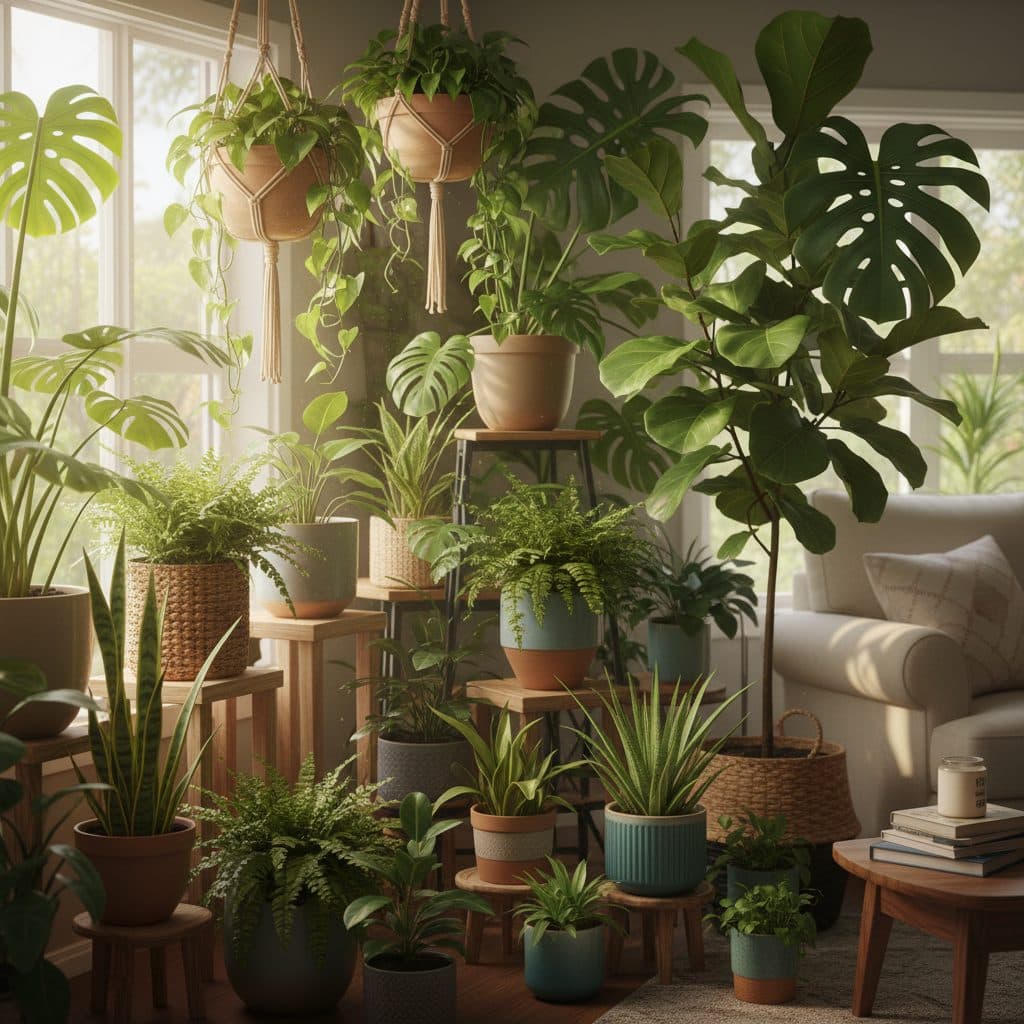
An effective, low-tech strategy to combat this dryness and provide a more hospitable environment for your moisture-loving plants is to group them together. This simple act, supported by transpiration, raises local humidity and turns a dry corner into a healthier spot for plants.
understanding plant humidity needs
Most tropical houseplants originate from environments where relative humidity consistently hovers between 60% and 90%. When these plants are brought into a typical US home, where winter heating can reduce indoor humidity to 30-40%, they struggle. Symptoms often include brown, crispy leaf margins on plants like Maranta or Alocasia, or a general lack of vigor. For example, a Boston fern (Nephrolepis exaltata) prefers humidity above 50% to prevent frond browning. Research indicates that plants significantly impact indoor humidity, with a measurable increase in naturally-ventilated spaces [1].
the role of transpiration in local humidity
Plants release water vapor into the air through a process called transpiration, primarily through tiny pores on their leaves called stomata. A mature Monstera deliciosa, for instance, can transpire several ounces of water per day. When multiple plants are clustered, this released moisture accumulates in the immediate vicinity, creating a pocket of air with higher humidity than the surrounding room. This effect is more pronounced in areas with less air movement, such as a corner, where the moisture can build up rather than quickly dispersing into the larger room volume. This natural process is the foundation for creating a beneficial microclimate.
- Crispy leaf edges: A common sign of low humidity, often seen on plants needing 60% or higher.
- Slow growth: Plants may conserve water in dry conditions, slowing their development.
- Pest susceptibility: Dry conditions can make plants more vulnerable to spider mites, which thrive in low humidity.
- Flower drop: Some flowering plants, like orchids, may drop buds if humidity is too low, often below 50%.
- Leaf curling: Certain plants, such as Calathea species, will curl their leaves to reduce water loss in dry air.
the science of grouping plants
Grouping plants together is not just aesthetically pleasing; it’s a practical application of basic physics. As each plant transpires, it releases water vapor into the air. When these plants are close, their individual contributions combine, saturating the air within their shared space. This increases the local relative humidity by several percentage points, creating a more humid microclimate. This effect is similar to how a small pond can raise humidity in its immediate vicinity. The collective transpiration from a cluster of five to ten plants can significantly alter the atmospheric conditions around them.
creating a boundary layer for moisture retention
When plants are grouped, they create a ‘boundary layer’ of humid air around themselves. This layer acts as a buffer, slowing the rate at which moisture diffuses away into the drier surrounding room. Imagine a small, dense forest compared to a single tree in an open field—the forest retains more moisture. This boundary layer reduces the vapor pressure deficit, making it easier for plants to absorb carbon dioxide for photosynthesis without losing excessive water. For example, a cluster of Pothos plants (Epipremnum aureum) can maintain higher humidity than a single isolated plant. This principle is effective in any US region, from the dry desert air of Nevada to the more humid climate of Florida, as it creates a localized effect.
- Reduced water loss: Plants lose less water through their leaves when the surrounding air is already humid.
- Better nutrient uptake: Higher humidity can improve the efficiency of nutrient transport within the plant.
- Improved photosynthesis: A more favorable microclimate allows stomata to remain open longer, increasing CO2 uptake.
- Natural pest deterrent: Many common houseplant pests, like spider mites, prefer dry conditions and are less active in higher humidity.
designing a humidity-friendly corner
Choosing the right corner in your home is the first step. Look for a spot that receives adequate light for your chosen plants, but avoid direct drafts from vents or windows, which can quickly dissipate humidity. A north- or east-facing window in a room with consistent temperatures, perhaps 68-72°F, is often ideal. Placing plants on a pebble tray filled with water can add a few percentage points of humidity directly around the plants as the water evaporates. Ensure the plant pots sit above the water level to prevent root rot. You can also incorporate a small, quiet humidifier set to a higher relative humidity, especially in very dry climates like those in USDA zone 5 during winter.
selecting plants for a humid corner
When selecting plants, prioritize species with similar light and humidity requirements. Grouping a Calathea orbifolia (which needs 60-70% humidity) with a peace lily (Spathiphyllum) and a small fern is more effective than mixing them with succulents that prefer dry air. Consider using a soil moisture meter to ensure each plant receives appropriate watering, as humidity can affect soil drying times. Plants with larger leaves tend to transpire more, contributing more to the local humidity. For instance, a small group of plants can effectively create a microclimate for a small space.
- Calathea species: Known for their striking foliage and high humidity needs, often 60%+.
- Ferns: Boston ferns, Maidenhair ferns, and Bird’s Nest ferns thrive in consistently moist air.
- Peace Lilies (Spathiphyllum): Tolerate lower light and appreciate humidity above 50%.
- Orchids (Phalaenopsis): Many popular varieties prefer 50-70% humidity, making them excellent cabinet inhabitants.
- Alocasia species: Their dramatic leaves benefit greatly from high humidity, typically 65% or more.
building a humidity cabinet or terrarium
For plants with very high humidity demands, such as carnivorous plants or rare aroids, a dedicated humidity cabinet or terrarium offers a controlled environment. These enclosed spaces minimize moisture loss to the surrounding room, allowing humidity levels to consistently reach 70-90%. A simple cabinet can be repurposed from an old display case or even a clear plastic storage bin. Ensure the chosen enclosure is airtight enough to retain moisture but can also be opened for ventilation. For example, a glass aquarium can serve as an excellent terrarium for small plants, maintaining high humidity with minimal effort.
essential components for an enclosed system
A successful humidity cabinet requires a few basic components. Good lighting, often provided by LED grow lights, matters; aim for adequate hours of light daily for most tropical plants. Ventilation is also vital to prevent stagnant air and fungal diseases. Small computer fans, operating on a timer for short periods a few times a day, can provide adequate air circulation. A hygrometer is indispensable for monitoring humidity levels, ensuring they remain within the desired range, typically 70-85% for many high-humidity plants. Consider adding a small water reservoir or a fogger to maintain consistent moisture. A reflective indoor grow tent can also serve as a larger, dedicated humidity space, offering excellent light reflection and environmental control for multiple plants.
- Enclosure: Glass cabinet, clear plastic bin, or repurposed aquarium.
- Lighting: Full-spectrum LED grow lights, typically 12-14 hours per day.
- Ventilation: Small USB fans to prevent stagnant air and fungal growth.
- Hygrometer: Essential for accurate humidity monitoring, aiming for 70-85%.
- Water source: Pebble tray, small humidifier, or fogger for consistent moisture.
monitoring and maintaining humidity levels
Consistent monitoring is key to a successful humidity setup. A digital hygrometer, which measures relative humidity and temperature, is an inexpensive and essential tool. Place it within your plant grouping or cabinet to get an accurate reading of the microclimate, aiming for the 50-80% range for most tropicals. In drier regions, like parts of California or Texas, you might need to mist plants daily or run a small humidifier for several hours. Remember that even in high humidity, plants still need adequate watering; use a 3-in-1 soil pH, moisture & light meter to prevent over or under-watering, as soil can dry slower in humid conditions.
preventing common problems in humid environments
While high humidity is beneficial, it can also create conditions favorable for certain problems. Fungal diseases, such as powdery mildew or botrytis, thrive in stagnant, moist air. Ensure good air circulation, especially in enclosed cabinets, by using small fans or regularly opening the enclosure for 10-15 minutes. Overwatering is another common issue; always check soil moisture before adding water. Pest control is also crucial. While high humidity deters spider mites, other pests like fungus gnats can flourish. Regularly inspect your plants, and if you spot issues, consider using a targeted solution like neem oil for plants, applied according to package directions, or a homemade bug spray for plants. Maintaining good plant hygiene, such as removing dead leaves, also helps prevent problems.
- Fungal issues: Powdery mildew and botrytis can appear if air is stagnant and humidity is consistently above 85%.
- Overwatering: Soil can stay wet longer in humid conditions, leading to root rot if not monitored.
- Pest infestations: Fungus gnats thrive in consistently moist soil, while mealybugs can still be an issue.
- Algae growth: Can occur on pot surfaces or cabinet walls in very high humidity with adequate light.
Comparison of Humidity Solutions for Houseplants
Method | Typical Humidity Increase | Maintenance Effort | Best For |
|---|---|---|---|
Misting | Temporary, 1-2% | High (multiple times daily) | Short-term relief, not a primary solution |
Pebble Trays | Local, 5-10% | Medium (refill water every 2-3 days) | Small groups of plants, moderate needs |
Grouping Plants | Local, 5-15% | Low to Medium | Multiple plants with similar needs |
Room Humidifier | Room-wide, 10-30% | Medium (daily refills, cleaning) | Large plant collections, dry homes |
Humidity Cabinet/Terrarium | Enclosed, 30-50% above ambient | Medium (monitoring, occasional ventilation) | High-humidity plants, rare species |
Optimal Humidity: Many tropical houseplants require 60-80% relative humidity to thrive, significantly higher than the 30-40% found in many US homes during winter months.
Transpiration Effect: A cluster of plants can collectively increase local humidity through natural transpiration, creating a beneficial microclimate.
Frequently asked questions
How much humidity do most houseplants need?
Most popular tropical houseplants, such as ferns, calatheas, and monsteras, thrive in relative humidity levels between 60% and 80%. This is often much higher than the typical 30-40% relative humidity found in many heated US homes during winter, making supplemental humidity crucial for their health.
Can grouping plants really make a difference in humidity?
Yes, grouping plants together can significantly increase local humidity. Through transpiration, plants release water vapor, and when clustered, this moisture accumulates, raising the relative humidity in their immediate vicinity. This creates a beneficial microclimate for humidity-loving species.
What are the best plants for a humidity cabinet?
Plants that require very high humidity, typically 70-90%, are ideal for a humidity cabinet. This includes many varieties of orchids, carnivorous plants like Nepenthes, rare Aroids such as Philodendron ‘Florida Ghost’, and delicate ferns like Maidenhair ferns. These plants often struggle in ambient indoor air.
How do I prevent mold and fungus in a high-humidity setup?
To prevent mold and fungus in high-humidity environments, ensure adequate air circulation. Use small fans in enclosed cabinets, running them for short periods a few times a day. Also, avoid overwatering by checking soil moisture with a meter before adding water, and remove any dead or decaying plant material promptly.
Is misting plants an effective way to increase humidity?
Misting plants provides only a very temporary increase in humidity, usually lasting for just a short time. While it can offer a brief respite, it’s not a long-term solution for plants requiring consistently high humidity. Grouping plants or using a humidifier provides a more sustained and effective boost to local humidity levels.
What tools are essential for monitoring humidity?
A digital hygrometer is the most essential tool for monitoring humidity, providing accurate readings of relative humidity and temperature. For soil moisture, a soil moisture meter is crucial to prevent overwatering, especially in high-humidity conditions where soil can dry out slower. Aim for humidity levels between 50-80% for most tropical plants.
References
- The impact of plants on the humidity of naturally-ventilated office indoor environments (2024). The impact of plants on the humidity of naturally-ventilated office indoor environments.
- Corner Affinity: A Robust Grouping Algorithm to Make Corner-guided Detector Great Again (2022). Corner Affinity: A Robust Grouping Algorithm to Make Corner-guided Detector Great Again.
- Moisture and Humidity Measurement in Industrial Plants (2013). Moisture and Humidity Measurement in Industrial Plants.
- The effect of moisture transfer on the inner surface thermal performance and the thermal transmittance of the roof-wall corner building node in high-temperature (2021). The effect of moisture transfer on the inner surface thermal performance and the thermal transmittance of the roof-wall corner building node in high-temperature.
- USDA Natural Resources Conservation Service (2024). USDA Natural Resources Conservation Service.
- EPA — Soak Up the Rain (2024). EPA — Soak Up the Rain.