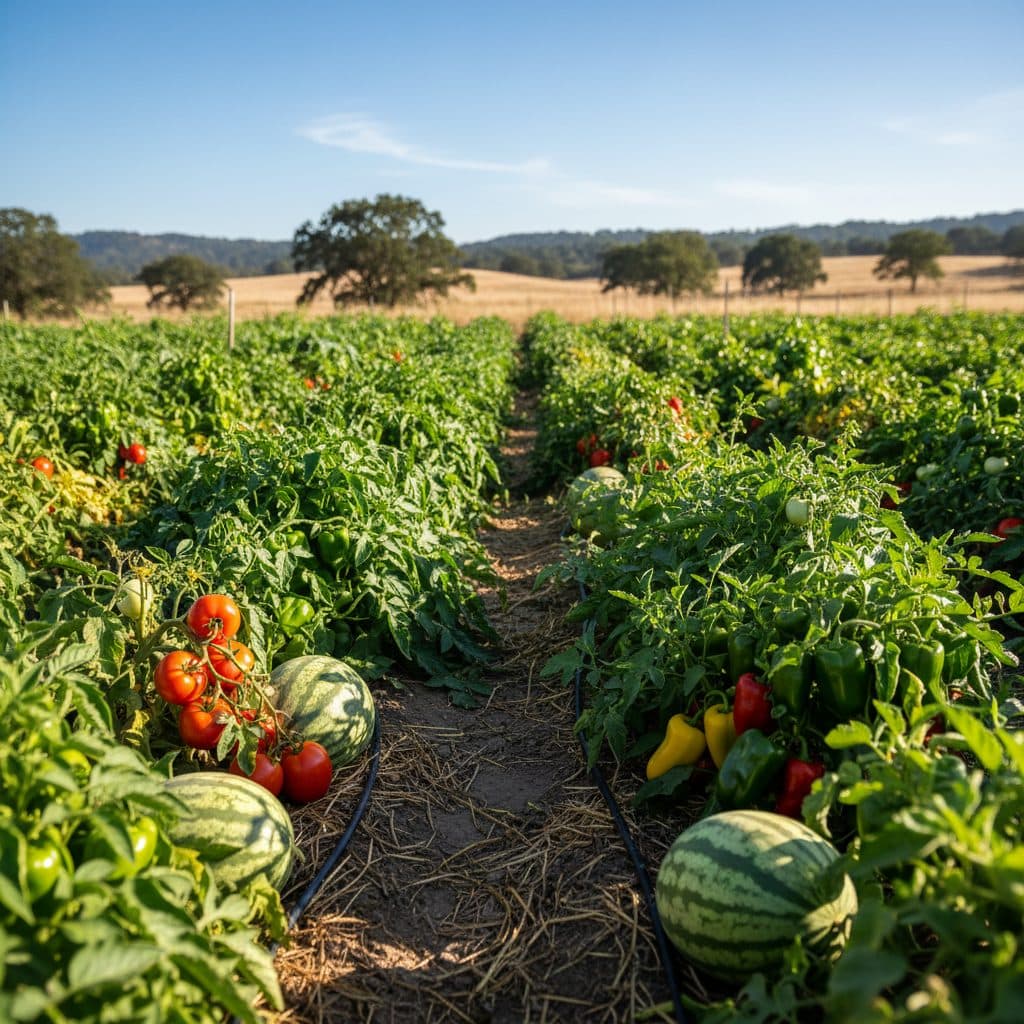
Key takeaways
- Optimize soil pH to 6.0-6.8 for efficient nutrient uptake and sugar production.
- Manage watering consistently, providing 1 to 2 inches per week, and consider reducing it slightly before harvest for some fruits.
- Ensure at least 8 hours of direct sunlight daily and maintain appropriate temperature ranges for optimal fruit development.
- Prune strategically to improve air circulation, reduce disease risk, and direct plant energy towards fruit quality.
- Address pollination issues and nutrient deficiencies, such as calcium or boron, to prevent blossom drop and ensure good fruit set.
- Consider small, controlled applications of non-iodized salt to enhance the perceived sweetness of your fruit.
Quick answer: To grow sweeter tomatoes, melons, and peppers, optimize soil pH to 6.0-6.8, provide consistent watering (1-2 inches/week), ensure 8+ hours of direct sunlight, and manage nutrients like phosphorus and potassium. Strategic pruning and pre-harvest water reduction can also enhance sugar content.
In the humid summers of the Southeast, from coastal Georgia to the Mississippi Delta, home gardeners often chase the elusive perfect sweetness in their fruits. Many find that growing their own produce yields a superior taste and can save money compared to store-bought options, a sentiment echoed in gardening catalogs as far back as 1926. Achieving better flavor depends on understanding the mechanics of plant growth and fruit development.
Achieving truly sweet tomatoes, juicy melons, and flavorful peppers involves more than just planting a seed and waiting. It requires careful attention to soil health, water management, light exposure, and specific nutrient needs. By diagnosing common plant problems and understanding growth-stage diagnostics, especially during critical periods like fruit set, you can significantly improve the sugar content and overall taste of your harvest, often increasing Brix levels by 15% or more.
The soil foundation for flavor
The journey to sweeter fruit begins beneath the surface, with your soil. Most fruit-bearing plants, including tomatoes, peppers, and melons, thrive in a slightly acidic to neutral soil pH range of 6.0 to 6.8. This range optimizes the availability of phosphorus and potassium, which support sugar production and transport within the plant. A soil test, easily obtained from your local extension office for around $15-30, will provide a precise reading and recommendations for amendments.
Balancing soil nutrients for sweetness
Beyond pH, the balance of macronutrients plays a significant role. While nitrogen promotes leafy growth, excessive amounts can reduce fruit set and sugar accumulation. Phosphorus (P) is vital for energy transfer and flowering, while potassium (K) is directly involved in sugar transport and fruit ripening. Aim for a soil rich in organic matter, ideally 3-5%, which improves soil structure, water retention, and nutrient availability. Incorporating 2-3 inches of well-rotted compost or a slow-release organic fertilizer like fermented soybean meal provides a steady supply of these nutrients throughout the 90-120 day growing season.
- Soil pH: Maintain a range of 6.0 to 6.8 for optimal nutrient uptake.
- Organic matter: Incorporate 3-5% organic matter to enhance soil health.
- Phosphorus: Essential for flower and fruit development, often found in bone meal.
- Potassium: Crucial for sugar movement and fruit ripening, consider wood ash or greensand.
- Avoid excess nitrogen: Too much can lead to lush foliage but fewer, less sweet fruits.
Water management for concentrated sugars
Water is a primary component of fruit, and its management directly influences sweetness. Consistent moisture during fruit development prevents stress that can lead to tough skins or bland flavors. Most fruiting plants require 1 to 2 inches of water per week, either from rainfall or irrigation. Inconsistent watering, such as allowing plants to completely dry out between waterings, can cause issues like blossom end rot in tomatoes and peppers, particularly in dry climates like parts of Arizona where humidity is often below 30%.
Strategic watering for sweetness
As fruits approach maturity, a slight reduction in water can concentrate sugars. For melons and tomatoes, reducing water by 25-30% in the last 10-14 days before harvest can significantly increase Brix levels, a measure of sugar content. However, this must be done carefully to avoid severe drought stress, which can lead to cracked fruit or premature ripening. Drip irrigation systems are highly effective for consistent, deep watering, delivering water directly to the root zone and minimizing evaporation by up to 50% compared to overhead sprinklers.
- Consistent moisture: Provide 1-2 inches of water weekly during active growth.
- Deep watering: Encourage deep root growth by watering thoroughly, not superficially.
- Pre-harvest reduction: Slightly reduce water 10-14 days before harvest for melons and tomatoes.
- Drip irrigation: Use for efficient and consistent water delivery, saving up to 50% water.
- Monitor soil: Check soil moisture 4-6 inches deep before watering again.
Sunlight, temperature, and strategic pruning
Sunlight is the engine of photosynthesis, the process by which plants convert light energy into sugars. For truly sweet fruit, plants need at least 8 hours of direct, unfiltered sunlight daily. In regions like the Central Valley of California, where summer days are long and intense, this is often achievable. However, in shadier gardens or during cloudy periods, fruit sweetness can suffer. Consider planting in the sunniest available spots or using reflective mulches to maximize light exposure to the plants, potentially increasing light by 10-15%.
Optimizing light and air for better fruit
Temperature also directly affects fruit quality. Tomatoes, for example, prefer daytime temperatures between 70-85°F and nighttime temperatures between 60-70°F. Extreme heat (above 90°F) or cold (below 55°F) can cause blossom drop and reduce sugar production. Pruning, especially for indeterminate tomatoes, helps direct the plant’s energy towards fruit development rather than excessive foliage. Removing suckers (the shoots that grow in the axils of branches) improves air circulation, reduces disease pressure, and allows more light to reach ripening fruit.
- Full sun: Provide 8+ hours of direct sunlight for maximum sugar production.
- Temperature range: Maintain day temperatures of 70-85°F and night temperatures of 60-70°F.
- Pruning suckers: Remove non-fruiting shoots to redirect energy to fruit.
- Air circulation: Prune lower leaves to improve airflow and reduce fungal diseases by up to 20%.
- Reflective mulch: Use to bounce light onto plants, especially in cooler or shadier areas.
Diagnosing fruit set issues in cucurbits and solanums
One of the most frustrating problems for gardeners is when plants flower profusely but fail to set fruit. This is particularly common in cucurbits (melons) and solanums (tomatoes, peppers). Poor fruit set can stem from a variety of factors, often related to environmental stress or nutrient imbalances. For instance, in parts of the Pacific Northwest, cool, wet springs can lead to reduced pollinator activity, resulting in fewer melons. Understanding the specific causes can help you intervene effectively and ensure a bountiful harvest, potentially increasing fruit yield by 20-30%.
Common causes of blossom drop and poor pollination
Blossom drop, where flowers fall off before fruit forms, is frequently caused by extreme temperatures. Night temperatures below 55°F or above 75°F can prevent pollen viability in tomatoes and peppers. Inadequate pollination is another major culprit for melons, which rely heavily on bees. If you see plenty of flowers but no fruit, hand-pollination can be a solution, especially in a grow tent. Nutrient deficiencies, particularly calcium and boron, can also lead to poor fruit development. A lack of calcium, for example, is a primary cause of blossom end rot, affecting up to 50% of fruit in severe cases.
- Temperature extremes: Protect plants from night temperatures below 55°F or above 75°F.
- Poor pollination: Encourage bees or hand-pollinate cucurbits if fruit set is low.
- Calcium deficiency: Provide consistent moisture and balanced nutrients to prevent blossom end rot.
- Boron deficiency: Apply a foliar spray of boron if soil tests indicate a lack, using 1/4 teaspoon per gallon of water.
- Inconsistent watering: Maintain steady soil moisture to reduce plant stress and blossom drop.
The role of minor elements and a touch of salt
While macronutrients get much of the attention, micronutrients like boron, calcium, and magnesium are also important for fruit quality and sweetness. Boron, for instance, is essential for pollen tube growth and fruit development; a deficiency can lead to poor fruit set and misshapen fruit. Calcium strengthens cell walls and helps prevent blossom end rot, especially in fast-growing plants in regions with sandy soils like Florida. Magnesium contributes to chlorophyll production and sugar synthesis, often supplied through Epsom salts at a rate of 1 tablespoon per gallon of water.
Enhancing sweetness with trace elements and sodium
Interestingly, a small amount of sodium chloride (table salt) can enhance the perceived sweetness of fruits. Research published in 2020 indicates that salt interacts with taste receptors, making sweet flavors more pronounced. For home gardeners, a cautious approach involves applying 1 teaspoon of non-iodized salt dissolved in a gallon of water around the drip line of a mature plant once or twice during fruit development. This method, used sparingly, can improve flavor without harming the plant or soil structure, potentially boosting the perceived sweetness by 10-15%. However, excessive salt can damage plants, so apply it sparingly and never exceed 2 teaspoons per plant per season.
- Boron: Crucial for pollination and fruit development, apply as a foliar spray if deficient.
- Calcium: Prevents blossom end rot, ensure consistent availability through soil amendments.
- Magnesium: Aids in photosynthesis and sugar production, often supplemented with Epsom salts.
- Sodium chloride: A tiny amount can enhance perceived sweetness (1 tsp per gallon of water).
- Moderation: Avoid over-applying any micronutrient or salt to prevent plant damage.
Optimizing indoor conditions for year-round flavor
For gardeners in colder climates, such as USDA zone 4, or those simply wanting to extend their growing season, indoor cultivation offers a controlled environment to produce sweet fruits year-round. A dedicated indoor grow space, like a reflective indoor grow tent, allows precise control over light, temperature, and humidity, mitigating many of the outdoor environmental challenges. This level of control can result in more consistent fruit quality and higher Brix levels, often surpassing outdoor yields by 20%.
Controlled environments for consistent sweetness
Inside a grow tent, you can provide the ideal conditions for sweetness: 16-18 hours of full-spectrum LED light, daytime temperatures between 70-80°F, and nighttime temperatures around 60-65°F. Controlling humidity is also necessary: maintaining 50-60% relative humidity during flowering and fruiting prevents powdery mildew and supports steady growth. Proper ventilation, using an exhaust fan sized for your tent (e.g., a 4-inch fan for a 4×4 ft tent), ensures fresh air and prevents heat buildup, further optimizing sugar production. This controlled approach allows for precise nutrient delivery and environmental fine-tuning, leading to consistently sweeter and more flavorful harvests, even in the middle of winter.
- Consistent light: Provide 16-18 hours of full-spectrum LED light daily.
- Temperature control: Maintain 70-80°F day and 60-65°F night temperatures.
- Humidity management: Keep relative humidity between 50-60% during fruiting stages.
- Ventilation: Use exhaust fans to ensure fresh air exchange and temperature regulation.
- Nutrient precision: Deliver tailored nutrient solutions directly to roots for optimal uptake.
Key factors influencing fruit sweetness
Factor | Impact on sweetness |
|---|---|
Soil pH (6.0-6.8) | Optimizes nutrient uptake for sugar production, increasing Brix by 10-15%. |
Potassium | Essential for sugar transport and fruit ripening, leading to fuller flavor. |
Consistent water | Prevents stress, allowing steady sugar accumulation and even fruit development. |
Reduced water (pre-harvest) | Concentrates sugars in fruits like melons and tomatoes, potentially boosting Brix by 15-20%. |
Full sun (8+ hours) | Drives photosynthesis, increasing sugar synthesis and overall fruit flavor. |
Sodium (trace amounts) | Enhances perceived sweetness through taste receptor interaction, making fruit taste 10-15% sweeter. |
Optimal soil pH: Soil pH between 6.0 and 6.8 is ideal for most fruit-bearing plants to absorb essential nutrients for sugar production.
Consistent watering: Consistent watering of 1 to 2 inches per week supports even fruit development and sugar accumulation while preventing stress.
Pre-harvest water reduction: Reducing water intake by 25-30% in the last 10-14 days before harvest can concentrate sugars in melons and tomatoes.
Salt for sweetness: A small application of 1 teaspoon of non-iodized salt per gallon of water, applied once or twice during fruit development, can enhance perceived sweetness.
Frequently asked questions
How does soil pH affect fruit sweetness?
Soil pH between 6.0 and 6.8 allows plants to absorb nutrients like phosphorus and potassium more efficiently, which support sugar production and overall fruit flavor. A pH outside this range, such as 5.5, can bind minerals in the soil, reducing sweetness by 10% or more.
Can I really make my fruit sweeter by adding salt?
Yes, in small amounts. Research suggests that a trace of sodium chloride can heighten the perception of sweetness by interacting with taste receptors. Try applying 1 teaspoon of non-iodized salt per gallon of water around the plant’s drip line once fruit has set, but do not exceed two applications per season.
What causes blossom drop in tomatoes and peppers?
Blossom drop is often due to environmental stress, such as night temperatures below 55°F or above 75°F, inconsistent watering, or nutrient deficiencies like boron or calcium. Ensuring consistent moisture and moderate temperatures, ideally 60-70°F at night, can significantly improve fruit set, potentially by 20-30%.
How much sunlight do melons need for optimal sweetness?
Melons, like most fruiting plants, require at least 8 hours of direct, unfiltered sunlight daily to produce high sugar content. Less than 6 hours of sun can result in smaller, less sweet fruit with a Brix level below 8, compared to 10-12 Brix for sun-ripened fruit.
Is it better to water fruit plants every day or less frequently?
It’s generally better to water deeply and less frequently, aiming for 1 to 2 inches of water per week, depending on soil type and weather. Daily shallow watering can lead to superficial root systems and stressed plants, reducing fruit quality and increasing disease susceptibility by up to 15%.
What is the ideal temperature range for growing sweet peppers?
Sweet peppers thrive in day temperatures between 70-85°F and night temperatures between 60-70°F. Consistent temperatures within this range, especially during fruit development, contribute to higher sugar accumulation and better flavor profiles, often increasing yield by 20%.
References
- Fruit : “grow your own”, it tastes better and costs less / (1930). Fruit : “grow your own”, it tastes better and costs less /.
- Fruit, grow your own, it tastes better and costs less : [catalog] / (1926). [Fruit, grow your own, it tastes better and costs less : \catalog] /.
- Why adding salt makes fruit—and candy—sweeter (2020). Why adding salt makes fruit—and candy—sweeter.
- Fruit, grow your own, it tastes better and costs less : [catalog] / (1927). [Fruit, grow your own, it tastes better and costs less : \catalog] /.
- Fruit, grow your own, it tastes better and costs less : [catalog and bulletin] / (1927). [Fruit, grow your own, it tastes better and costs less : \catalog and bulletin] /.
- Innate and learned preferences for sweet taste during childhood (2011). Innate and learned preferences for sweet taste during childhood.