Key takeaways
A close-up photograph showing a gardener's hands holding a spray bottle, gently misting water onto a leaf of an organic tomato plant to dislodge a small cluster of green aphids.
Before reaching for strong chemicals, consider the simplest solution. A gentle spray of water can effectively dislodge aphid colonies, protecting beneficial insects and maintaining the delicate balance of your organic garden.
- Start low: a strong stream of water dislodges most of a colony in seconds and costs nothing.
- Climb only if you must — insecticidal soap, then neem, then beneficials — because each rung kills only what it touches.
- Aphid females give birth to live young, up to 12 per day without mating, so a colony rebuilds in a week if you stop early.
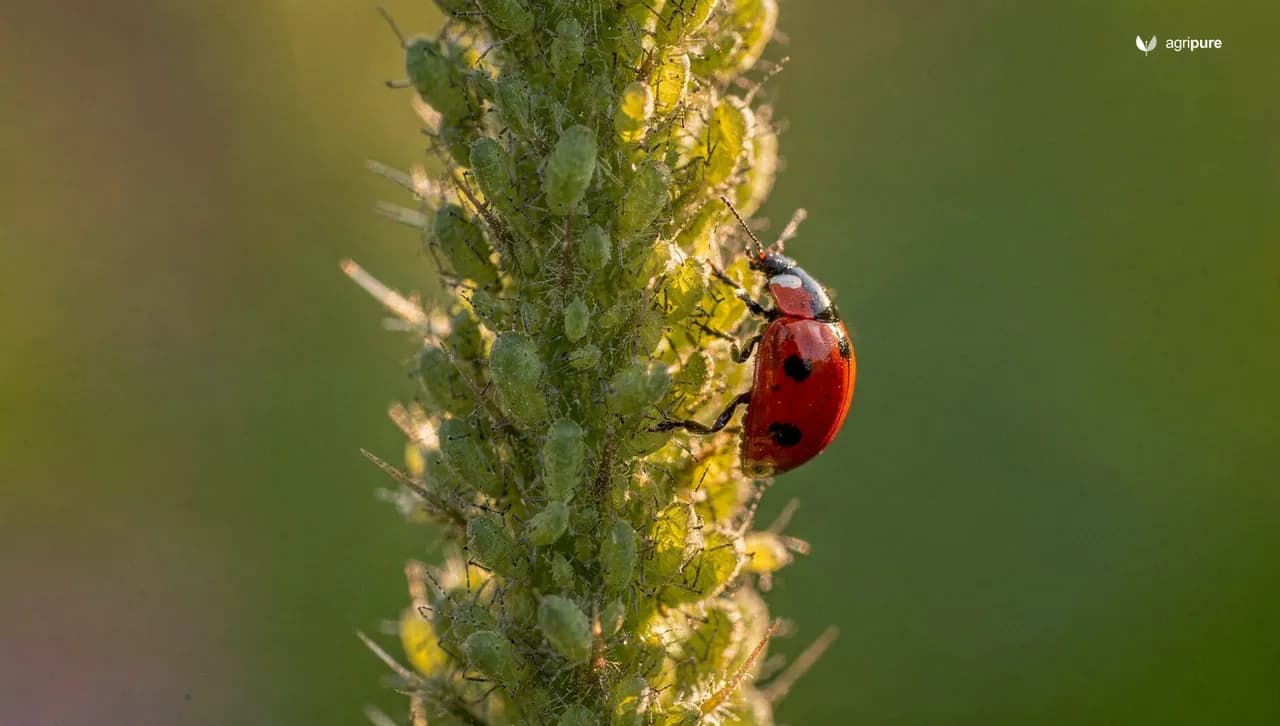
- One adult convergent lady beetle eats about 100 aphids per day, so protecting predators beats spraying them.
- If ants are farming the aphids for honeydew, band the stem with sticky material or you will never win.
An aphid colony looks alarming and is mostly bluff. A heavy infestation on a tomato shoot can hold several hundred insects, yet most of them are clinging by a thin mouthpart and will not survive a firm push. That is why the cheapest control — a jet of water — dislodges most of a colony before you ever open a bottle.
The mistake is reaching for the strongest spray first. Aphids breed fast enough that a single survivor restarts the colony, so the smart approach is a ladder: try the gentlest method, check in 3 days, and step up only if the population holds. Here is that ladder — water, soap, neem, then living predators — plus the ant connection that undoes everyone’s first attempt.
Start with water before you spray anything
The first rung costs nothing and protects every beneficial insect on the plant. UC Integrated Pest Management is direct about it: knock aphid populations off plants by shaking the plant or spraying it with a strong stream of water. Aphids are soft and weakly attached, so a hose nozzle at moderate pressure removes the bulk of a colony, and the few that land on soil rarely climb back. Repeat every 2 to 3 days for a week and many infestations simply collapse.
Target the undersides of leaves and growing tips, where colonies cluster on the tenderest tissue. A morning spray lets foliage dry by afternoon, which keeps fungal disease down on plants like tomato that resent wet leaves. The method has one real limit: it does nothing for the eggs or the next live-born generation, so consistency over a 7 to 10 day stretch matters more than force.
When water is enough on its own
Water alone handles most light infestations if you catch them before bloom. There are 3 situations where you should not bother climbing higher on the ladder.
- Sturdy plants: roses, brassicas, and fruit trees tolerate firm spraying and rebound quickly.
- Early colonies: a patch under 1 inch across on a few shoots is well within reach of water plus a finger-and-thumb squash.
- Active predators present: if you see lady beetle larvae or lacewings, spray gently and let them finish the job.
Pressure, not blast: use enough force to knock insects free without shredding leaves. On seedlings, drop to a fine shower — a bruised stem invites more trouble than a few surviving aphids.
Water spraying from a garden nozzle across the underside of broad green leaves, droplets scattering aphids into the air in bright daylight.
Soap and neem: the next two rungs
If water has not cleared the colony after a week, step up to insecticidal soap. Colorado State University Extension explains that insecticidal soaps kill insects by disruption of cell membranes, causing the insect to die from rapid dehydration. The catch is in the next sentence: soaps act strictly as contact insecticides, with no residual effect, so the spray must land directly on the aphid while wet. Use a labeled product mixed to a 1 to 2% solution — about 2.5 to 5 tablespoons per gallon — and coat the leaf undersides thoroughly; do not go stronger, as a heavier mix can burn the foliage.
Neem oil is the rung above soap. It works slower but adds a reproductive brake: peer-reviewed work by Lowery and Isman found that neem seed oil and azadirachtin inhibit aphid reproduction, so survivors lay fewer young over the following days. UC IPM groups them honestly — soaps, neem oil, and horticultural oil kill only the aphids present on the day they are sprayed, which is why a second pass 4 to 7 days later is part of the method.
Spray cool, spray covered: apply soap or neem in early morning or evening, never on foliage above 90°F or in full sun, and test one leaf 24 hours ahead — both can scorch stressed or hairy-leaved plants.
The ant connection most people miss
Plenty of gardeners spray for 2 or 3 weeks and wonder why the colony keeps returning. The usual culprit is ants. UC IPM describes the trade plainly: ants tend aphids and feed on the honeydew aphids excrete, and in exchange the ants protect the aphids from natural enemies. A column of ants running up a stem is a standing guard that drives off the lady beetles and lacewings that would otherwise clear the colony for free.
Breaking that partnership is often the single move that turns a losing battle around. If you see ants climbing an infested woody plant, put a band of sticky material around the trunk to stop them — a 2 inch wide barrier of horticultural glue on a collar of tape works on roses and fruit trees. Cut back any branches touching fences or walls that give ants a second route up, and bait the nest if the trail leads to one. Once the bodyguards are gone, resident predators usually finish the aphids within 1 to 2 weeks.
Reading the colony before you act
Spend 30 seconds looking before you spray. Glossy honeydew or black sooty mold on lower leaves confirms a heavy, ant-tended colony; mummified tan aphids mean parasitic wasps are already working and you should hold off on sprays that would kill them too.
A field comparison of aphid control methods
Each rung of the ladder has a job it does well and a cost it carries. This table sorts the common methods by how fast they act, whether they spare beneficial insects, and where each one fits.
Method | Speed | Spares beneficials? | Best use |
|---|---|---|---|
Strong water spray | Immediate | Yes | First response, light colonies |
Insecticidal soap | Hours (contact) | Partly (kills on contact) | Persistent colonies on leaves |
Neem oil | Days | Partly | Heavy colonies, repeat passes |
Lady beetles and lacewings | Days to weeks | Yes (they are the beneficials) | Established gardens, ongoing pressure |
Ant banding | Indirect | Yes | Trees and shrubs with ant trails |
Broad-spectrum insecticide | Hours | No (kills predators too) | Last resort, rarely needed |
Across all 6 methods, water and banding spare your allies, soap and neem trade some collateral for speed, and a broad-spectrum spray is the one rung that usually makes the problem worse by clearing the predators first.
Let the predators do the work
The top rung is a standing population of natural enemies, not a product you buy. The math is one-sided: UC IPM notes that a single adult convergent lady beetle can consume about 100 aphids per day before it disperses, and its larvae are hungrier still. Lacewing larvae, syrphid (hover fly) maggots, and parasitic wasps add to the toll, often clearing a colony faster than a weekly spray and without any repeat trips.
You buy that labor by building habitat, not by ordering beetles in a bag, which tend to fly off within 1 to 2 days. Plant small-flowered insectary species that feed adult predators nectar and pollen — sweet alyssum, dill, fennel, yarrow, and marigold tucked among the vegetables. A diverse, layered planting keeps predators on site year-round so the next aphid flush is met before you even notice it.
Prevention that lowers the next outbreak
Most aphid surges ride on lush, soft growth. These 3 habits cut the frequency of outbreaks well before you reach for any rung of the ladder.
- Ease off the nitrogen: over-fed plants push tender shoots that aphids prefer, so feed steadily rather than in heavy doses.
- Scout the tips weekly: 30 seconds checking new growth on tomatoes and roses catches a colony at 20 insects, not 2,000.
- Keep beds resilient: steady moisture and a mulched, healthy soil grow plants that shrug off light feeding.
Tolerate a few: a low background of aphids feeds the predators that protect you. Aim to keep colonies in check, not to sterilize the plant — an aphid-free garden has no lady beetles either.
A lady beetle and its spiky larva feeding on a cluster of aphids along a green plant stem, photographed in close detail outdoors.
Conclusion
Getting rid of aphids is less about the strongest spray and more about climbing the ladder in order: water first, soap and neem only if the colony holds, and a standing crew of predators as the long game. Cut the ant guard, tolerate the handful of aphids that feed your lady beetles, and most outbreaks end in 1 to 2 weeks without a single harsh chemical.
Frequently asked questions
What is the fastest way to get rid of aphids?
A strong stream of water is the fastest first step, knocking most of a colony off in seconds without harming beneficial insects. Repeat every 2 to 3 days for a week, and step up to insecticidal soap only if the population holds.
Does dish soap kill aphids?
A mild soap solution works because insecticidal soaps disrupt the insect’s cell membranes and cause rapid dehydration. It only kills aphids it contacts while wet, with no residual effect, so coat the leaf undersides directly and repeat every 4 to 7 days.
Why do my aphids keep coming back?
Usually because ants are farming them. Ants tend aphids for honeydew and protect them from natural enemies, so until you band the stem with a 2 inch wide sticky barrier to stop the ants, predators cannot clear the colony and it rebuilds within days.
Do ladybugs really get rid of aphids?
Yes, resident ones do. A single adult convergent lady beetle eats about 100 aphids per day, and the larvae eat more. Attracting them with insectary flowers works better than releasing bought beetles, which usually fly off within a day or two.
How do I prevent aphids from returning?
Ease off heavy nitrogen feeding that pushes soft growth, spend 30 seconds scouting new shoots weekly to catch colonies early, and plant small-flowered species like alyssum, dill, and marigold to keep predators on site through the season.
References
- UC Statewide IPM Program — Pest Notes: Aphids
- UC Statewide IPM Program — Natural Enemies Gallery: Convergent Lady Beetle
- University of Minnesota Extension — Aphids in home yards and gardens
- Colorado State University Extension — Insect Control: Soaps and Detergents
- Clemson Cooperative Extension — Insecticidal Soaps for Garden Pest Control
- Lowery & Isman, Journal of Economic Entomology (1996) — Inhibition of Aphid Reproduction by Neem Seed Oil and Azadirachtin