Key takeaways
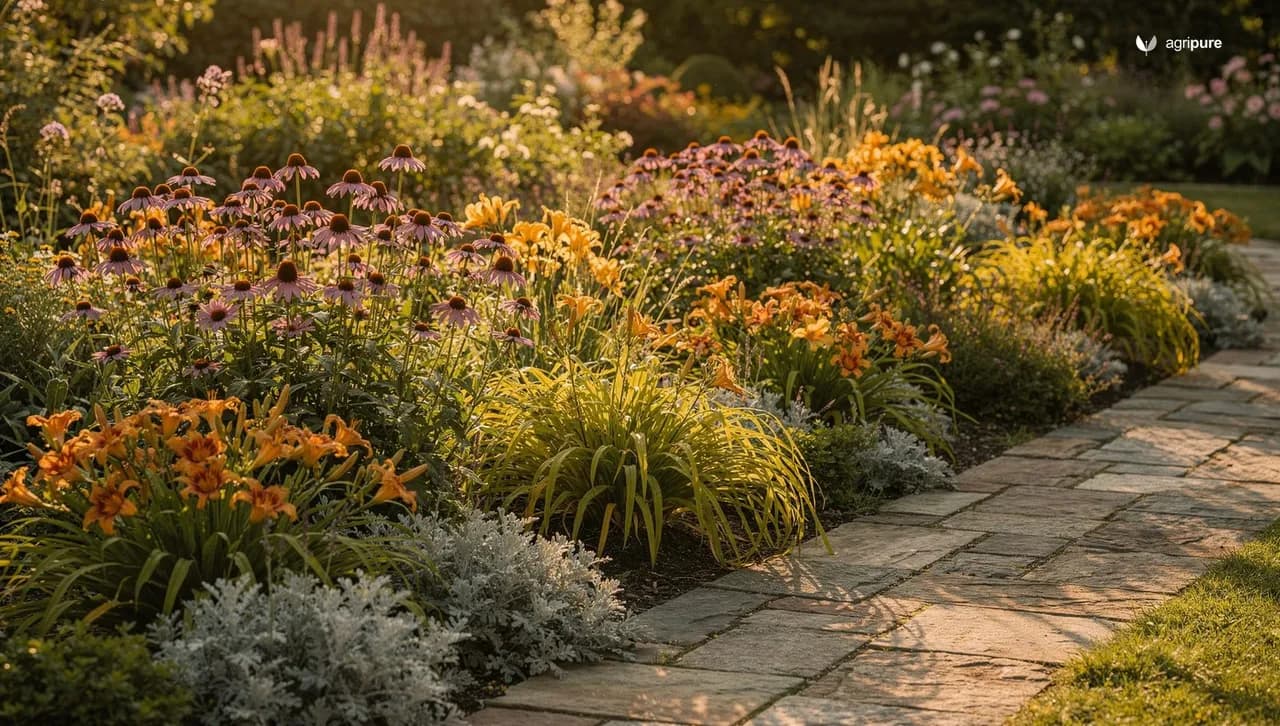
A perennial bed with purple coneflowers in bloom in the sun, attracting bees and butterflies, and hostas growing in dappled shade under trees.
Choosing perennials starts with checking your hardiness zone and light conditions so that plants like coneflowers and hostas establish reliably.
- Pick by USDA zone first: the map sorts plants into 10-degree F bands from zone 1 to 13, so a plant rated to zone 4 survives a winter your zone-7 neighbor never sees.
- Purple coneflower blooms June through August in zones 3 to 8 and feeds bees, butterflies, and seed-eating birds: the best single pick for pollinators.
- For shade, hostas survive on under 4 hours of sun a day and return reliably from zone 3.
- The best perennials pay you back: most can be divided every 3 to 5 years, turning one plant into several at no cost.
- Edible perennials like asparagus stay productive for about 15 years, but you wait 2 seasons for the first real harvest.
A good perennial is a plant you buy once and keep for a decade. The trouble is that “best” depends entirely on the job: a coneflower that feeds 20 species of butterfly is useless in a bed that gets 3 hours of sun, and a hosta that thrives in that shade will sulk in full afternoon glare. The sorting starts with one number.
That number is your USDA hardiness zone. Everything else (bloom season, pollinator value, whether a plant is edible, how fast it multiplies) comes after you have ruled out anything that cannot survive your winter. Below, the best perennials are grouped by the 5 jobs gardeners actually ask them to do, with the zone and bloom window for each.
Start with your zone, then your light
Before any plant tag matters, find your zone. The USDA Plant Hardiness Zone Map sorts the country into 10-degree Fahrenheit bands from zone 1 to zone 13, based on the average annual extreme minimum winter temperature. Each band splits again into an ‘a’ and ‘b’ half (5-degree F increments), so zone 6a runs about 5 degrees colder than 6b. A perennial rated “hardy to zone 4” will come back through a winter that bottoms out near minus 30 F; the same plant in a zone-3 garden may not.
Light is the second filter, and it overrides almost everything else. A plant’s bloom and vigor depend on whether it gets full sun (6-plus hours), part shade (3 to 6 hours), or deep shade (under 4 hours). Match both numbers before you spend a dollar.
Two numbers that decide everything
- Zone number: buy plants rated at or below your zone number; a zone-5 garden is safe with anything tagged 3, 4, or 5.
- Sun hours: count them on the bed in midsummer, not in April when the trees are still bare.
- Bloom window: read the months on the tag so you can stagger color across the season rather than cram it all into June.
Zone is an average, not a guarantee: the USDA bands reflect 1991-2020 data and the average lowest winter temperature, not the coldest night on record. In an exposed or low-lying spot, plant one zone hardier than your map says.
Best perennials for pollinators and long color
If you want the bed busy with bees and butterflies from early summer to frost, lead with lavender and native coneflower. Purple coneflower (Echinacea purpurea) is the workhorse: it is hardy in zones 3 to 8, blooms June through August, and the Missouri Botanical Garden lists it as attracting both birds and butterflies. Leave the seed heads standing and goldfinches strip them through winter.
For nonstop color on the lowest possible effort, the ‘Stella de Oro’ daylily is hard to beat. It is rated zones 3 to 10 (one of the widest ranges of any perennial) and carries flowers May to August. Pair these with catmint, which throws a haze of blue from late spring and can be sheared back for a second flush, and you have a border that never goes fully quiet for 4 months.
Stagger the bloom: aim for at least 3 plants flowering at any time. Coneflower and daylily cover midsummer; add a spring bulb companion and a fall aster so the bed reads as full from April to October.
A purple coneflower in full bloom with a bumblebee on its orange central cone, set against a soft green summer border.
Best perennials by purpose
Every perennial earns its spot by doing one job better than the alternatives. This table sorts 6 of the strongest picks by purpose, with the USDA zone range and bloom window for each so you can match them to your map at a glance.
Purpose | Top pick | USDA zones | Bloom window |
|---|---|---|---|
Pollinators | Purple coneflower | 3 to 8 | June to August |
Long color, beginner-proof | ‘Stella de Oro’ daylily | 3 to 10 | May to August |
Shade | Hosta | 3 to 4 and up | Late spring to summer |
Cut flowers | Lavender | 5 to 9 | Early to midsummer |
Edible / herb | Garden sage | 4 to 8 | Early summer (foliage all season) |
Edible / long-lived crop | Asparagus | 3 to 8 | Spears in spring |
Across all 6 picks, the pattern is clear: a single bed of coneflower, daylily, sage, and a shade edge of hosta covers pollinators, color, and the kitchen while staying inside zones 3 to 8, the range that fits most of the country.
Shade, edibles, and the herbs that double as both
A shady bed is not a dead bed. Hostas are the most reliable shade perennial in the country: the University of Minnesota Extension notes they thrive in dappled shade and can survive in deep shade of under 4 hours of sun a day, and most are hardy to zone 3 or 4 depending on variety. Their job is foliage (bold leaves in greens, blues, and golds), with a bonus flower spike in late spring or summer.
For the kitchen, the best perennials pull double duty. Garden sage is hardy to zone 4, holds usable leaves nearly all season, and flowers for the bees in early summer. Asparagus is the long game: a bed stays productive for about 15 years, but you harvest nothing for the first 2 seasons after planting crowns while the root system builds.
Edible perennials worth the wait
- Asparagus: roughly 15 productive years from one planting, but no full harvest until year 3, so plant it where it can stay put.
- Sage and thyme: woody herbs that return each spring in zones 4 and warmer and give you leaves within weeks.
- Rhubarb: a single crown can stay productive for 15 or more years and is hardy to zone 4 (worth trying in zone 3).
Divide every few years and multiply for free
The quiet advantage of perennials is that they pay dividends. Most clumping perennials should be divided every 3 to 5 years, both to keep them vigorous and to multiply your stock. The University of Minnesota Extension is direct about it: division “is a form of propagation” that creates several plants from one, and it calls it an easy, inexpensive way to increase the number of plants in your garden.
Timing follows bloom. Divide spring and summer bloomers in fall, and fall bloomers in spring, giving each the longest possible runway to re-root before its next show. A 3-year-old coneflower clump can split into 3 or 4 fist-sized divisions, so one bed becomes a whole border. The same no-dig, soil-first habits that suit perennials (building beds you never till) help roots establish undisturbed.
Replant fast: divisions dry out in minutes once the roots are exposed. Lift, split, and get them back in the ground or a bucket of water within about 10 minutes, then water deeply for the first 2 weeks.
Building a bed that blooms all season
An effective perennial bed stays in continuous bloom rather than relying on a single showy specimen. Succession is the trick: choose at least 3 plants for each part of the season so something is always in flower from spring to frost. Coneflower and daylily carry midsummer, sage and lavender bridge early summer, and a fall aster closes the year.
Anchor it all with good ground. A 3 to 4 inch layer of mulch holds moisture, suppresses weeds, and feeds the soil as it breaks down, which matters because a perennial sits in the same spot for years. Plant in odd-numbered groups of 3 or 5, leave room for each clump to triple in size, and let the divisions you take every few years fill the gaps for free.
A freshly mulched perennial border with young daylily and sage clumps spaced in groups across dark soil on a bright morning.
Conclusion
The best perennials are the ones that fit your zone, your light, and the job you need filled, then keep filling it for years. Sort by purpose first: coneflower for pollinators in zones 3 to 8, daylily for 4 months of color, hosta for shade, sage and asparagus for the kitchen. Divide them every 3 to 5 years and one bed becomes several, which is the closest thing gardening offers to free plants.
Frequently asked questions
What are the best perennials for a beginner?
Daylilies are among the easiest, rated for zones 3 to 10 and described by botanical sources as extremely adaptable and relatively pest free. Pair them with purple coneflower and a clump of hosta for shade, and you have a bed that survives most winters and most mistakes.
How do I know which perennials survive my winter?
Check your USDA hardiness zone, which is based on the average annual extreme minimum winter temperature in 10-degree F bands from zone 1 to 13. Buy plants rated at or below your zone number; a zone-5 garden is safe with anything tagged zone 3, 4, or 5.
Which perennials are best for pollinators?
Purple coneflower is a standout: it blooms June through August in zones 3 to 8 and attracts butterflies, bees, and seed-eating birds. Catmint and lavender extend the nectar season on either side of the coneflower’s peak.
How often should I divide perennials?
Most clumping perennials benefit from division every 3 to 5 years, which keeps them vigorous and multiplies your stock for free. Divide spring and summer bloomers in fall, and fall bloomers in spring, so each has time to re-root.
Are there perennials I can eat?
Yes. Asparagus stays productive for about 15 years once established, though you wait 2 seasons before the first real harvest. Sage, thyme, and rhubarb are other perennials that return each year and earn a place in the kitchen.
References
- USDA Plant Hardiness Zone Map — How to Use the Maps
- Missouri Botanical Garden Plant Finder — Echinacea purpurea
- Missouri Botanical Garden Plant Finder — Hemerocallis ‘Stella de Oro’
- University of Minnesota Extension — Hostas
- University of Minnesota Extension — How and When to Divide Perennials
- University of Minnesota Extension — Growing Asparagus in Home Gardens
- University of Minnesota Extension — Growing Rhubarb in Home Gardens