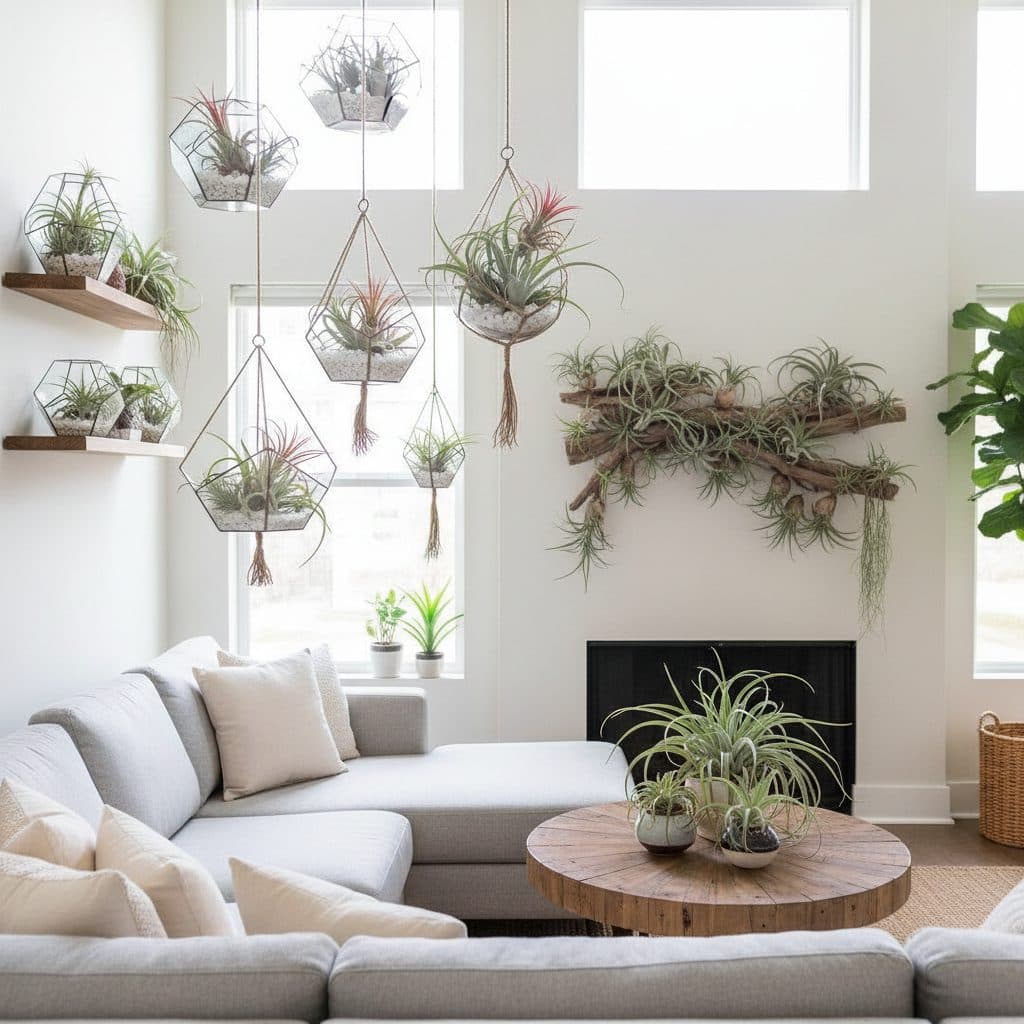
Key takeaways
- Air plants (Tillandsia) require proper air circulation and 50-70% humidity for optimal health indoors.
- Open terrariums are suitable for air plants, but closed containers can lead to rot due to insufficient airflow.
- Mounting air plants on cork, wood, or stone with plant-safe adhesive offers a natural, artistic display.
- Hanging holders provide excellent air circulation and allow for vertical gardening in smaller US apartments.
- Consistent watering, typically a 20-30 minute soak every 1-2 weeks, keeps Tillandsia healthy.
- Indirect light, such as from an east-facing window or 6-8 hours under a grow light, supports steady growth.
Quick answer: Creative air plant displays in US homes thrive with 50-70% humidity, consistent air circulation, and indirect light. Popular methods include open terrariums, natural mounts, and hanging holders, all requiring regular soaking and drying.
Across the US, from the humid Gulf Coast states to drier mountain regions, air plants, or Tillandsia, have become a popular choice for indoor gardeners seeking low-maintenance greenery. These fascinating epiphytes don’t require soil, which opens up a world of creative display possibilities for homes and apartments. However, understanding their specific needs (such as high humidity and consistent air circulation) is essential to keeping them healthy.
Designing displays for air plants can support cognitive flexibility, much like other creative activities [1]. Whether arranging plants in a glass vessel, securing them to a natural mount, or suspending them in holders, each method balances display design with air circulation.
Terrariums for air plants: open designs are best
Terrariums offer a contained, artistic environment for air plants, but they must remain open. Unlike traditional terrariums for humidity-loving plants, Tillandsia need ample air circulation to prevent rot, especially after watering. A glass globe or geometric container with a wide opening, at least 3-4 inches in diameter, works well. In drier climates like Arizona or Nevada, an open terrarium can help maintain slightly higher localized humidity, but it will not replace regular watering. Avoid fully enclosed containers, as they trap moisture and stifle airflow, leading to plant decline within weeks.
Selecting materials and plants for terrariums
When building an air plant terrarium, choose materials that won’t hold excessive moisture. A base layer of sand, small pebbles, or decorative glass beads, about one inch deep, provides drainage and visual interest. Incorporate elements like small pieces of driftwood, dried moss (not live moss which can retain too much water), or miniature figurines to create a scene. For plants, smaller Tillandsia species like Tillandsia ionantha or Tillandsia argentea are ideal, typically growing to 2-3 inches in height. Remember to mist your plants 2-3 times per week, or soak them for 20 minutes every 10 days, removing them from the terrarium for drying before returning them to their display. This routine keeps air plants healthy and prevents moisture buildup in the container.
- Choose open-mouthed glass containers, at least 3 inches wide.
- Use non-moisture-retaining base materials like sand or small stones.
- Select smaller Tillandsia species that fit the scale, such as T. ionantha.
- Incorporate decorative elements like small pieces of cork bark or dried moss.
- Ensure plants are completely dry before returning them to the terrarium after watering.
Mounting air plants: natural and artistic displays
Mounting air plants to natural materials like cork bark, driftwood, or stones mimics their natural growth habit. This method provides excellent air circulation, which protects Tillandsia from rot, especially in humid regions like Florida where ambient humidity can exceed 75%. When selecting a mount, choose untreated, rot-resistant materials. Pieces of grapewood or cholla wood, often found in pet stores, are excellent choices, typically ranging from 6 to 18 inches in length. The process of affixing the plants involves a plant-safe adhesive or thin fishing line, ensuring the plant’s base (where roots would naturally form) is firmly but gently secured to the mount.
Securing air plants to mounts
To secure your air plant, apply a small amount of plant-safe adhesive, such as E6000 or a silicone-based glue, to the base of the plant, avoiding the foliage. Press the plant firmly onto the mount for 30 seconds to one minute. Alternatively, you can use clear fishing line or thin floral wire to gently wrap around the plant’s base and the mount, securing it without constricting growth. Over time, the air plant may produce small roots that will naturally attach to the mount, further stabilizing it. For watering mounted plants, a 20-minute soak every 7-10 days is generally sufficient, followed by a thorough drying period of 2-3 hours, ensuring no water collects in the plant’s base. This method allows for versatile placement, natural aesthetics, and optimal air exposure for your Tillandsia. A light meter can help gauge light levels near your mounted plants, aiming for 6-8 hours of bright, indirect light.
- Select untreated, rot-resistant materials like cork bark or driftwood.
- Use plant-safe adhesive (e.g., E6000) or clear fishing line for attachment.
- Position the plant so its base is in contact with the mount.
- Allow roots to naturally attach over several months.
- Ensure mounted plants receive a 20-minute soak every 7-10 days.
Hanging holders: vertical beauty and airflow
Hanging holders are perhaps the most popular and versatile way to display air plants, especially in smaller US apartments where floor space is at a premium. They provide excellent air circulation, which prevents moisture from lingering around the plant’s base. Options range from simple wire cages and ceramic planters with drainage holes to intricate macrame hangers and geometric metal designs. When choosing a holder, consider its material; metal holders should be made of non-corrosive materials like stainless steel or coated wire to prevent damage to the plant over time. Many designs accommodate plants ranging from 1 inch to 6 inches in size.
Designing with hanging air plant holders
The beauty of hanging holders lies in their ability to create vertical interest and allow for dynamic arrangements. You can group several holders at varying heights to create a cascading effect, or use a single, striking holder as a focal point. Ensure your chosen location provides bright, indirect light for 6-8 hours daily; a north or east-facing window is often ideal. If natural light is insufficient, especially during winter months in northern states like Michigan or Minnesota, consider supplementing with a grow light. An indoor grow tent can also house a larger collection, providing controlled light and humidity. Regular watering, typically a 20-minute soak every 7-14 days, is essential, followed by a thorough upside-down drying to prevent water from pooling in the plant’s center. This method ensures maximum air exposure, flexible placement, and striking visual appeal.
- Choose holders that allow for maximum air circulation around the plant.
- Consider materials like non-corrosive metals, ceramic, or macrame.
- Group holders at different heights for a visually dynamic display.
- Ensure the hanging location provides 6-8 hours of bright, indirect light.
- Always dry plants upside down for 2-3 hours after watering to prevent rot.
General care for thriving air plant displays
Regardless of your chosen display method, consistent and appropriate care is fundamental for air plant longevity. Most Tillandsia species thrive in temperatures between 60°F and 80°F, making them well-suited for average US indoor conditions. The most common mistake growers make is insufficient watering or poor drying, leading to plant death within 2-3 months. A thorough soak is generally preferred over misting, especially for larger plants or in drier environments like Colorado, where ambient humidity can drop below 30%. After soaking, gently shake off excess water and place the plant upside down on a towel for 2-3 hours to ensure it dries completely before returning it to its display. This prevents water from collecting in the plant’s base, which causes rot.
Optimizing light and air for long-term health
Light is another critical factor. Air plants prefer bright, indirect light, similar to what they would receive under a tree canopy in their native habitats of Central and South America. Direct, intense sun, particularly in southern states like Texas or Arizona, can scorch their leaves within a few hours. An east or north-facing window is often ideal, providing 6-8 hours of gentle light. If natural light is limited, a full-spectrum LED grow light positioned 12-18 inches above the plants for 10-12 hours daily can be very effective. Good air circulation is essential; avoid placing air plants in stagnant corners or enclosed spaces. If your home has low airflow, consider a small fan running for a few hours daily. Providing these conditions helps air plants grow steadily and produce blooms [2].
- Maintain indoor temperatures between 60°F and 80°F.
- Water by soaking for 20-30 minutes every 1-2 weeks.
- Always dry plants upside down for 2-3 hours after watering.
- Provide 6-8 hours of bright, indirect light daily.
- Ensure good air circulation to prevent rot and promote health.
Comparison of Air Plant Display Methods
Display Method | Air Circulation | Humidity Retention | Aesthetic Versatility | Typical Plant Size |
|---|---|---|---|---|
Open Terrarium | Good (if open) | Moderate (localized) | High (miniature scenes) | Small (1-3 inches) |
Mounted Display | Excellent (360° exposure) | Low (ambient) | High (natural, organic) | Medium to Large (3-10 inches) |
Hanging Holder | Excellent (vertical space) | Low (ambient) | High (modern, minimalist) | Small to Medium (1-6 inches) |
Optimal Humidity: Air plants thrive best in indoor environments with 50-70% relative humidity, which can be challenging to maintain in homes with 30-40% humidity during winter.
Watering Frequency: Most Tillandsia require a 20-30 minute soak every 7-14 days, with thorough drying for 2-3 hours to prevent rot.
Frequently asked questions
How often should I water air plants in a terrarium?
Air plants in open terrariums should be removed and soaked in water for 20-30 minutes every 7-14 days. After soaking, shake off excess water and allow them to dry completely upside down for 2-3 hours before returning them to the terrarium to prevent rot.
Can air plants survive in low light conditions?
While air plants can tolerate lower light for short periods, they thrive with 6-8 hours of bright, indirect light daily. Too little light can lead to stunted growth and dull foliage, and they may not bloom. Consider a grow light if natural light is insufficient.
What kind of glue is safe to use for mounting air plants?
For mounting air plants, use plant-safe, waterproof adhesives like E6000 or silicone-based glues. Avoid hot glue or superglue, as they can burn or damage the plant’s delicate tissues. A small amount is sufficient to secure the plant’s base.
Do air plants need fertilizer?
Air plants benefit from a specialized air plant fertilizer, diluted to one-quarter strength, applied once a month during their active growing season (spring and summer). Use a fertilizer specifically formulated for epiphytes or bromeliads.
Why is my air plant turning brown?
Browning air plant leaves, especially at the tips or base, often indicate insufficient watering or poor air circulation. Ensure you are soaking your plant thoroughly for 20-30 minutes every 1-2 weeks and allowing it to dry completely for 2-3 hours afterward. Increase humidity if your home is consistently dry.
References
- Creative Cognition in Design II: Creative Strategies (2023). Creative Cognition in Design II: Creative Strategies.
- Creative Cognition in Design I: The Creative Leap (2023). Creative Cognition in Design I: The Creative Leap.
- Allowing Creative Thinking (2015). Allowing Creative Thinking.
- Creative Ways of Knowing and the Future of Engineering Education (2016). Creative Ways of Knowing and the Future of Engineering Education.
- Creative Grief Practices (2026). Creative Grief Practices.
- USDA Natural Resources Conservation Service (2024). USDA Natural Resources Conservation Service.