Key takeaways
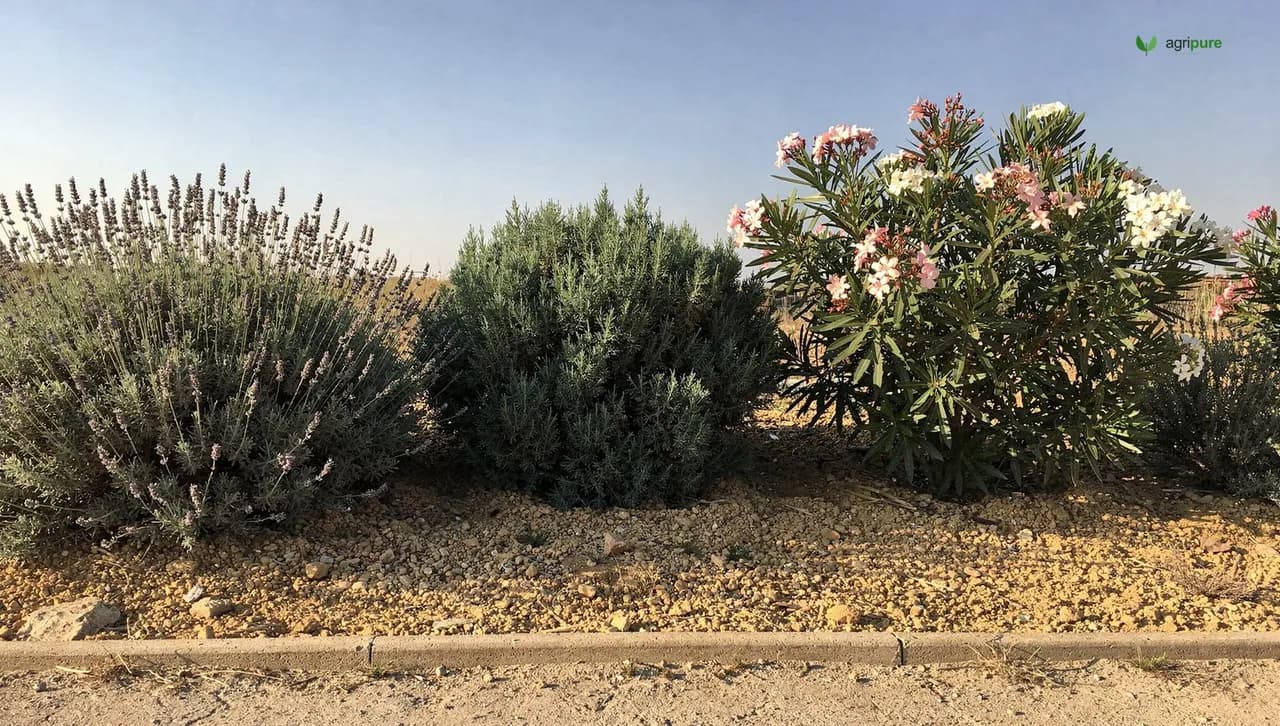
A sun-drenched xeriscape garden with mature, verdant drought-tolerant shrubs, including fragrant lavender and deep green rosemary, providing a layered structural design. Bees are actively pollinating the purple lavender blooms, illustrating the ecosystem benefits of water-wise planting.
Established drought-tolerant shrubs not only conserve water but also offer beautiful, resilient structure and vital habitat for pollinators, thriving with minimal fuss once their roots are deep.
- No shrub is drought tolerant on day one — root establishment takes 1 to several years, and every plant needs supplemental water until then.
- Outdoor watering is 30% of household water use nationally and far higher in dry regions, so low-water shrubs cut the biggest line on the bill.
- Match cold-hardiness to your USDA zone, which is set by average annual extreme minimum winter temperature in 10°F bands.
- Water deeply to 12 inches and infrequently; light daily sprinkling builds shallow roots that fail in the first heat wave.
- Native shrubs like fragrant sumac and ninebark give you screening structure plus pollinator and bird value on the same water budget.
A drought tolerant shrub still needs attention early on. Once its roots reach deep moisture, it gets by on the rain your zone already delivers. The catch is that first year. A 5-gallon lavender or juniper dropped in dry June soil has a root ball the size of a coffee can, and it will die of thirst as fast as a tomato until those roots spread.
This guide sorts flowering and evergreen drought tolerant shrubs by USDA zone, walks through the establishment-year care that makes or breaks them, and shows how to use shrubs as low-water structure and screening. Outdoor watering is about 30% of the average household’s water, so the right woody plants do more for a water bill than any other change in the yard.
What makes a shrub drought tolerant
Drought tolerance is a root trait first and a leaf trait second. Clemson Cooperative Extension is direct about the limit: these plants are drought tolerant once established, and all plants need water while building a root system and during extended drought. A shrub earns its reputation by sending roots down to moisture that stays put between rains, which is why the same species can sail through a dry August in year 3 and die in year 1.
Above ground, the adaptations are easier to spot, and the best drought tolerant shrubs combine 2 or 3 of them. Look for silver or gray foliage that reflects light, small or needle-like leaves with under half the surface area of a broadleaf, and waxy or hairy surfaces that slow evaporation. Lavender, with its narrow gray leaves, and juniper, with its scaled needles, both wear their drought strategy on the surface.
Roots before leaves
The single biggest mistake is treating a new drought tolerant shrub like a cactus from the day it goes in. Root establishment can take from 1 to several years depending on the size of the plant at planting, and a larger nursery shrub takes longer to catch up than a small one. Until the roots spread past the original root ball, the plant has no reserve to draw on.
- Small plants establish faster: a 1-gallon shrub often roots out in a single season, while a 5-gallon specimen may need 2 to 3 years.
- Fall planting helps: roots grow through the cool, moist months while the top is dormant, so the shrub hits summer already anchored.
- Mulch buys time: a 2 to 3 inch ring of organic mulch holds soil moisture and keeps roots cooler through the first dry spell.
Drought tolerant shrubs by USDA zone
The first filter is cold-hardiness. The USDA Plant Hardiness Zone Map is based on the average annual extreme minimum winter temperature, shown as 10°F zones and 5°F half zones, so a shrub rated to zone 5 should survive a normal winter low down to about -20°F. Pick shrubs whose rated range includes your zone, then sort by whether you want flowers, evergreen screening, or a native that feeds wildlife.
Cold zones (3 to 5) reward tough deciduous natives. Penn State Extension lists ninebark, fragrant sumac, and bayberry among hardy drought-tolerant shrubs that shrug off heat and dry soil. Mild zones (8 to 10) open the door to broadleaf evergreens like oleander and hopbush, which hold their leaves and their screen all year.
Flowering versus evergreen
Most yards want some of both — flowering shrubs for pollinators and seasonal color, evergreens for the bones that carry the garden through winter. A practical border runs roughly 60% evergreen structure and 40% flowering shrubs, so the planting never reads as bare.
Check the half-zone: a shrub rated to zone 7 is risky in zone 6b, where winter lows run 5°F colder. When a tag lists a single zone, treat it as the warm edge and give borderline shrubs a sheltered, south-facing spot.
A mixed shrub border with silvery evergreen junipers and flowering oleander against a fence in bright dry-climate sunlight with gravel mulch.
How to choose: a side-by-side comparison
Each of these shrubs handles drought, but they differ in hardiness, mature size, and wildlife value. This table sorts 6 reliable choices spanning USDA zones 3 through 11 by the trade-offs that decide where each one belongs in a low-water yard.
Shrub | USDA zones | Type | Best use |
|---|---|---|---|
Lavender | 5-9 | Flowering, evergreen | Low border, pollinators |
Fragrant sumac | 3-9 | Deciduous native | Slopes, wildlife, cold zones |
Ninebark | 3-7 | Deciduous native | Hedge, bee flowers |
Juniper | 3-9 | Evergreen conifer | Year-round structure |
Oleander | 8-10 | Evergreen, flowering | Tall screen (toxic) |
Hopbush | 9-11 | Evergreen native | Hedge, windbreak, arid zones |
Across these 6 shrubs, the natives carry the most wildlife value, the evergreens carry the screen, and only one — oleander — is toxic enough to keep away from grazing animals and small children. Match the zone first, then the job.
Establishment-year care that makes or breaks them
The first year decides everything. Colorado State University Extension advises applying water slowly so it soaks to a depth of 12 inches, where most of a shrub’s water-absorbing roots live. That depth is the target every time you water a new shrub, because anything shallower trains roots to stay near a hot, fast-drying surface.
How often you hit that depth matters as much as the depth itself. University of Minnesota Extension warns to avoid light watering, since it promotes shallow root systems that buckle under summer heat and drought stress. Soil type sets the interval: a clay soil holding 1 inch of water may go a week, while a sandy soil draining fast may need about half an inch every 3 to 4 days. A soil moisture probe takes the guesswork out — water when the top 6 to 9 inches read dry, not on a fixed calendar.
The taper-off schedule
The goal is to wean the shrub off your hose over 2 to 3 seasons, stretching the interval as the roots reach farther. A simple progression works for most drought tolerant shrubs in the ground:
- Weeks 1 to 4: water the root ball deeply 2 to 3 times a week, more in heat above 90°F.
- Months 2 to 6: deep soak once a week, moving the water out to the dripline as the roots spread.
- Year 2: water deeply every 2 to 3 weeks in dry spells, then only during real drought.
Skip the daily sprinkle: a lawn sprinkler that wets the top inch does a new shrub no favors. One slow, deep soak from a hose at the base beats seven light passes, and it is exactly what builds the deep roots drought tolerance depends on.
Using shrubs as low-water structure and screening
Shrubs earn their keep as the bones of a low-water yard. A row of evergreen shrubs at 6 to 10 feet makes a living screen that blocks a neighbor’s window or a road view without the water bill of a lawn, and it works on rainfall once established. Oleander and hopbush both hold a dense year-round wall in mild zones; juniper does the same job where winters are hard.
Placed with intent, shrubs also cut the water the rest of the garden needs. A windbreak hedge slows the drying wind that pulls moisture from soil and leaves — the same principle behind prairie shelterbelts, which conserve soil moisture on the sheltered side and, on farm fields, can lift crop yields by 10 to 20%. Group shrubs with similar water needs into one irrigation zone so you never overwater a tough plant to keep a thirsty neighbor alive.
Native shrubs pull double duty
Native drought tolerant shrubs give you the structure and a habitat dividend. Fragrant sumac and ninebark, both on Penn State’s hardy list, flower for native bees in spring and set fruit that feeds birds into winter, so a screen made of them supports pollinators the same season it shades the soil. A mixed native hedge of 3 to 4 species can host dozens of insect species that an evergreen wall of a single non-native cannot.
A flowering native shrub hedge with clusters of small cream blossoms and green foliage along a dry sunny garden edge, alive with visiting bees.
Conclusion
Drought tolerant shrubs are the highest-leverage plants in a low-water yard, because outdoor watering is 30% of household use and woody plants, once rooted, run on rain. The work is front-loaded: match the shrub to your USDA zone, water deeply to 12 inches and less often through 2 to 3 seasons of establishment, and lean on natives where you want pollinators and birds along with the screen. Do that, and the same border that took a hose all summer in year 1 needs almost nothing by year 3.
Frequently asked questions
How long until a drought tolerant shrub stops needing water?
Root establishment takes from one to several years depending on the size at planting. A small 1-gallon shrub may root out in a season, while a 5-gallon specimen often needs 2 to 3 years before it can rely on rainfall alone.
What are the best drought tolerant shrubs for cold zones?
For USDA zones 3 to 5, hardy native deciduous shrubs work best, including fragrant sumac, ninebark, and bayberry. These tolerate dry soil and hard winters and also feed pollinators and birds.
How deep should I water a new shrub?
Water slowly so it soaks to a depth of about 12 inches, where most of a shrub’s water-absorbing roots sit. Light surface watering trains shallow roots that fail in the first summer heat wave.
Are drought tolerant shrubs good for privacy screening?
Yes. Evergreen drought tolerant shrubs like juniper, oleander, and hopbush form a 6 to 10 foot living screen that runs on rainfall once established, with far less water than a lawn or thirsty hedge.
Do drought tolerant shrubs help pollinators?
Many do, especially natives. Fragrant sumac and ninebark flower for native bees and set fruit for birds, so a hedge of 2 to 3 native species supports pollinators on the same low-water budget as an ornamental one.
References
- Clemson Cooperative Extension — Plants That Tolerate Drought
- University of Minnesota Extension — Watering Established Trees and Shrubs
- Colorado State University Extension — Watering a Home Landscape During Drought
- U.S. EPA WaterSense — How We Use Water
- USDA Agricultural Research Service — Plant Hardiness Zone Map
- Penn State Extension — Heat and Drought Tolerant Plants
- Olmez, Gokturk & Temel, Seed Science and Technology (2007) — Seed Germination of Drought-Tolerant Shrubs
- USDA Forest Service, National Agroforestry Center — Windbreaks