Key takeaways
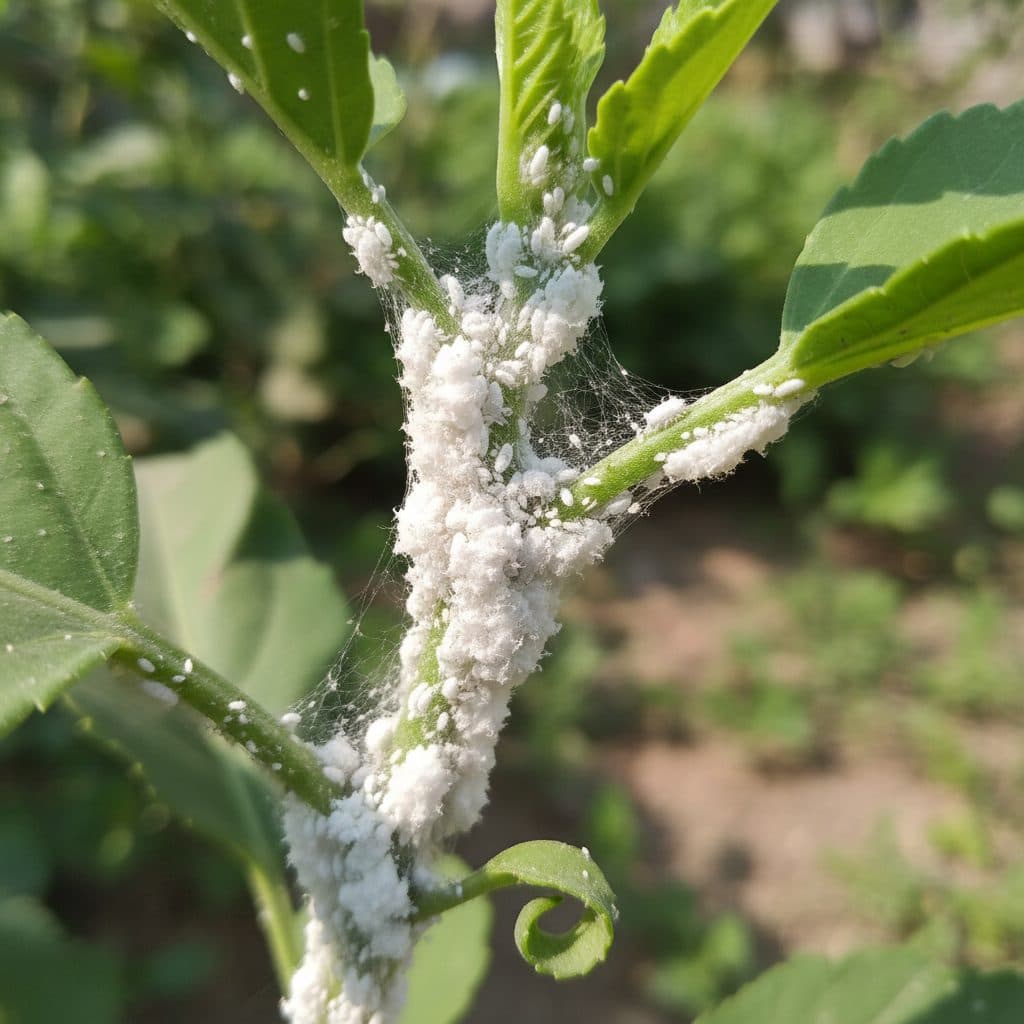
- Mealybugs are soft-bodied, sap-sucking scale insects covered in a protective white powdery wax that cluster in leaf axils, flower buds, and branch joints.
- Spot-treat visible clusters immediately using a cotton swab dipped in 70 percent isopropyl alcohol, which dissolves the protective waxy coating and kills the insect on contact.
- Spray plants thoroughly with a cold-pressed neem oil and liquid soap emulsion across four applications (Day 1, 7, 14, and 21) over three weeks to treat successive crawler hatches.
- Control black and red garden ants; ants actively farm, transport, and protect mealybugs from natural predatory insects in exchange for sugary honeydew.
- For root mealybugs infesting potting soil, wash old mix from roots, repot in clean media, and drench with a diluted neem oil or soap solution.
- Isolate newly purchased nursery plants for two weeks before introducing them to your terrace or balcony garden.
Quick answer: To get rid of mealybugs on plants, dip a cotton swab in 70% isopropyl alcohol and dab directly onto white cottony clusters to dissolve their waxy shield. Follow up by spraying the entire plant—especially the undersides of leaves and stem joints—with a mixture of 5 ml neem oil and 2 ml liquid soap per litre of warm water across four applications at Day 1, 7, 14, and 21 over three weeks.
Mealybugs are arguably the most common and persistent insect pest encountered by home gardeners across India. Whether you are tending ornamental hibiscus (gudhal) on a sunny rooftop, nurturing container brinjals and chillies in a kitchen garden, or caring for indoor houseplants, these white, cotton-like insects can multiply from a tiny speck into an overwhelming infestation in a matter of weeks.
Learning how to get rid of mealybugs on plants requires understanding their biology. The white fluff surrounding them is a water-repellent waxy shield that deflects casual water sprays and dilute contact pesticides. By implementing a systematic multi-step organic protocol—combining alcohol spot treatments, botanical neem sprays, ant exclusion, and lifecycle management—you can bring mealybugs down to a level you can keep on top of with routine inspection.
+-------------------------------------------------------------+
|              MEALYBUG LIFE CYCLE & TARGET WINDOWS           |
|                                                             |
|   1. EGG MASS: Several hundred eggs laid in cottony ovisac  |
|                                                             |
|   2. CRAWLER STAGE (Microscopic Nymphs):                    |
|   - Highly mobile; zero waxy armor; spreads rapidly         |
|   - CRITICAL SPRAY WINDOW: Vulnerable to neem & soap sprays |
|                                                             |
|   3. ADULT FEMALE (Sedentary Sap-Sucker):                   |
|   - Secretes thick white waxy filaments; feeds on sap       |
|   - Excretes sticky honeydew; triggers black sooty mold     |
+-------------------------------------------------------------+
Identifying mealybugs and understanding the damage
Mealybugs (family Pseudococcidae) are small (1 mm to 5 mm long), wingless, oval-shaped insects that thrive in warm, humid tropical and subtropical environments.
+-------------------------------------------------------------+
|               COMMON MEALYBUG SYMPTOMS ON PLANTS            |
|                                                             |
|   - Dense white cottony or powdery patches in leaf axils    |
|   - Yellowing, curling, and premature dropping of leaves    |
|   - Unopened flower buds turning brown and dropping off     |
|   - Sticky, clear liquid (honeydew) coating stems and pots  |
|   - Black powdery sooty mold growing over sticky foliage    |
|   - High ant traffic moving up and down the plant stems     |
+-------------------------------------------------------------+
How mealybugs weaken plants
Mealybugs insert needle-like piercing mouthparts (stylets) directly into plant vascular phloem tissue, extracting vital sugars, amino acids, and moisture. As hundreds of insects feed simultaneously:
- Vascular depletion: The host plant experiences severe nutrient starvation, causing stunted shoots, distorted growing tips, and sudden leaf yellowing.
- Honeydew and sooty mold: Mealybugs excrete excess plant sugars as sticky honeydew. Airborne fungal spores land on this sweet excretion, developing into a thick coat of black sooty mold that blocks sunlight and halts photosynthesis.
- Ant mutualism: Garden ants protect mealybug colonies from natural predators (such as ladybird beetles and hoverfly larvae) and actively transport mealybug crawlers to new uninfected branches to expand their "herds."
To understand care routines for susceptible flowering hosts, see our complete guide on hibiscus plant care.
Step 1: The rubbing alcohol spot-treatment
For light to moderate infestations, direct contact with isopropyl alcohol is the fastest, most effective non-toxic home remedy.
+-------------------------------------------------------------+
|                 ALCOHOL SPOT-TREATMENT PROTOCOL             |
|                                                             |
|   Material: 70% Isopropyl Alcohol (Rubbing / Surgical Spirit)|
|   Tool: Cotton earbud (Q-tip), cotton ball, or soft brush   |
|                                                             |
|   1. Dip swab generously in undiluted 70% alcohol           |
|   2. Press swab directly into white cottony mealybug cluster|
|   3. Alcohol strips the waxy coating on contact             |
|   4. Insect turns brown/yellow and dehydrates               |
|   5. Wipe away dead insects and cottony egg sacs with cloth |
+-------------------------------------------------------------+
Why alcohol works
The white fluff covering mealybugs is composed of complex organic waxes and lipids. Rubbing alcohol immediately dissolves these waxy lipids, stripping away the insect's protective barrier and causing rapid fatal dehydration.
Safety Note: Alcohol evaporates quickly and is safe on tough stems and mature leaves of plants like hibiscus, crotons, citrus, and money plants. However, avoid soaking extremely delicate fuzzy leaves or tender ferns; test a single leaf 24 hours prior if unsure.
Step 2: Formulating and spraying organic neem oil emulsions
While alcohol removes visible adult clusters, microscopic nymphs (crawlers) and hidden egg sacs remain concealed in tight leaf crevices and bark fissures. A botanical foliar spray is essential to break the reproductive cycle.
+-------------------------------------------------------------+
|                 ORGANIC NEEM SPRAY FORMULATION              |
|                                                             |
|   Ingredients per 1 Litre of Warm Water:                    |
|   - 5 ml pure cold-pressed neem oil (1,500-3,000 ppm azad.) |
|   - 2 ml Organic Liquid Castile Soap or Gentle Dish Soap    |
|                                                             |
|   Step 1: Mix neem oil and soap in a small cup with warm water
|   Step 2: Shake vigorously until completely emulsified/milky|
|   Step 3: Pour into 1L pressure sprayer; top with warm water|
+-------------------------------------------------------------+
Component | Proportion | Functional Role |
|---|---|---|
Cold-Pressed Neem Oil | 5 ml per litre (1,500 to 3,000 ppm azadirachtin) | Disrupts insect hormonal systems; anti-feedant; stops molting |
Liquid Castile / Dish Soap | 2 ml per litre | Emulsifier (blends oil into water); dissolves waxy cuticle |
Warm Water (30°C to 35°C) | 1 litre | Keeps neem oil fluid; improves leaf adhesion |
The 3-week spray schedule (four applications):
Because mealybug eggs hatch every 7 to 10 days, a single spray will not solve the problem.
- Spray 1 (Day 1): Kills active crawlers and suffocates exposed adults.
- Spray 2 (Day 7): Kills newly hatched nymphs before they can develop waxy armor.
- Spray 3 (Day 14): Targets the next wave of emerging crawlers.
- Spray 4 (Day 21): Treats the final generation of emerging crawlers before they reach reproductive maturity.
Application Rule: Always spray in the late afternoon or evening after direct sun has left your plants. Applying oil sprays under hot midday sunshine will cause solar leaf burn (phytotoxicity).
To understand soap concentrations and dilution safety across different plant families, read our manual on insecticidal soap spray dilution and use and explore oil mechanisms in neem and horticultural oil sprays.
Step 3: Treating root mealybugs in container soil
Sometimes you clean every leaf on a plant, yet mealybugs reappear weeks later. In many cases, you are dealing with root mealybugs (Rhizoecus spp.), which live below the soil line, feeding directly on fine roots.
+-------------------------------------------------------------+
|                 ROOT MEALYBUG SOIL DRENCH PROTOCOL          |
|                                                             |
|   Symptoms: White powdery web-like residue on root ball and |
|   inside container walls when plant is unpotted.            |
|                                                             |
|   TREATMENT:                                                |
|   1. Unpot plant, wash roots bare, discard old mix, scrub pot
|   2. Repot into fresh mix; drench with 5ml neem + 2ml soap/1L
|   3. Top-dress container surface with 2 tbsp neem cake      |
+-------------------------------------------------------------+- Physical root wash and repot: Unpot the plant, wash all old medium off the roots under running water, discard that medium (do not compost it), scrub and rinse the pot, and repot into fresh mix.
- Neem soil drench: Drench the fresh medium with a solution of 5 ml cold-pressed neem oil and 2 ml liquid soap per litre of warm water.
- Neem cake top-dressing: Neem cake powder (neem khali) contains natural azadirachtin that releases slowly into the root zone with each watering, suppressing soil-dwelling grubs, nematodes, and root mealybugs while providing organic nitrogen to the plant.
For broader non-chemical pest management across container gardens, review our principles in organic soft-bodied pest control.
Step 4: Ant management and physical barriers
You cannot permanently solve a mealybug infestation without controlling the ants that protect them.
+-------------------------------------------------------------+
|                 ANT DISRUPTION STRATEGIES                   |
|                                                             |
|   1. STICKY TRUNK BARRIERS:                                 |
|   - Wrap masking tape around base of pot or plant trunk     |
|   - Coat tape with petroleum jelly or insect barrier glue   |
|                                                             |
|   2. NATURAL REPELLENT LINES:                               |
|   - Dust ground cinnamon, chalk, or turmeric powder around  |
|     pot saucers and terrace drainage paths                  |
|                                                             |
|   3. ELEVATING CONTAINERS:                                  |
|   - Stand pot feet in shallow water moats to block ant access
+-------------------------------------------------------------+
Once ant trails are broken, native beneficial predatory insects can reach mealybug colonies again. The mealybug destroyer beetle (Cryptolaemus montrouzieri) is the most effective of these, though a single beetle works through a colony over weeks, not overnight.
To integrate pest prevention into everyday vegetable growing, explore our foundational strategies in what is a kitchen garden and urban rooftop setups in terrace gardening in Chandigarh.
Prevention and quarantine habits for home gardens
Preventing mealybugs from entering your garden is far easier than curing a widespread outbreak:
- Quarantine new plants: Always isolate newly purchased nursery plants in a separate shaded area for 10 to 14 days before placing them next to your established collection.
- Avoid high-nitrogen fertilizer spikes: Excess synthetic nitrogen produces weak, watery, sap-heavy plant tissue that attracts sap-sucking mealybugs. Use balanced organic compost and vermicompost.
- Inspect hidden crevices: Check the undersides of leaves, leaf axils, and container rims weekly during routine watering. Catching two or three individual mealybugs with an alcohol swab prevents a full-blown infestation.