Key takeaways
- Maintain 50-70% relative humidity for tropical plants like calathea, ferns, and fittonia.
- Use distilled or filtered water to avoid mineral buildup, especially for sensitive species.
- Provide bright, indirect light for 6-8 hours daily; direct sun can scorch delicate leaves.
- Keep soil consistently moist but never waterlogged to prevent root rot, checking the top inch of soil.
- Inspect plants weekly for pests such as spider mites, which thrive in conditions below 40% humidity.
- Consider grouping plants or using pebble trays to increase local humidity.
Quick answer: To keep calathea, ferns, and fittonia happy in US homes, maintain 50-70% relative humidity, provide bright, indirect light for 6-8 hours daily, and keep soil consistently moist but not waterlogged using distilled or filtered water.
Many US homes, especially during winter months, often have indoor humidity levels hovering around 30-40%. This can be a real challenge for some of the most beautiful houseplants, like calathea, ferns, and fittonia, which naturally thrive in environments with 60% relative humidity or higher. These plants originate from tropical regions, where the air is consistently moist, and replicating that indoors requires a bit of understanding and effort.
Keeping these high-humidity lovers happy is entirely achievable across various climates, from humid summers in zone 7b to drier winters in zone 5a. This article will walk you through the essential steps to create a thriving indoor environment for your tropical plants, so they flourish in your home, whatever your local climate.
Understanding the humidity imperative for tropical plants
The primary challenge for growing calathea, ferns, and fittonia in most US homes is maintaining adequate humidity. These plants evolved in tropical rainforests, where relative humidity often stays above 70% for much of the year [1]. When the air around them is too dry, typically below 50%, their leaves can start to show distress, curling, browning at the edges, or developing crispy tips. A 2020 study in India found that houseplants can contribute to indoor humidity, but for truly tropical species, the baseline ambient humidity in a home needs to be considered [2].
Why humidity matters for leaf health
High humidity reduces the rate of transpiration, which is the process by which plants release water vapor through their leaves. In dry conditions, plants transpire too quickly, leading to dehydration and stress. For a calathea, like the striking Calathea crocata with its orange blooms, consistent humidity above 60% is vital for its characteristic leaf movement and overall vigor [3]. Without it, you might notice the leaves struggling to unfurl or staying curled up, a clear sign of environmental stress. Maintaining the right humidity can make a significant difference in plant health.
- Crispy leaf edges: A common sign when humidity drops below 50%.
- Curling leaves: Plants curl leaves to reduce surface area and slow water loss.
- Stunted growth: Dry air can inhibit the development of new foliage.
- Increased pest susceptibility: Spider mites, for instance, prefer dry conditions and can multiply rapidly.
Watering and soil: balancing moisture and drainage
While high humidity matters, it’s only one part of the equation; proper watering and soil are equally important for these plants. High-humidity loving plants require consistently moist soil, but they absolutely cannot tolerate waterlogged conditions, which lead to root rot. For instance, a Boston fern needs its soil to remain damp, but if it sits in standing water for more than 24 hours, its delicate root system will suffer. Check the top 1 inch of soil; if it feels dry, it’s time to water.
The right water and potting mix
The quality of your water can significantly impact the health of sensitive plants like calatheas. Tap water in many US cities, especially in regions with hard water like parts of the Southwest or Midwest, contains chlorine, fluoride, and dissolved minerals that can accumulate in the soil and cause leaf tip burn. Using filtered, distilled, or rainwater is often recommended. For a Calathea arundinacea, also known as variegated calathea, mineral buildup can quickly lead to brown leaf margins [4]. A good potting mix should be well-draining yet moisture-retentive, often containing a blend of peat moss, perlite, and orchid bark. Aim for a mix that retains moisture for 3-5 days between waterings.
- Peat moss: Provides excellent moisture retention.
- Perlite: Improves drainage and aeration, preventing compaction.
- Orchid bark: Adds coarse texture for air circulation around roots.
- Vermiculite: Helps retain water and nutrients, slowly releasing them.
Light and temperature: mimicking the rainforest canopy
In their natural habitats, plants like calathea and ferns grow under the canopy of larger trees, receiving dappled, indirect light rather than harsh, direct sun. Replicating this indoors means providing bright, indirect light for 6-8 hours daily. A north- or east-facing window is often ideal, or a south- or west-facing window with a sheer curtain to diffuse the light. Direct sunlight, especially in summer, can quickly scorch the delicate leaves of a fittonia, causing them to bleach or brown within a few hours.
Maintaining stable temperatures
Tropical plants are also sensitive to temperature fluctuations and drafts. They thrive in consistent temperatures between 65°F and 80°F. Temperatures below 60°F can stress these plants, leading to slowed growth and leaf damage. For instance, a sudden drop to 55°F overnight in a drafty room can cause a calathea to droop significantly, and recovery might take several days [5]. Avoid placing them near exterior doors, heating vents, or air conditioning units. If you live in a colder USDA zone, like zone 4, supplemental lighting or a Reflective Indoor Grow Tent might be beneficial for maintaining consistent conditions, especially during winter months when natural light is scarce.
- North-facing window: Provides consistent, gentle light.
- East-facing window: Offers morning sun, which is less intense.
- Sheer curtains: Diffuse harsh light from south or west windows.
- Grow lights: Supplement natural light during darker seasons, providing 8-10 hours of light.
Boosting humidity in your home for happy plants
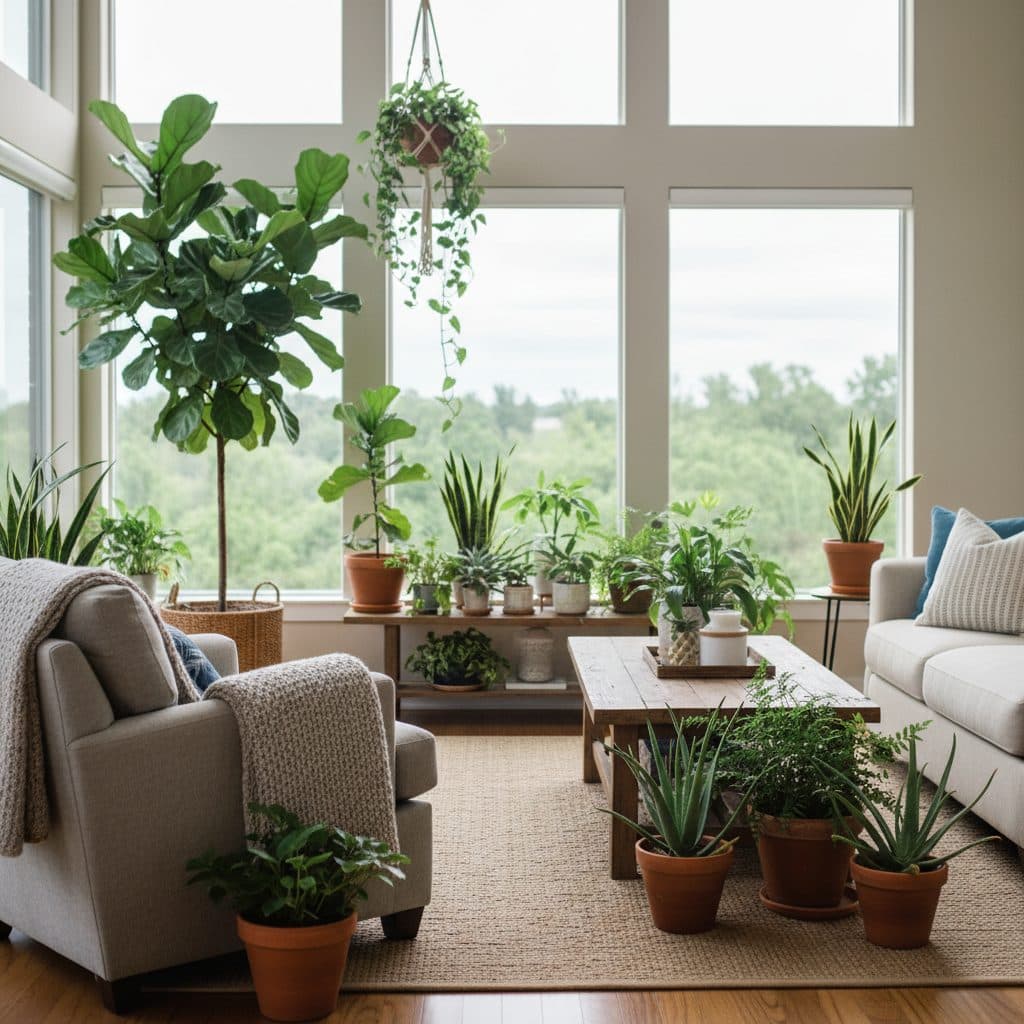
Since most US homes don’t naturally offer the 60-70% humidity these plants crave, you’ll need to actively increase the moisture in the air around them. There are several effective methods you can employ, ranging from simple to more automated solutions. One of the easiest ways is to group your plants together; as plants transpire, they release moisture, creating a microclimate that can be more humid than the surrounding air. This works particularly well for a cluster of 3-5 plants.
Practical humidity solutions
Pebble trays are another straightforward solution. Fill a shallow tray with pebbles and water, ensuring the plant pot sits on top of the pebbles, not in the water. As the water evaporates, it increases local humidity. For more significant and consistent humidity boosts, especially in larger rooms or drier climates (like USDA zone 3 in Minnesota), a humidifier is the most effective tool. A small, 1-gallon cool-mist humidifier can easily raise the humidity in a 100-square-foot room within a few hours. Regularly misting leaves can offer a temporary, short-term boost, but it’s not a substitute for consistent ambient humidity and should be done with caution to avoid fungal issues on foliage.
- Pebble trays: Simple, low-cost way to increase local humidity.
- Plant grouping: Creates a beneficial microclimate, raising humidity by up to 15%.
- Humidifiers: Most effective for consistent, widespread humidity control.
- Terrariums/cloches: Excellent for very high humidity for single, smaller plants.
Common pests and problems: staying vigilant
Even with optimal conditions, high-humidity plants can sometimes encounter issues, particularly pests. Spider mites are a common nemesis, especially in dry indoor environments where humidity falls below 40%. These tiny pests thrive in arid conditions and can quickly infest a plant, causing stippling on leaves and eventually webbing. A small spider mite population can multiply rapidly if left unchecked, particularly on ferns or calatheas with their delicate foliage. Regular inspection, at least once a week, is your best defense.
Early detection and treatment
Look for tiny red or brown dots on the undersides of leaves, or fine webbing between stems and leaves. Fungus gnats, while less damaging, can also be a nuisance, often indicating overwatering or consistently soggy soil. If you spot pests, immediate action is key. For spider mites, increasing humidity can help deter them, but a thorough treatment with insecticidal soap or neem oil is usually necessary. You can find detailed guidance on managing these unwelcome visitors at How to get rid of spider mites (and keep them from coming back). Remember, a healthy plant with consistent care is much more resilient to pest attacks, often recovering within 1-2 weeks of treatment.
- Spider mites: Thrive in dry air, cause stippling and webbing.
- Fungus gnats: Indicate overwatering, adults fly around soil.
- Mealybugs: White, cottony pests found in leaf axils.
- Scale: Small, immobile bumps on stems and leaves.
Care Comparison for High-Humidity Houseplants
Plant Type | Light Needs | Watering | Humidity Target | Common Challenge |
|---|---|---|---|---|
Calathea | Bright, indirect (6-8 hrs) | Consistently moist, filtered water | 60-70% | Brown leaf tips from dry air/minerals |
Ferns (e.g., Boston, Maidenhair) | Bright, indirect (6-8 hrs) | Consistently moist, never dry | 50-70% | Crispy fronds from low humidity |
Fittonia (Nerve Plant) | Bright, indirect (6-8 hrs) | Consistently moist, prone to wilting | 60-70% | Dramatic wilting when dry, scorching in direct sun |
Humidity Target: Aim for 60-70% relative humidity for optimal growth of tropical plants, a 20% increase over typical home levels.
Water Quality: Using filtered or distilled water can prevent leaf tip burn in sensitive plants like Calatheas, reducing mineral buildup.
Pest Watch: Check the undersides of leaves weekly, as spider mites can multiply rapidly in dry conditions below 40% humidity.
Frequently asked questions
What is the ideal humidity range for high-humidity houseplants?
The ideal relative humidity range for tropical houseplants like calathea, ferns, and fittonia is between 60% and 70%. Maintaining this level helps prevent common issues like crispy leaf edges and promotes vigorous growth, often increasing plant health.
Why are my calathea leaf tips turning brown?
Brown leaf tips on calatheas are typically caused by low humidity, usually below 50%, or mineral buildup from tap water. Using filtered or distilled water and increasing ambient humidity can significantly improve leaf health within a few weeks.
How often should I water a fern to keep it happy?
You should water a fern when the top 1 inch of its soil feels dry to the touch. This often means watering 2-3 times per week, depending on your home’s temperature and humidity, so the soil stays consistently moist but never waterlogged.
Can I use regular tap water for these sensitive plants?
Using regular tap water can be problematic due to chlorine, fluoride, and mineral content, especially in areas with hard water. It’s best to use filtered, distilled, or rainwater to avoid mineral buildup and leaf damage, which can affect sensitive plant foliage.
What kind of light do fittonias need to thrive indoors?
Fittonias thrive in bright, indirect light, ideally for 6-8 hours daily. They do best in a north or east-facing window, or a shaded south or west window, as direct sunlight can easily scorch their delicate leaves within a few hours.
How do I know if my plant has spider mites, and what should I do?
Look for tiny specks or stippling on the leaves, fine webbing between stems, and overall plant decline. Spider mites thrive in dry conditions, often below 40% humidity, and can multiply rapidly in 3-5 days. Isolate the plant and treat it with insecticidal soap or neem oil for 1-2 weeks.
References
- Ferns: the houseplants that reveal how tropical rainforests are responding to climate change (2022). Ferns: the houseplants that reveal how tropical rainforests are responding to climate change.
- Impact Assessment of Houseplants on Atmospheric Relative Humidity in the Residential Buildings of Udaipur, Rajasthan (2020). Impact Assessment of Houseplants on Atmospheric Relative Humidity in the Residential Buildings of Udaipur, Rajasthan.
- Calathea crocata (2021). Calathea crocata.
- Calathea arundinacea (variegated calatea) (2017). Calathea arundinacea (variegated calatea).
- Calathea (2019). Calathea.
- USDA Natural Resources Conservation Service (2024). USDA Natural Resources Conservation Service.